Absorption & Action Spectra (Edexcel IAL Biology)
Spec point —
5.6
Absorption & Action Spectra
-
Chloroplasts contain several different photosynthetic pigments within photosystems embedded in the thylakoid membranes
-
Different pigments absorb light of different wavelengths
-
Chlorophylls absorb wavelengths in the blue-violet and red regions of the light spectrum, reflecting green light and appearing green in colour
-
Carotenoids absorb wavelengths of light mainly in the blue-violet region of the spectrum, reflecting yellow and orange light
- Carotenoids often remain in leaves after the breakdown of chlorophyll in the autumn, giving some leaves their yellow, orange, and red autumn colours
-
Examples of Photosynthetic pigments Table
| Pigment group | Name of pigment | Colour of pigment |
|---|---|---|
| Chlorophylls | Chlorophyll a | Blue-green |
| Chlorophyll b | Yellow-green | |
| Carotenoids | β Carotene | Orange |
| Xanthophyll | Yellow |
-
The amount of light at different wavelengths absorbed by a particular pigment gives that pigment's absorption spectrum (plural spectra)
- Because each type of pigment absorbs light at different wavelengths the absorption spectrum of each pigment is different
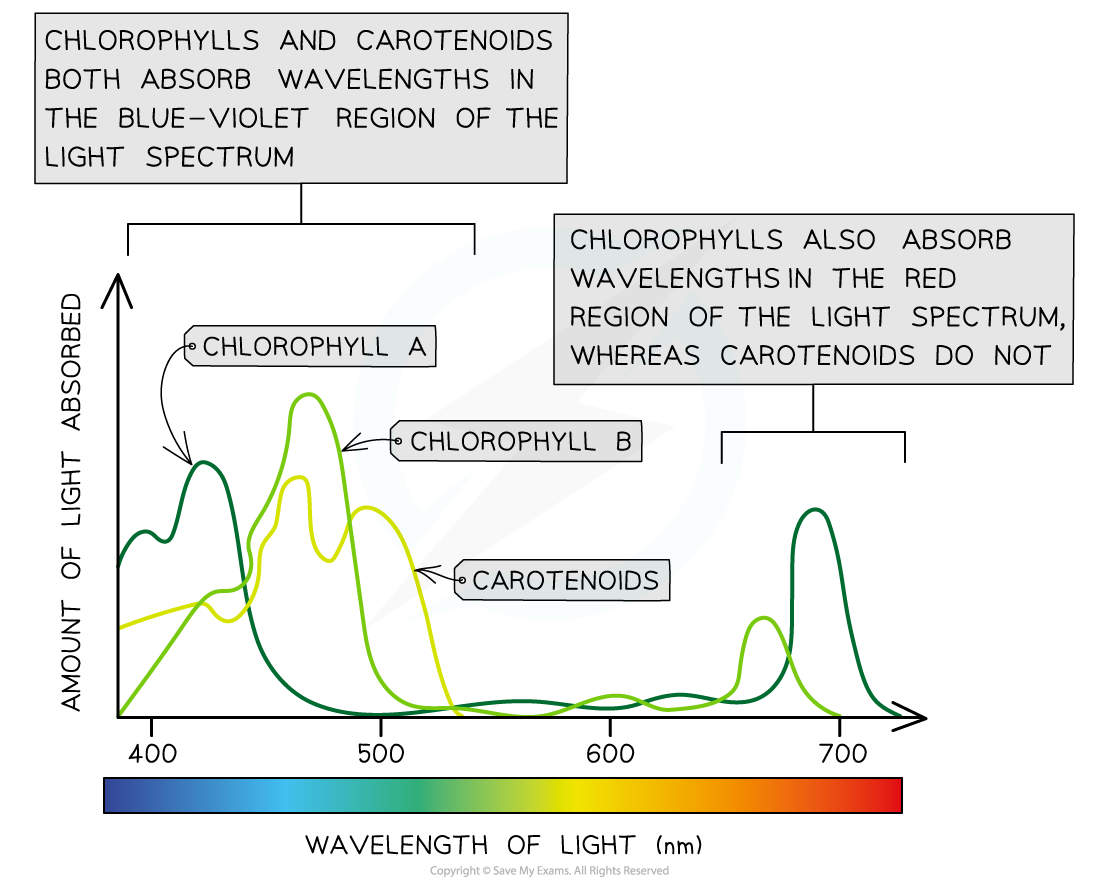
Different photosynthetic pigments absorb light of different wavelengths, giving different absorption spectra
-
A plant's rate of photosynthesis varies depending on the wavelengths of light available
-
The changing rate of photosynthesis at different wavelengths is known as an action spectrum
-
Action spectra are very closely correlated to the absorption spectra of the different pigments
- Having several different pigments with different absorption spectra allows plants to photosynthesise under a wider variety of light wavelengths; this extends the action spectra of plants and maximises rates of photosynthesis
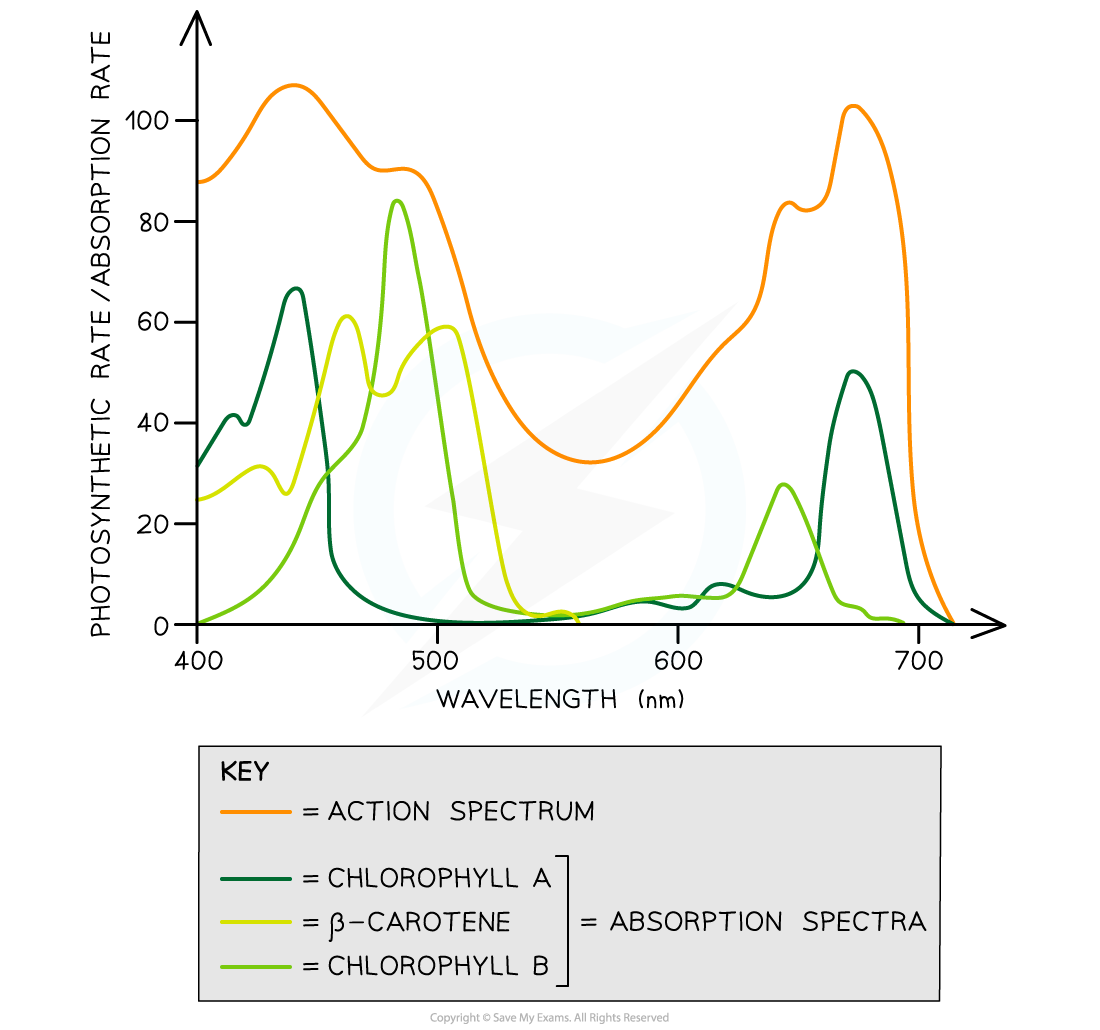
Plant action spectra are closely related to the absorption spectra of the different photosynthetic pigments
Was this revision note helpful?