Effects of Greenhouse Gases (Cambridge International IGCSE Science)
Spec point — Describe how the greenhouse gases carbon dioxide and methane cause global warming, limited to: the absorption, reflection and emission of thermal energy reducing thermal energy loss to space
Effects of greenhouse gases
Extended Tier Only
-
The Sun emits energy in the form of radiation that enters the Earth’s atmosphere
-
Some of this energy is reflected from the Earth's surface
-
The Earth’s surface absorbs energy and then re-emits it as thermal energy (infrared radiation)
-
Some energy passes through the atmosphere and is emitted into space
-
Greenhouse gases, such as carbon dioxide and methane, absorb some of the thermal energy
-
These greenhouse gases then re-emit thermal energy in all directions
-
This reduces the thermal energy lost to space and traps more thermal energy in the Earth’s atmosphere, keeping the Earth warm
- This process is known as the greenhouse effect
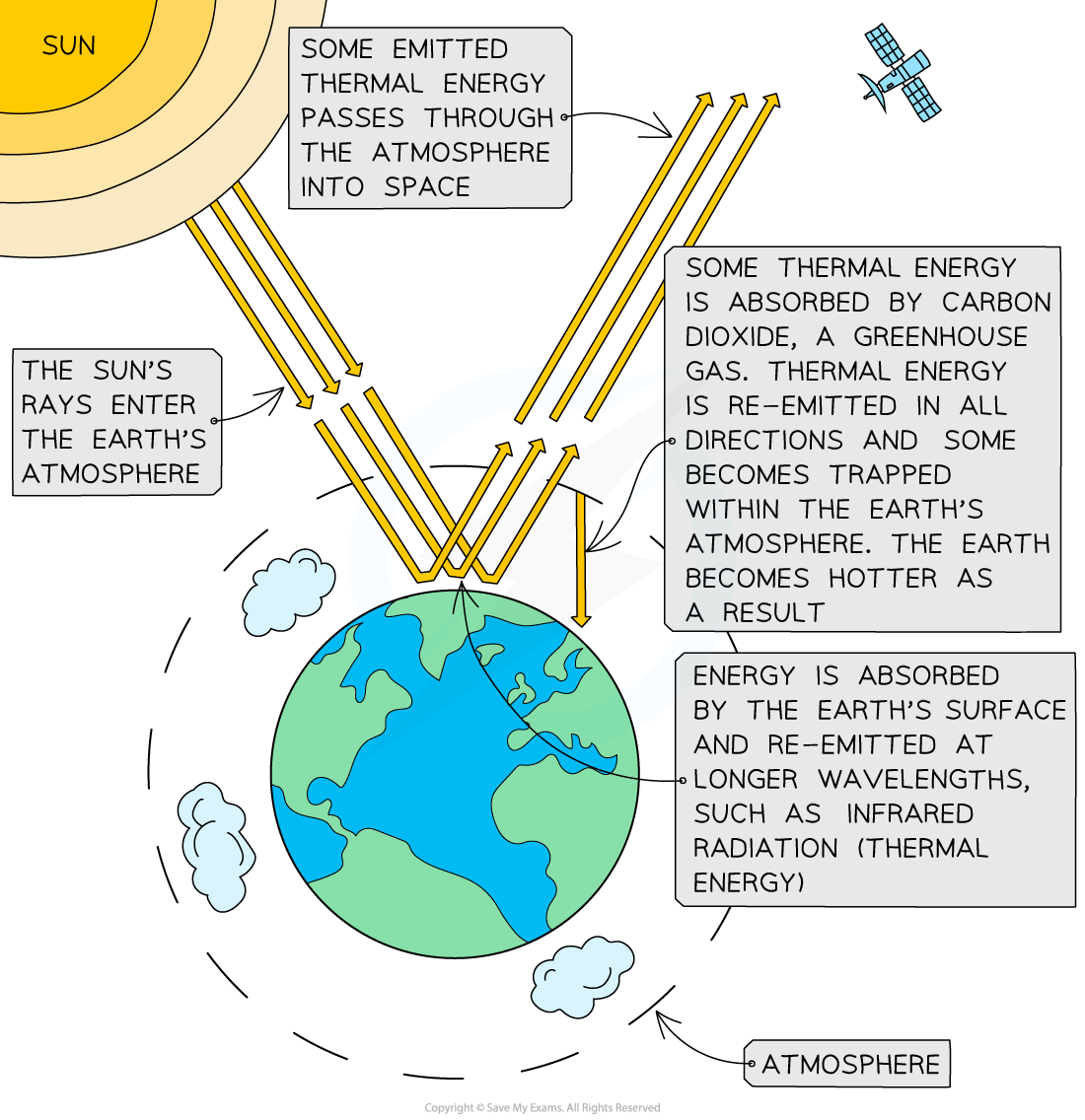
Diagram showing how the greenhouse effect occurs
-
As the concentration of greenhouse gases in the atmosphere increases due to human activity, more thermal energy is trapped
-
This causes the Earth’s average temperature to rise, which is called global warming
- This process is called the enhanced greenhouse effect
Consequences of global warming
- Climate change due to the increase in Earth’s temperature
- Water levels will rise as glaciers melt because of high temperatures, causing flooding in low-lying countries
- Extinction of species due to the destruction of natural habitats
- Migration of species as they will move to areas that are more habitable (no droughts)
- Spread of diseases caused by warmer climate
- Loss of habitat due to climate change (animals that live on glaciers or in low-lying countries)
Was this revision note helpful?
Build on this topic