Fossil Fuels (Cambridge International IGCSE Science)
Common fossil fuels
-
A fuel is a substance which when burned, releases heat energy
-
This can be transferred into electricity, which we use in our daily lives
-
The main fossil fuels are:
- Coal
- Natural gas
- Petroleum
-
Methane, CH4, is the main constituent of natural gas and is a hydrocarbon
- Hydrocarbons are made from hydrogen and carbon atoms only
Fractional Distillation
Petroleum & fractional distillation
Petroleum
- Petroleum is also called crude oil
- It is a mixture of hydrocarbons
- It is a thick, sticky, black liquid that is found under porous rock (under the ground and under the sea)
The location of crude oil
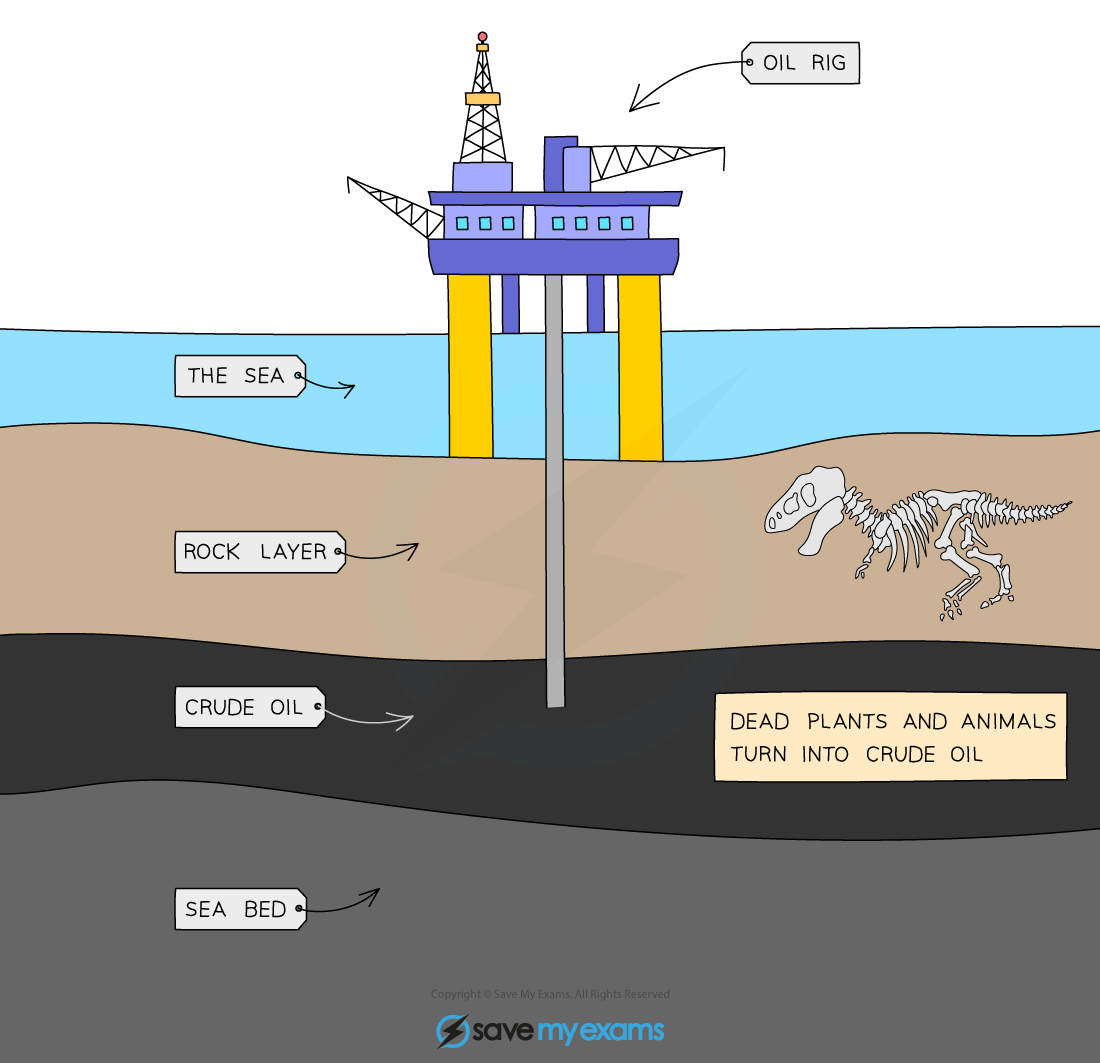
Crude oil is located under the sea
-
Petroleum itself as a mixture is not very useful
- However, the mixture can be separated into useful parts called fractions
- Each fraction has different uses
Fractional distillation
-
Each fraction consists of groups of hydrocarbons with similar chain lengths
-
The fractions in petroleum are separated from each other in a process called fractional distillation
-
Fractional distillation separates fractions according to their boiling points
-
Fractional distillation is carried out in a fractionating column which has a temperature gradient
- It is very hot at the bottom of the column and cooler at the top
-
During fractional distillation:
- The crude oil is heated and vapourises
- The vapours enter the fractionating column
- Hydrocarbons with high boiling points condense near the bottom of the column
- Hydrocarbons with lower boiling points rise up the column and condense higher up
Diagram to show fractional distillation
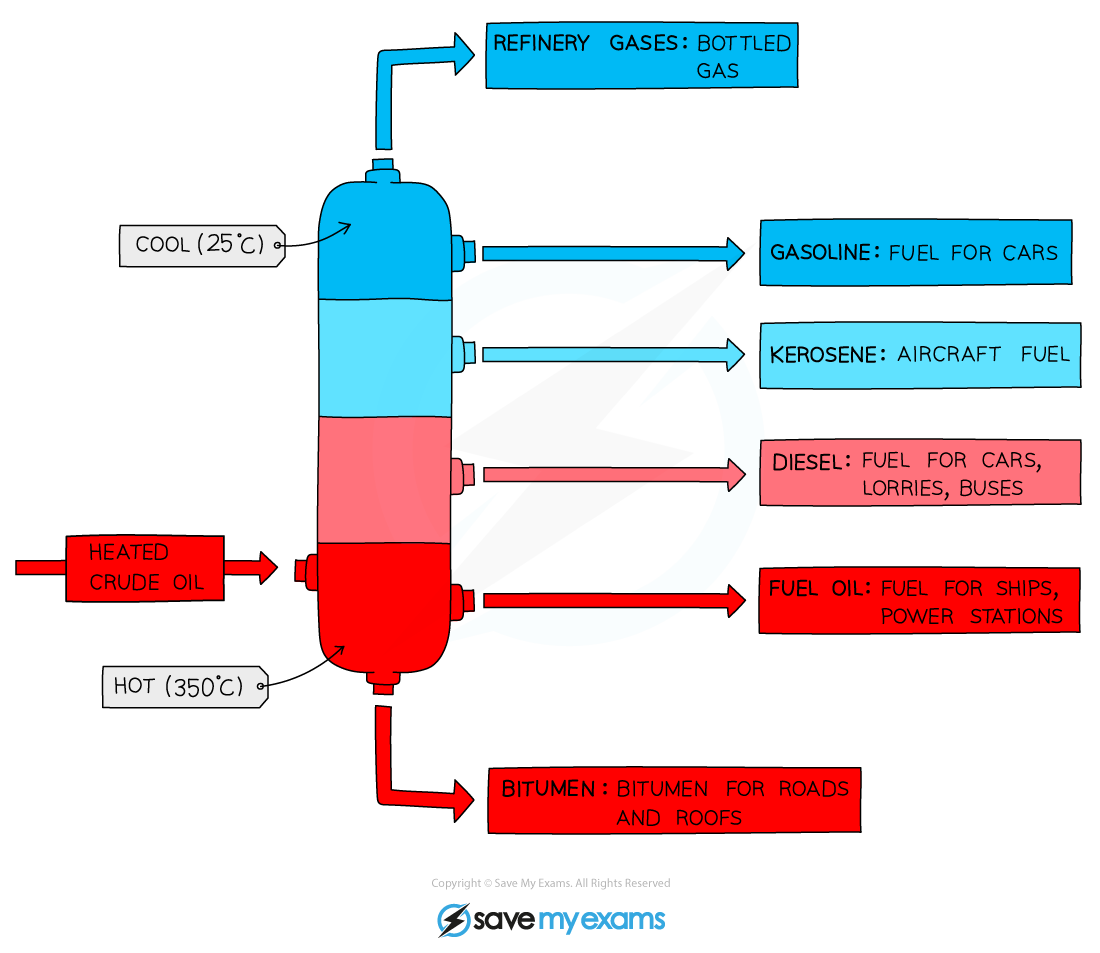
The process separates the fractions according to their boiling point
Uses of Fractions
- Refinery gas: heating and cooking
- Gasoline: fuel for cars (petrol)
- Naphtha: raw product for producing chemicals
- Diesel: fuel for diesel engines (gas oil)
- Bitumen: for surfacing roads
Properties of fractions
Extended tier only
-
From the bottom to the top of the fractionating column:
- Chain length decreases
- Boiling points decrease
-
Melting point/boiling point
- As the molecules get larger, the forces between molecules get stronger
- So, more heat is needed to separate the molecules
- Going down the column, the boiling points of the fractions increase
Table to show the trends in properties
| Fraction | Chain length (relative) | Boiling point (relative) |
|---|---|---|
| Refinery gas | Shortest | Lowest |
| Gasoline / petrol | Short | Low |
| Naptha | Medium | Medium |
| Diesel / gas oil | Long | High |
| Bitumen | Longest | Highest |
Exam Hint You must be able to recall a use for each fraction as well describe the trends in properties.
Was this revision note helpful?
Build on this topic