Comparing Acids & Alkalis (Cambridge International IGCSE Science)
Hydrogen ion concentration & pH
Spec point — Describe how to compare hydrogen ion concentration, neutrality, relative acidity and relative alkalinity in terms of colour and pH using universal indicator paper
The pH scale and universal indicator
What is the pH scale?
-
The pH scale goes from 1 – 14
-
All acids have pH values of below 7, all alkalis have pH values of above 7
-
The lower the pH then the more acidic the solution is:
-
pH 0-2 = strong acid
- Extremely acidic substances can have values of below 1
-
pH 3-6 = weak acid
-
-
The higher the pH then the more alkaline the solution is:
- pH 8-11 = weak alkali
- pH 12-14 = strong alkali
-
A solution of pH 7 is described as being neutral
The pH scale
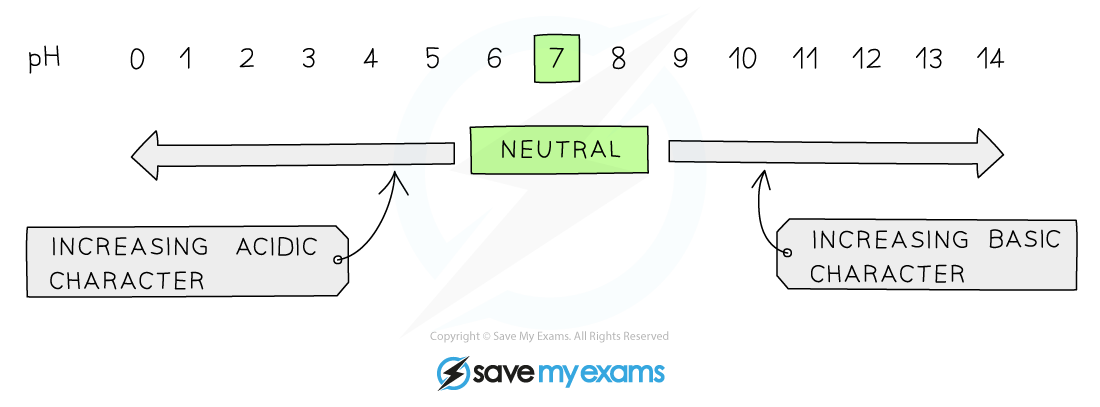
The pH scale showing acidity, neutrality and alkalinity
How is universal indicator paper used?
-
Universal indicator paper is used to measure the pH
-
A small strip of universal indicator paper is dipped into the solution
-
The colour is matched with a colour chart which indicates the pH which matches specific colours
-
The colour and pH can be used to compare solutions:
-
Neutral solutions give a green colour (pH 7)
-
The more acidic the solution:
- The lower the pH
- The colour moves towards red/orange/yellow
-
The more alkaline the solution:
- The higher the pH
- The colour moves towards blue/purple
-
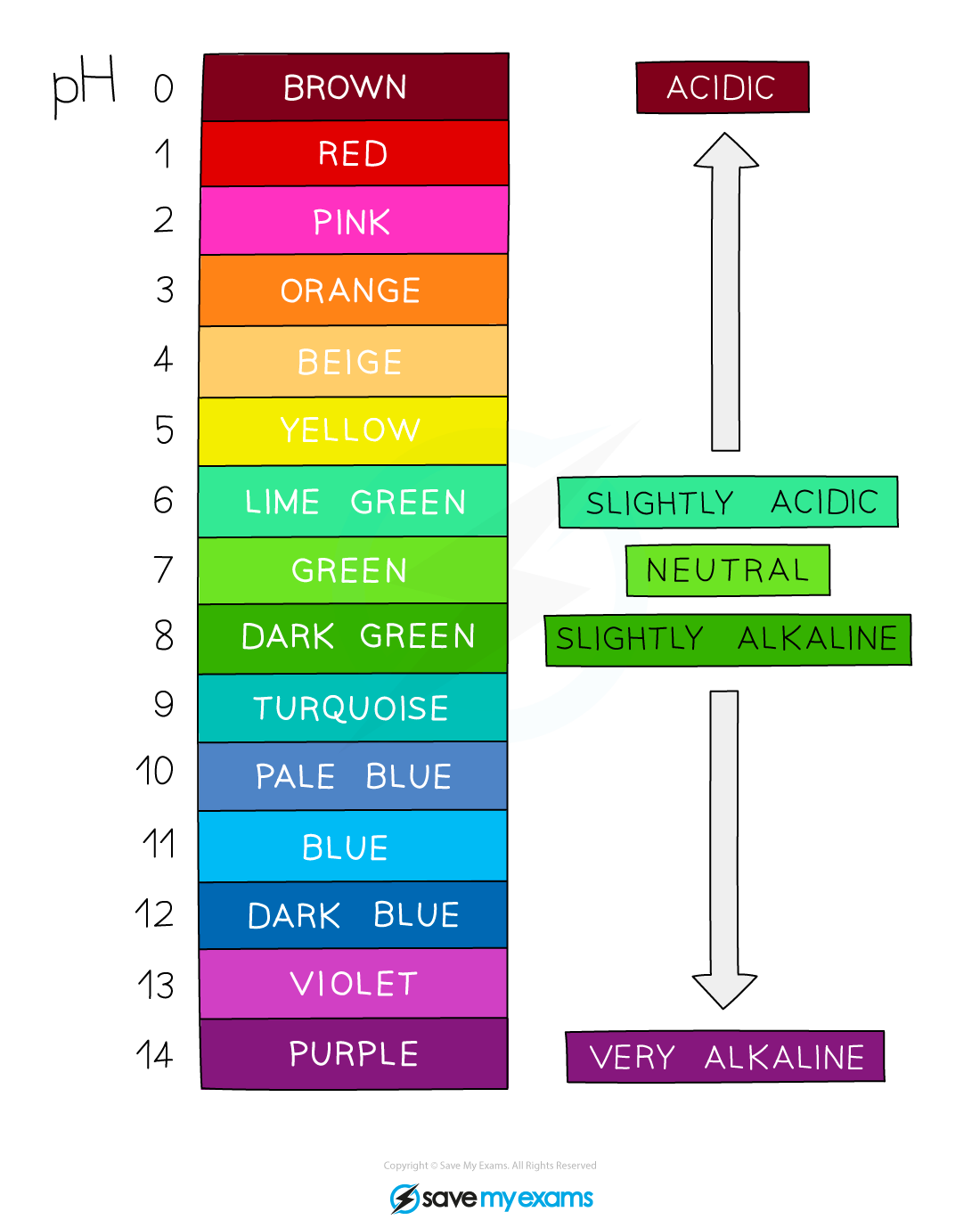
The pH scale with the Universal Indicator colours which can be used to determine the pH of a solution
Was this revision note helpful?
Build on this topic