Addition Reactions (Cambridge International IGCSE Science)
Spec point — State that in an addition reaction only one product is formed Describe the properties of alkenes in terms of addition reactions with: bromine or aqueous bromine hydrogen in the presence of a nickel catalyst steam in the presence of an acid catalyst and draw the structural or displayed formulae of the products
Addition reactions
Extended tier only
-
Alkenes undergo addition reactions, where atoms from a small molecule add across the C=C double bond
-
In an addition reaction:
- The C=C bond breaks
- New single bonds form
- Only one product is formed
Alkenes and bromine
-
The reaction between an alkene and bromine is an addition reaction.
- Bromine atoms add across the C=C double bond
- A saturated compound is formed
-
Aqueous bromine is orange and is used as a test for alkenes.
- When bromine water is added to an alkene, it is decolourised (orange → colourless)
- This happens because bromine reacts with the C=C bond and is no longer in solution
-
Example:
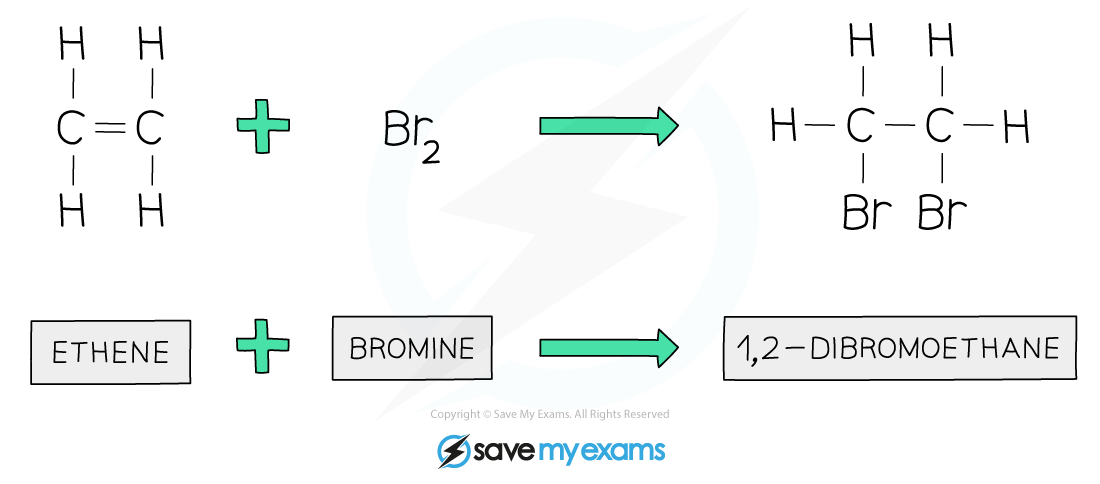
Bromine atoms add across the C=C in the addition reaction of ethene and bromine
Alkenes and hydrogen
-
When alkenes react with hydrogen, an alkane is formed
- This is an addition reaction
- A nickel catalyst is required
-
Examples:
- Ethene + hydrogen → ethane
- Propene + hydrogen → propane
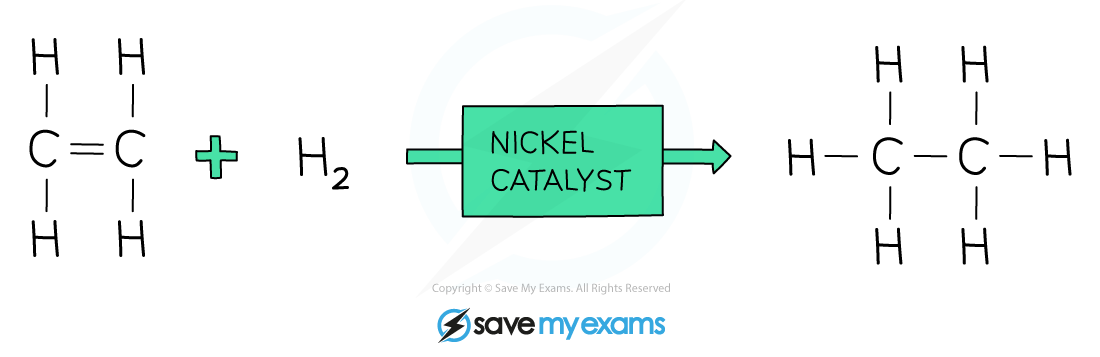
Hydrogen atoms add across the C=C in the addition reaction of ethene and hydrogen
Alkenes and steam
-
When alkenes react with steam, an alcohol is formed
- This is an addition reaction
- It is also called a hydration reaction
- An acid catalyst is required
-
Examples:
- Ethene + steam → ethanol
- Propene + steam → propanol
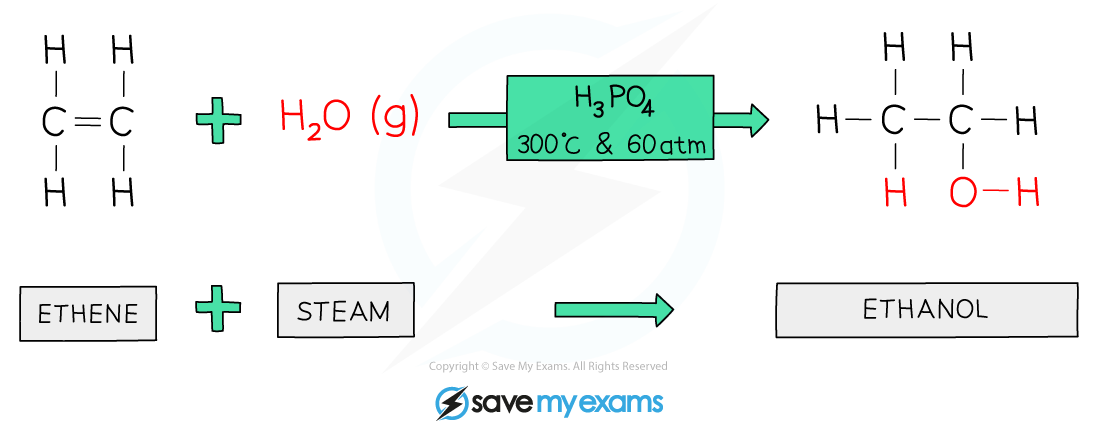
A water molecule adds across the C=C in the addition reaction (hydration) of ethene with water to produce ethanol
Was this revision note helpful?
Build on this topic