Molecules & Compounds (Cambridge International IGCSE Science)
Covalent bonds in complex covalent molecules
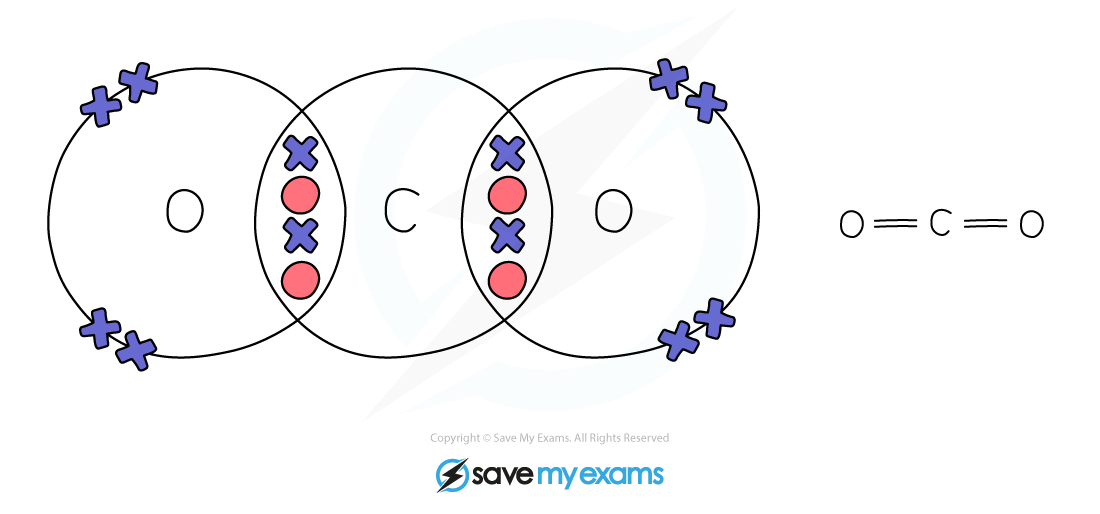
Spec point — Describe the formation of covalent bonds in simple molecules, including CH3OH, C2H4, O2, CO2 and N2. Use dot-and-cross diagrams to show the electronic configurations in these and similar molecules
Extended Tier Only
- Some atoms need to share more than one pair of electrons to gain a full outer shell of electrons
- If two adjacent atoms share two pairs of electrons, two covalent bonds are formed, also known as a double bond
- If two adjacent atoms share three pairs of electrons, three covalent bonds are formed, also known as a triple bond
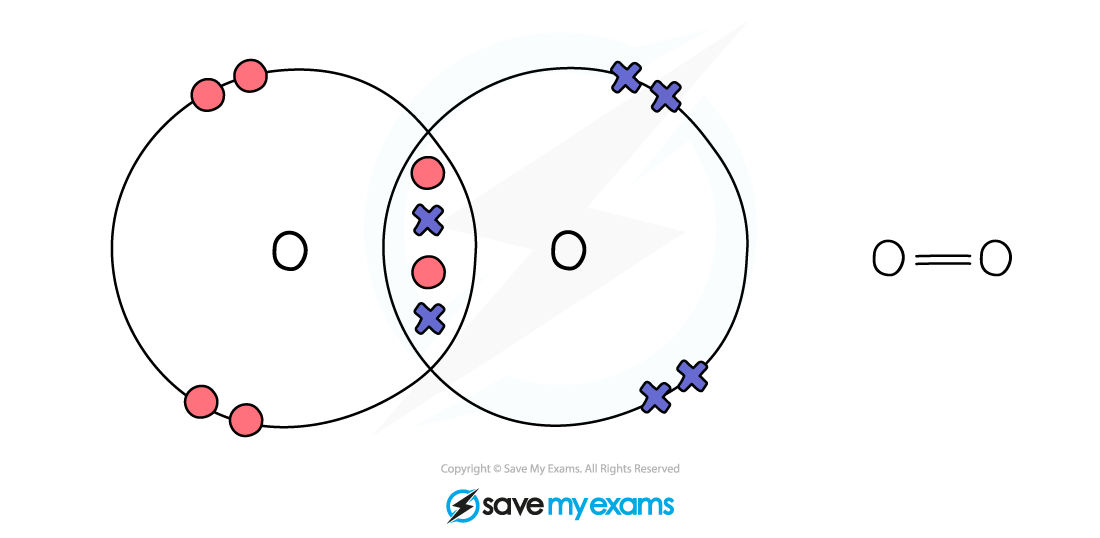
Oxygen:
When 2 oxygen atoms react, they share 2 pairs of electrons to form a double bond
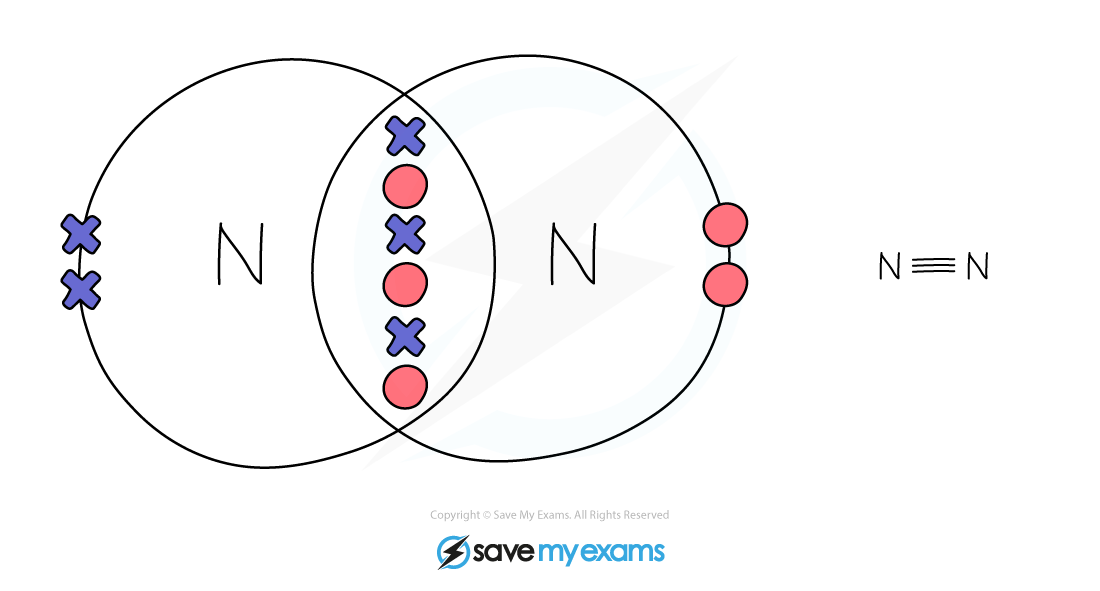
Nitrogen:
- When 2 nitrogen atoms react, they share 3 pairs of electrons to form a triple bond
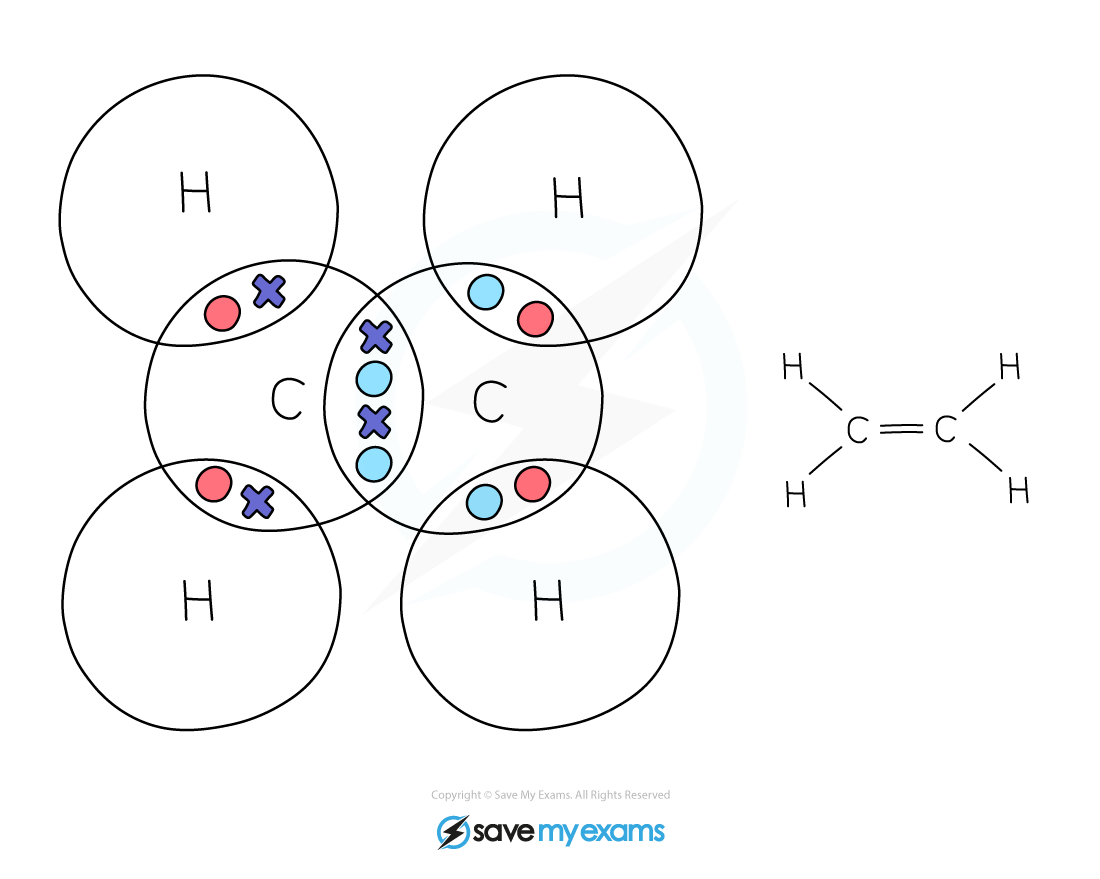
Ethene:
- In ethene, the 2 carbon atoms share 2 pairs of electrons
- This is known as a double bond
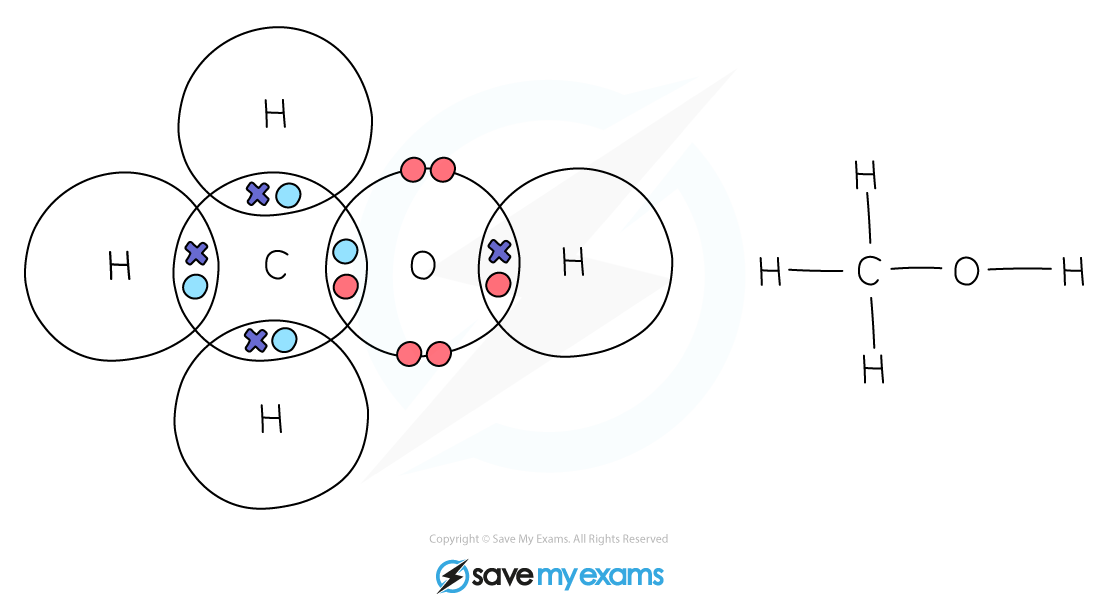
Methanol:
Carbon Dioxide:
Exam Hint Be careful when drawing dot-and-cross diagrams, it is a common mistake for students to draw the wrong type of diagram.
Remember, if the compound contains metal and non-metal, it is an ionic compound and you need to draw the ions separated, with square brackets around each ion, together with a charge.
If the compound contains non-metal atoms only, it is a covalent compound, the shells should overlap and contain one or more pairs of electrons.
Was this revision note helpful?
Build on this topic