Drugs for Medicine (Cambridge International IGCSE Science)
What is a Drug?
- A drug can be defined as:
A substance taken into the body that modifies or affects chemical reactions in the body
-
Some drugs are medicinal drugs that are used to treat the symptoms or causes of a disease, e.g.
- Painkillers
- Antibiotics
Antibiotics
-
Antibiotics are chemical substances that can kill bacterial cells, meaning that they are useful in the treatment of bacterial infections
- Antibiotics target processes and structures that are specific to bacterial cells so they do not harm animal cells
-
Antibiotics kill bacteria but have no effect on viruses, so they are never used in the treatment of viral infections
-
It is possible for bacteria to develop antibiotic resistance, meaning that exposure to an antibiotic will not kill the resistant bacteria
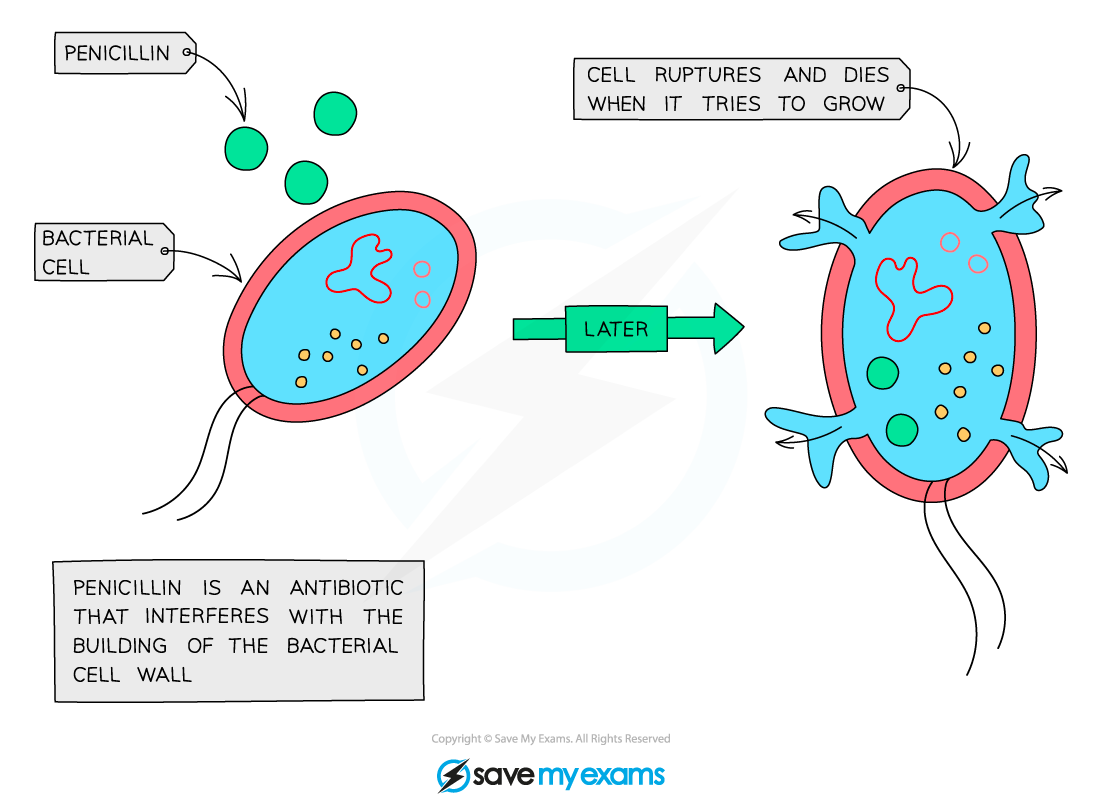
Antibiotics kill bacterial cells, e.g. by damaging bacterial cell walls
Antibiotic Resistance & Use: Extended
Extended Tier Only
-
Antibiotic resistance only becomes widespread among bacterial populations when bacteria come into contact with an antibiotic
- This is because contact causes non-resistant bacteria to be killed while the resistant individuals will survive and reproduce
-
This means that reducing antibiotic use can reduce the spread of resistance in bacteria
- Doctors will only prescribe antibiotics when they are essential
- Antibiotics are never prescribed for viral infections
-
Reducing antibiotic use is one strategy in the fight against antibiotic resistant strains of bacteria such as MRSA
- MRSA = methicillin resistant Staphylococcus aureus
Development of antibiotic resistance diagram
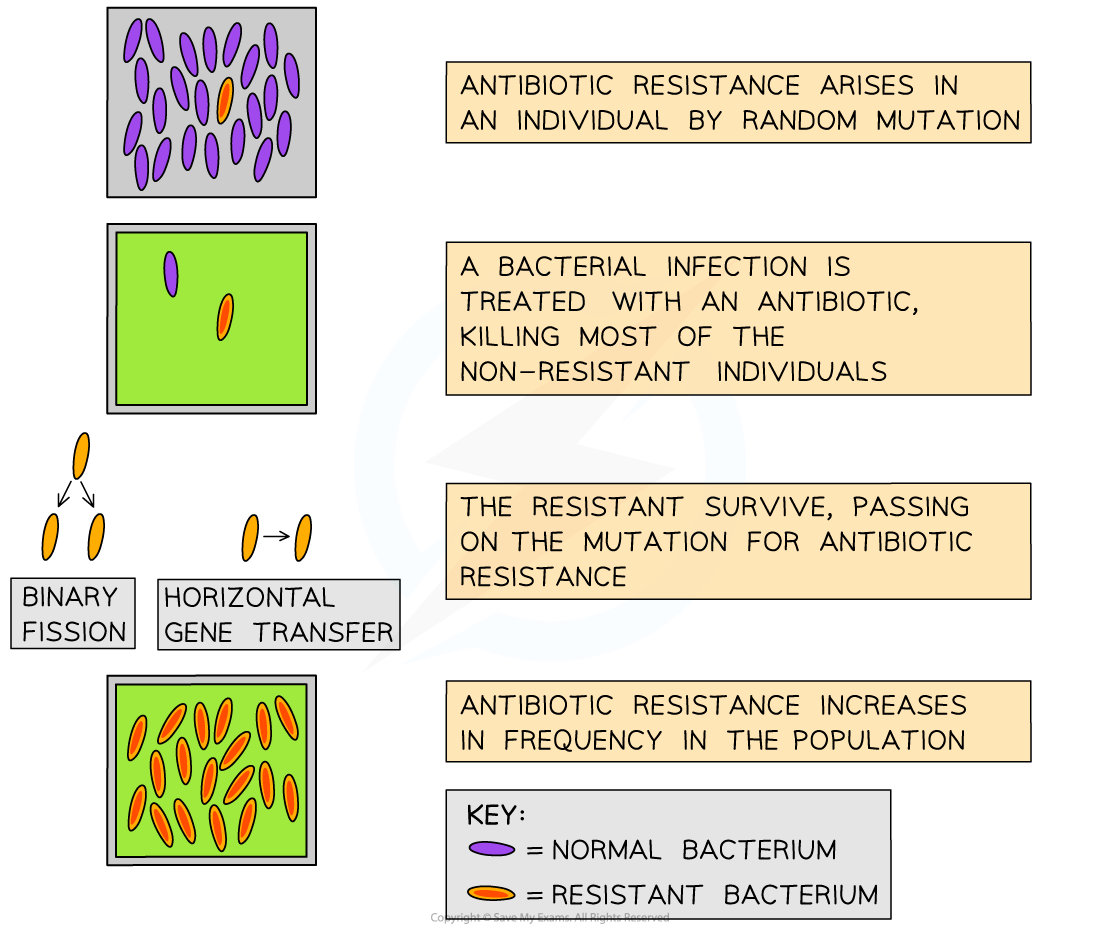
Exposure to antibiotics increases the likelihood that resistance will become widespread in a bacterial population; this means that decreasing antibiotic use will limit the development of resistant strains such as MRSA
Was this revision note helpful?
Build on this topic