Cell Structure (Cambridge International IGCSE Science)
Animal & Plant Cells
Animal cells
-
Animal cells have the following structural features:
- A cell membrane that separates them from their surroundings
- A gel-like liquid known as cytoplasm
- A nucleus
- Mitochondria (singular mitochondrion)
- Many tiny ribosomes
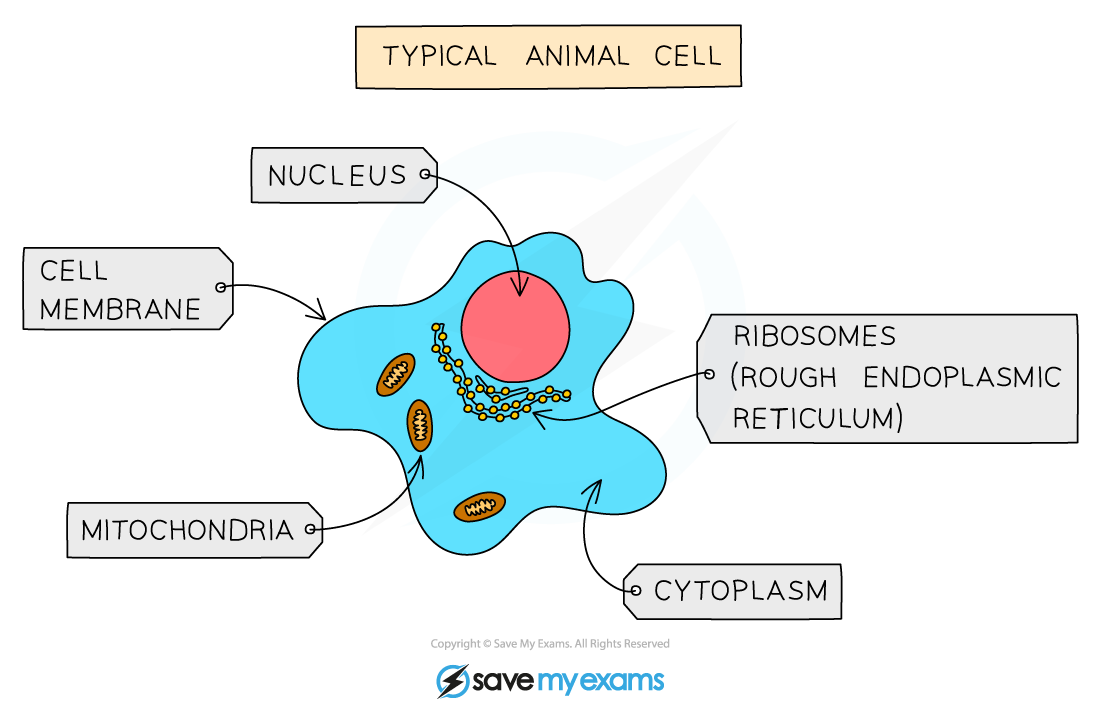
Animal cells have a cell membrane, cytoplasm, nucleus, mitochondria and ribosomes
Plant cells
-
Plant cells share the features of animal cells, so they contain:
- Cell membrane
- Cytoplasm
- Nucleus
- Mitochondria
- Ribosomes
-
Plant cells also have some structural features that are not present in animal cells:
- A cell wall made of cellulose
- Large structures called chloroplasts that contain the green pigment chlorophyll
- A permanent vacuole
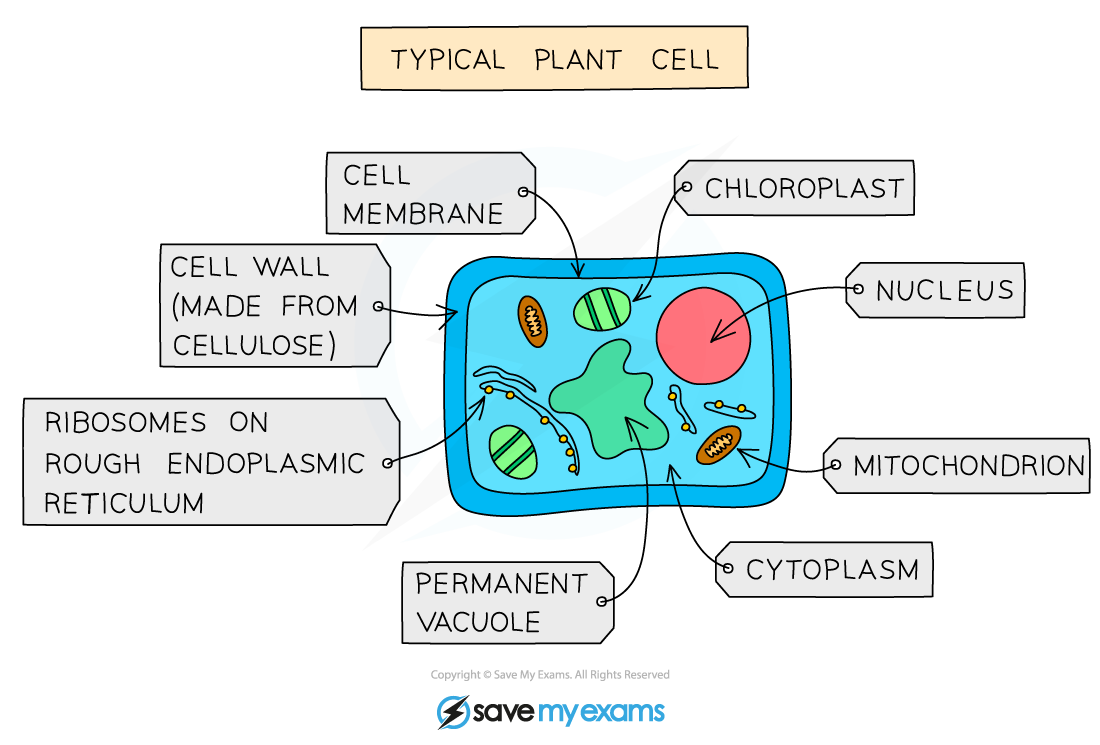
Plant cells have all of the features found in animal cells, as well as a cellulose cell wall, chloroplasts and a permanent vacuole
Comparing animal and plant cell structures
| Structure | Animal / plant cells |
|---|---|
| Cell membrane | Both |
| Cytoplasm | Both |
| Nucleus | Both |
| Mitochondria | Both |
| Ribosomes | Both |
| Cellulose cell wall | Plant only |
| Chloroplasts | Plant only |
| Permanent vacuole | Plant only |
Comparing animal and plant cell structure diagram
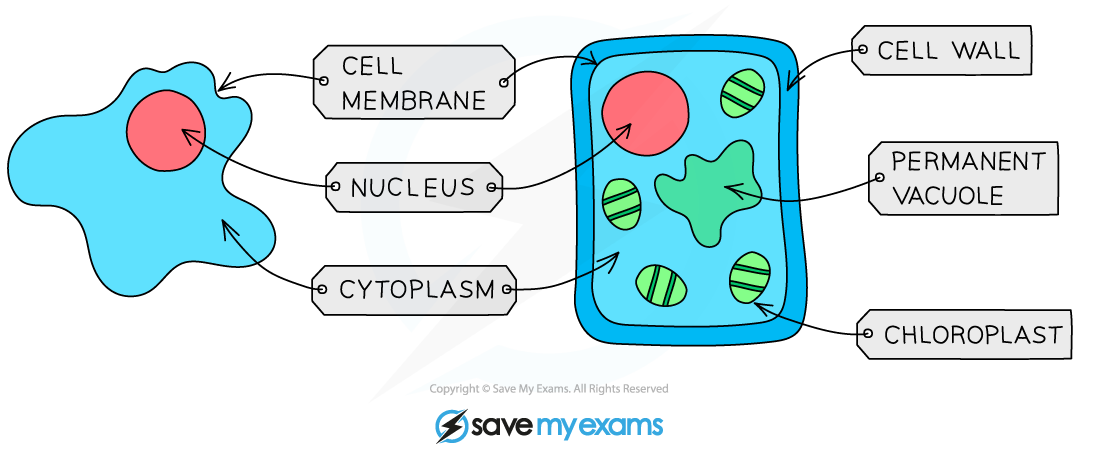
Animal and plant cells have some features in common, while other features are found only in plant cells
Bacteria Cells
-
Bacteria are microscopic, single-celled organisms
-
They have a cell structure that is distinct from that of animals and plants:
-
Features of bacterial cells include:
- Bacterial cells contain a cell membrane, and have cytoplasm and ribosomes
- Bacterial cells have cell walls made of a chemical called peptidoglycan; this is different to the cellulose cell walls of plants
- The DNA of bacteria is circular
- Some bacteria have small loops of DNA known as plasmids
-
Bacteria lack some features that are present in animal and plant cells:
-
They do not contain internal membranes, so they lack:
- A nucleus
- Mitochondria
- Chloroplasts
-
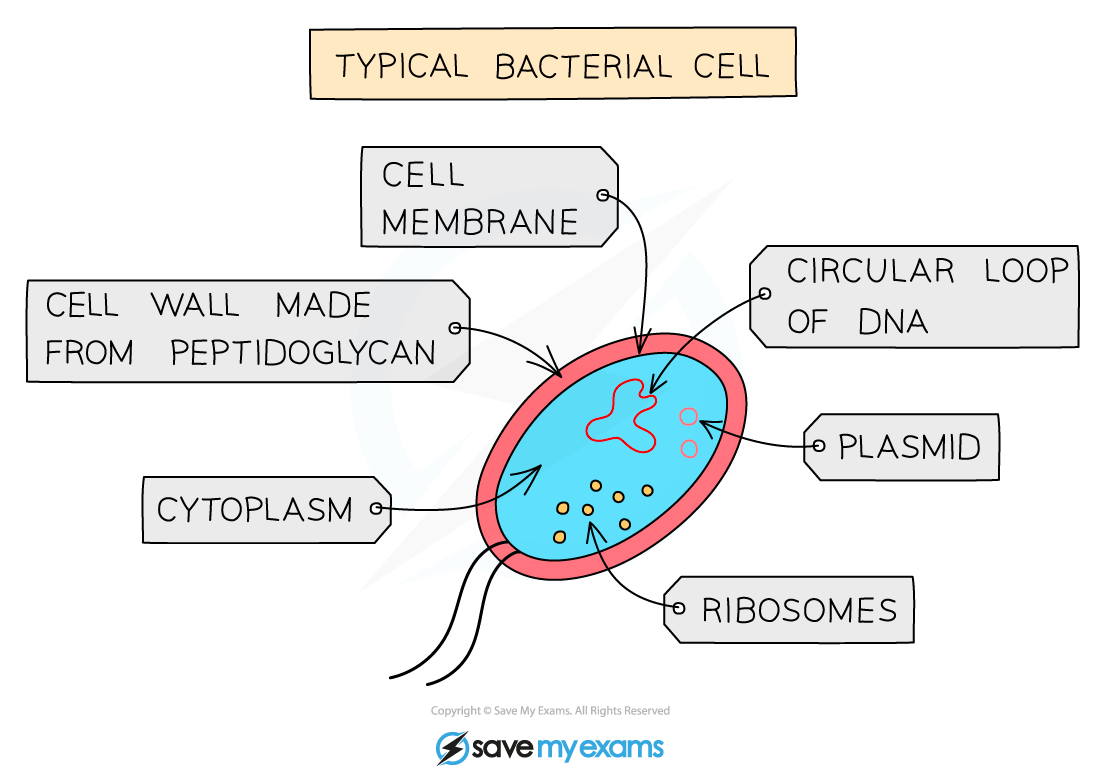
Bacteria have a cell wall, cell membrane, cytoplasm, ribosomes, circular DNA and, in some cases, plasmids
Identifying Cell Structures & Function
Identifying cellular structures
-
It is possible to identify cellular features in diagrams and when looking at microscope images
-
The structures that are visible depend on the magnification at which a cell is being viewed, e.g.
-
Under a light microscope structures are viewed at a relatively low magnification, so it is possible to view:
- Nucleus
- Chloroplasts
- The position of the cytoplasm, cell membrane and cell walls, but no details of these structures
-
Under an electron microscope much higher magnification can be achieved, so it is possible to view:
- Mitochondria
- Ribosomes
- Details of structures, e.g. cell walls and chloroplasts
-
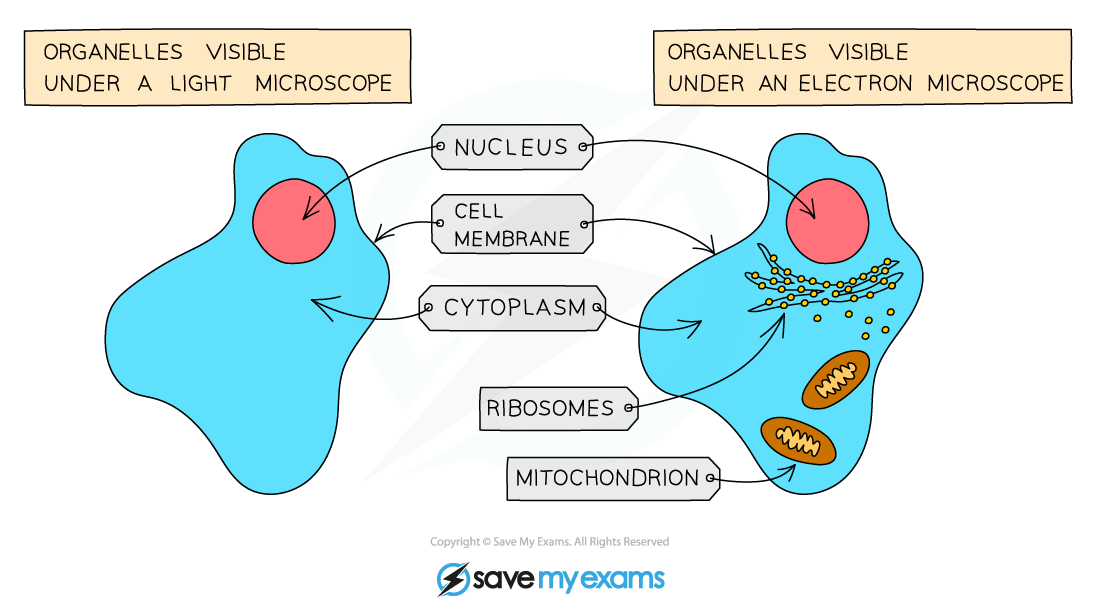
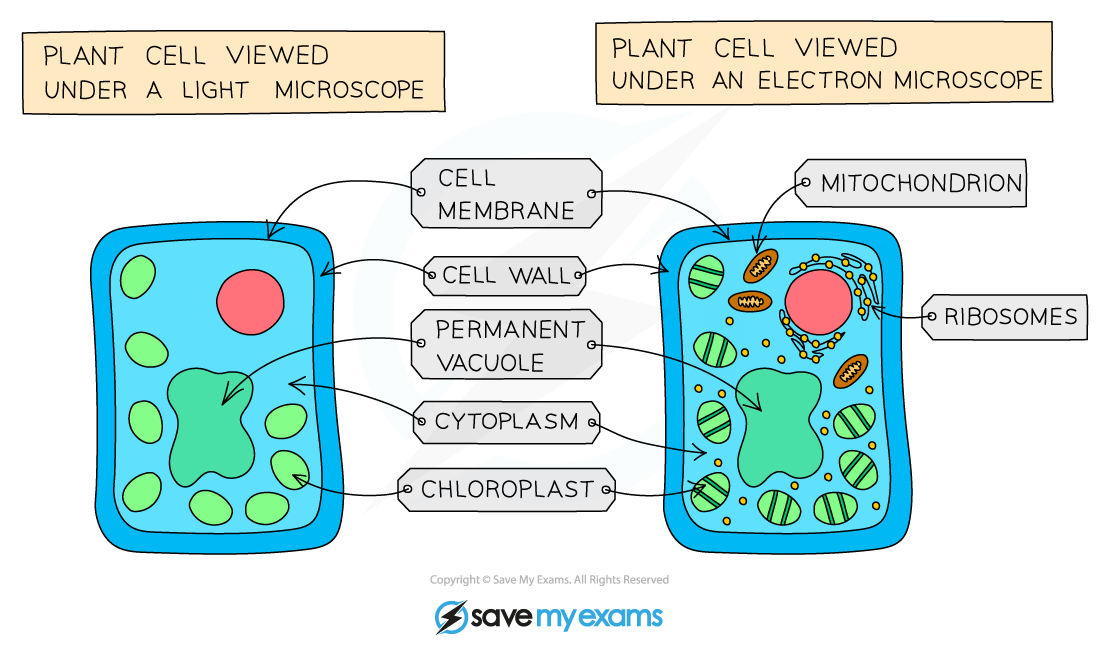
The structures visible in animal and plant cells will differ depending on the type of microscope used
Functions of cellular structures
| Structure | Cell type | Function |
|---|---|---|
| Cell membrane | Animal Plant Bacteria | Separates the cell contents from the external environment Controls passage of substances into and out of the cell |
| Cytoplasm | Animal Plant Bacteria | Gel-like liquid within which the chemical reactions of the cell occur Provides some structural support to the cell |
| Nucleus | Animal Plant | Contains the genetic material of the cell in the form of DNA |
| Mitochondria | Animal Plant | Site of aerobic respiration, releasing energy for cell activities |
| Ribosomes | Animal Plant Bacteria | Site of protein production, also known as protein synthesis |
| Cellulose cell wall | Plant | Provides structural support to the cell, giving plant cells a rigid shape |
| Chloroplasts | Plant | Contain chlorophyll and absorb light energy for photosynthesis |
| Permanent vacuole | Plant | Storage of cell sap; this is a solution that contains sugars and salts dissolved in water When full of cell sap the vacuole provides additional support to the cell |
| Circular DNA | Bacteria | Contains the genetic material of the cell |
| Plasmids | Bacteria | Carry a small number of genes Can be passed from one cell to another easily |
| Peptidoglycan cell wall | Bacteria | Provides structural support to the cell, giving bacterial cells their shape |
Was this revision note helpful?
Build on this topic