Homeostasis (Cambridge International IGCSE Science)
Defining Homeostasis: Extended
Extended Tier Only
- Homeostasis is defined as the maintenance of a constant internal environment
The Concept of Negative Feedback: Extended
Extended Tier Only
-
Negative feedback occurs when conditions change from the ideal or set point and returns conditions to this set point
-
It works in the following way:
- if the level of something rises, control systems are switched on to reduce it again
- if the level of something falls, control systems are switched on to raise it again
-
Negative feedback mechanisms are usually a continuous cycle of bringing levels down and then bringing them back up so that overall, they stay within a narrow range of what is considered ‘normal’
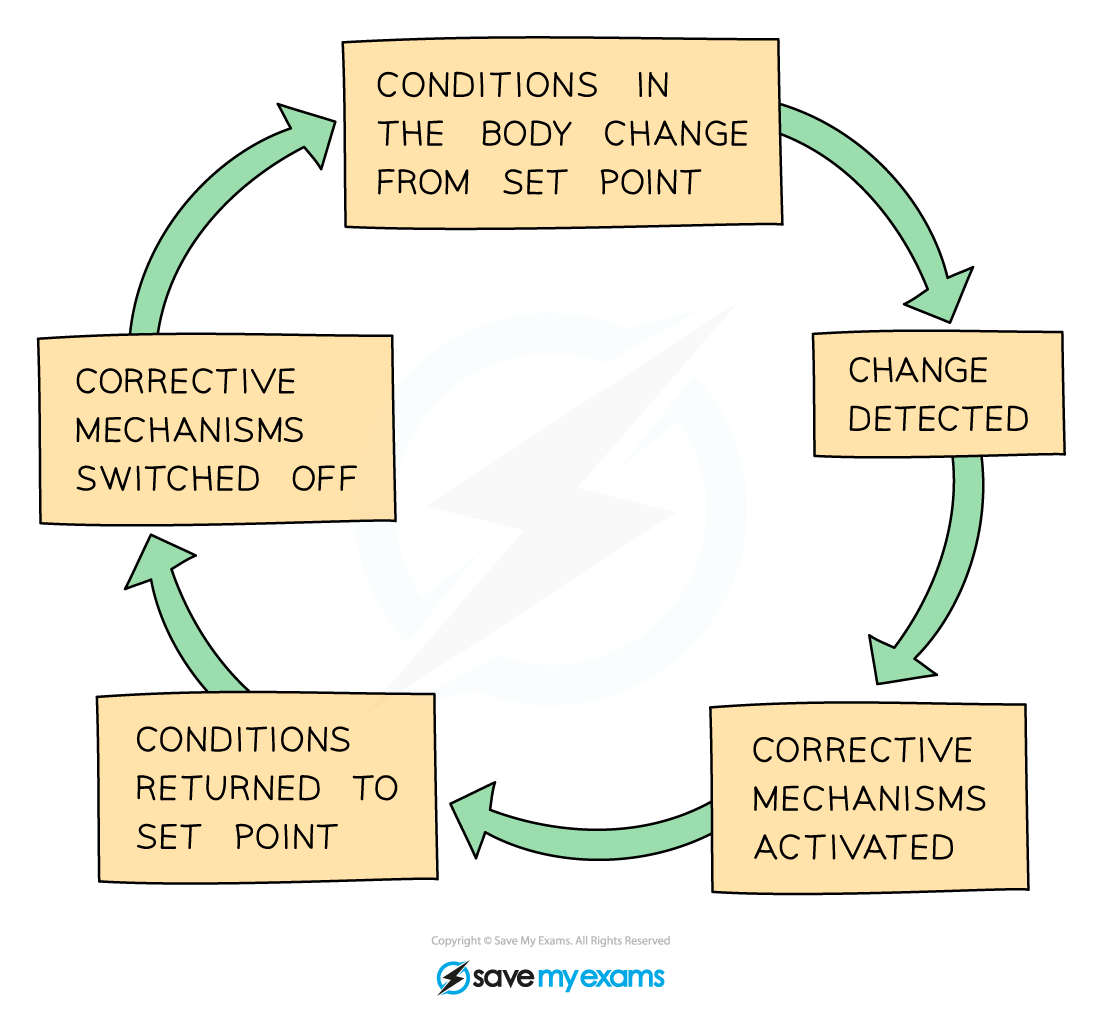
The negative feedback cycle
Blood Glucose Control: Extended
Extended Tier Only
- Blood glucose levels are controlled by a negative feedback mechanism involving the production of two hormones - insulin and glucagon
- Both hormones which control blood glucose concentration are made in the pancreas
If the blood glucose concentration gets too low
- Cells in the pancreas detect the decreased blood glucose levels
- The pancreas produces the hormone glucagon and secretes it into the blood
- Glucagon causes the glycogen stored in the liver to be converted into **glucose **and released into the blood
- This** increases** the concentration of glucose in the blood back to normal levels, at which point the pancreas stops secreting glucagon
If the blood glucose concentration gets too high
- Cells in the pancreas detect the increased blood glucose levels
- The pancreas produces the hormone insulin, secreting it into the blood
- Insulin stimulates muscles and the liver to take up glucose from the bloodstream and store it as glycogen (a polymer of glucose)
- This reduces the concentration of glucose in the blood back to normal levels, at which point the pancreas stops secreting insulin
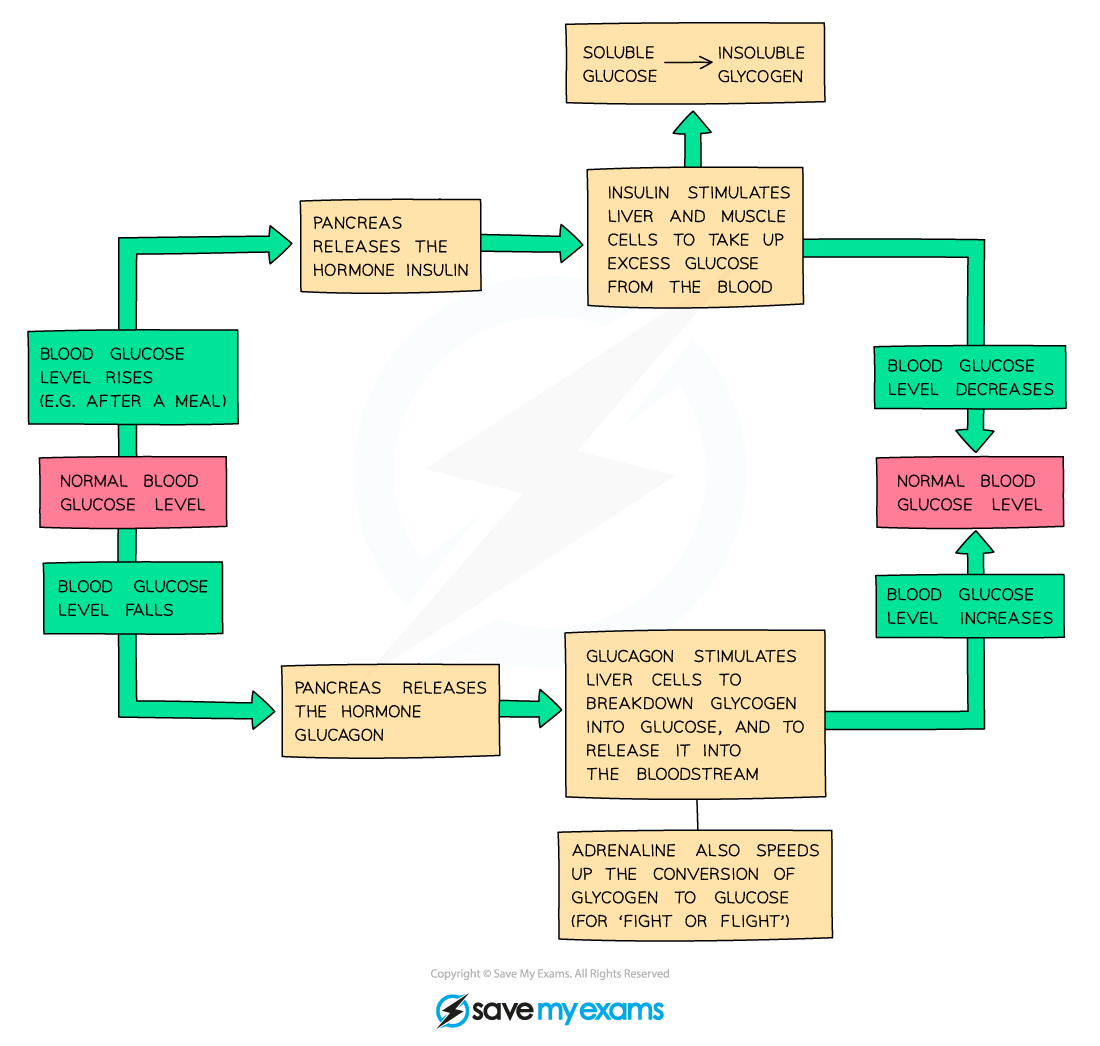
Negative feedback regulation of blood glucose levels
Exam Hint The terms glucagon and glycogen are very often mixed up by students as they sound similar. Remember:
- Glucagon is the hormone
- Glycogen is the polysaccharide glucose is stored as
Learn the differences between the spellings and what each one does so you do not get confused in the exam!
Was this revision note helpful?
Build on this topic