The Importance of Biodiversity (Cambridge International IGCSE Science)
Exam board Cambridge International · IGCSEUpdated 2026-07-02
What is an Ecosystem?
- An ecosystem is defined as a unit containing the community of organisms and their environment, interacting together(e.g. a decomposing log, a lake)
Human Pressures on Other Species
Biodiversity
- Is defined as the number of different species that live in a particular area
- Human activities have tended to force biodiversity downwards, whereas, high biodiversity is needed for stable ecosystems
- Habitat destruction by humans is a major downward pressure on biodiversity
Reasons for Habitat Destruction
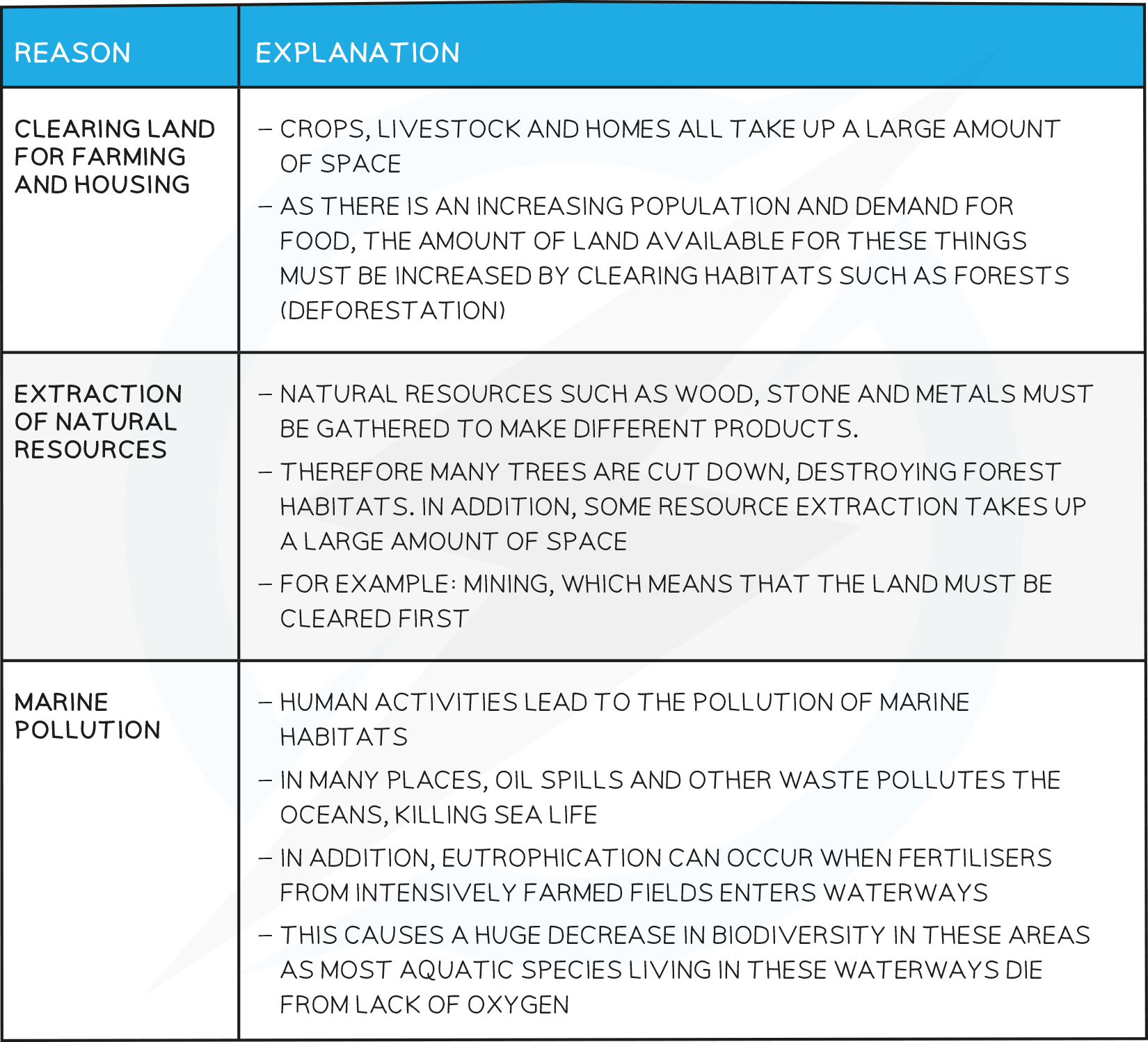
- The increasing human population of the planet is causing destruction of many habitats from rainforest to woodland to marine
- Many habitats are destroyed by humans to make space for other economic activities, or by pollution from these activities, and this reduces the biodiversity of these areas
- This interrupts food chains and webs, meaning that more species may die because their prey is gone
- The main reasons for habitat destruction include:
Deforestation
-
Deforestation is the clearing of trees (usually on a large scale)
-
If trees are replaced by replanting it can be a sustainable practise
-
Generally the trees are being cleared for the land to be used in a different way (for building, grazing for cattle, planting of monocultures such as palm oil plantations etc) and therefore it is not sustainable
-
As the amount of the Earth’s surface covered by trees decreases, it causes increasingly negative effects on the environment and is a particularly severe example of habitat destruction
-
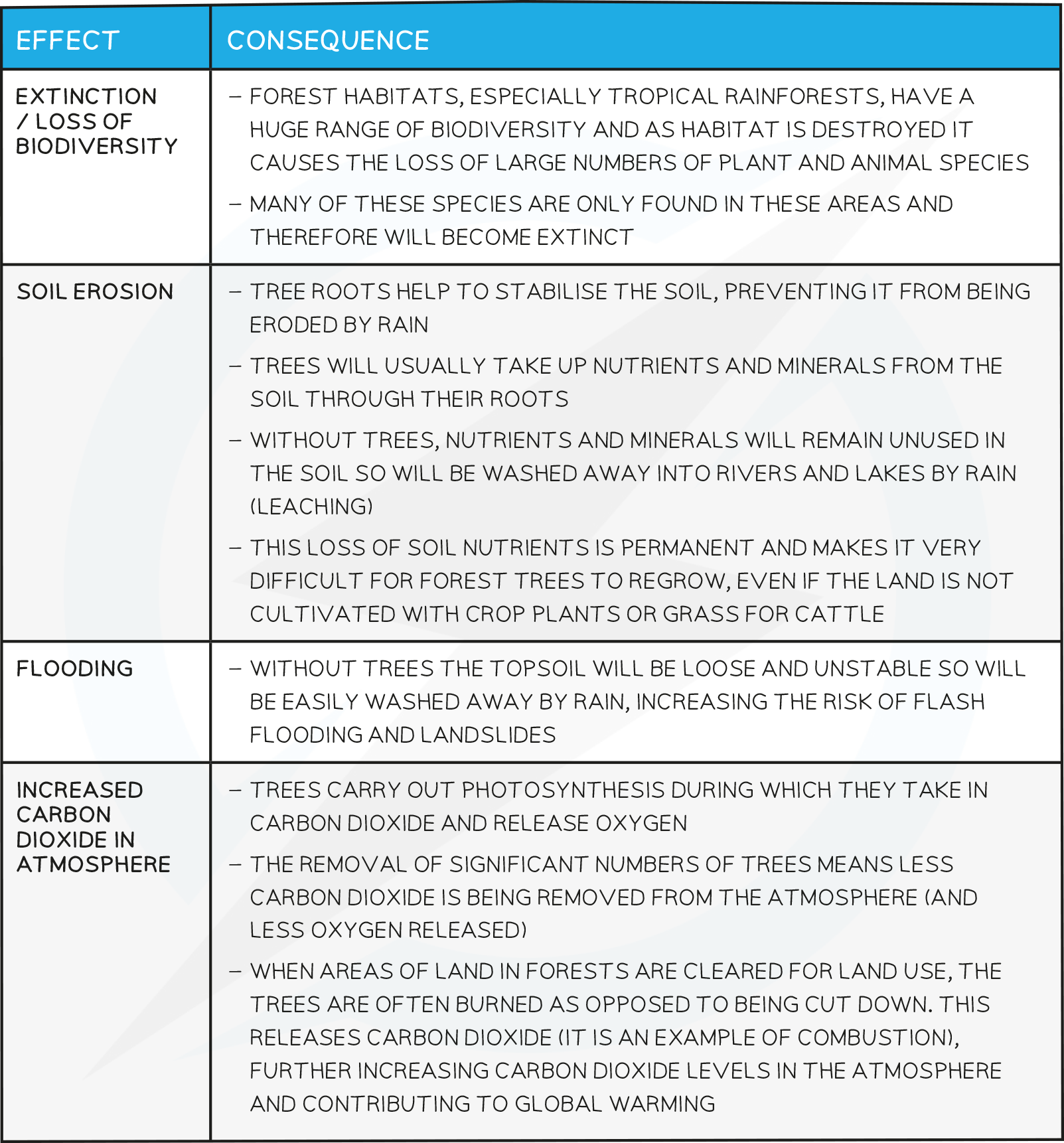
Undesirable effects of deforestation include:
- Extinction of species
- Loss of soil
- Flooding
- Increase of carbon dioxide in the atmosphere
Undesirable Effects of Deforestation: Extended
Extended Tier Only
An explanation of the undesirable effects of deforestation table
Was this revision note helpful?
Build on this topic