Variation (Cambridge International IGCSE Science)
Exam board Cambridge International · IGCSEUpdated 2026-07-02
Types of Variation
- Variation can be defined as:
Differences between individuals of the same species
- Variation gives rise to different phenotypes
- Variation can be either continuous or discontinuous
Continuous Variation
-
Variation that shows a range of phenotypes
-
Phenotypes fall in between extremes
-
Examples include:
- Body length
- Body mass
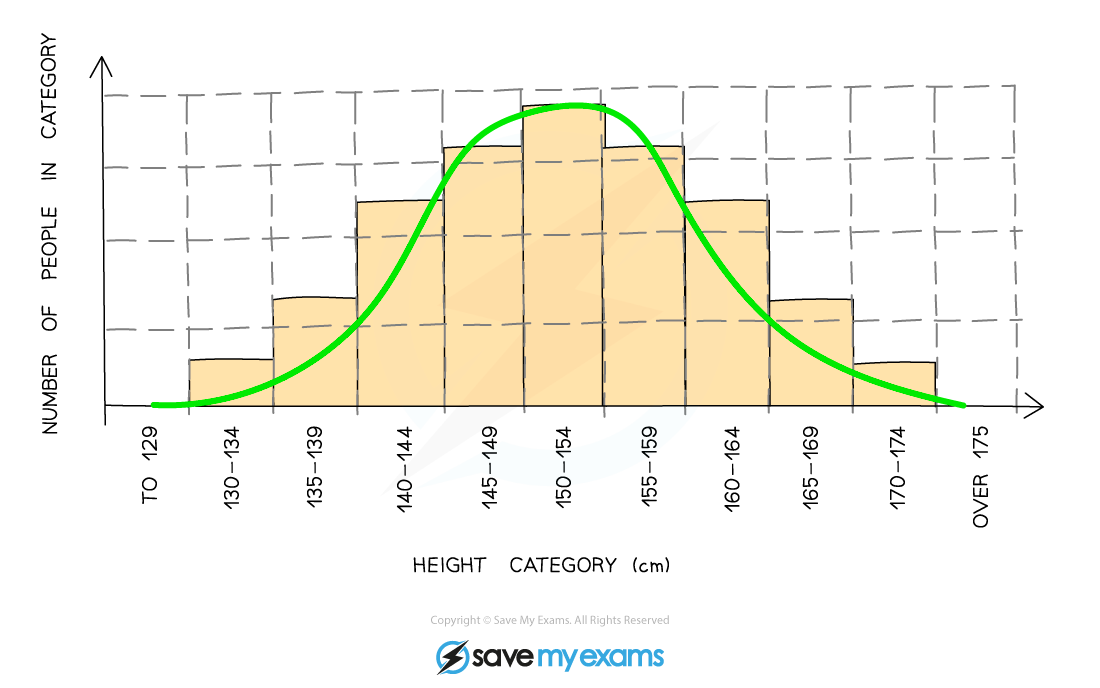
Height is an example of continuous variation; it gives rise to a smooth bell-shaped curve when plotted as a frequency histogram
Discontinuous Variation
-
Variation that results in a limited number of phenotypes
-
There are no phenotypes that fall in between groups
-
For example:
- People are either blood group A, B, AB or O
- Pea seeds are either round or wrinkled
- Pea seeds are either yellow or green
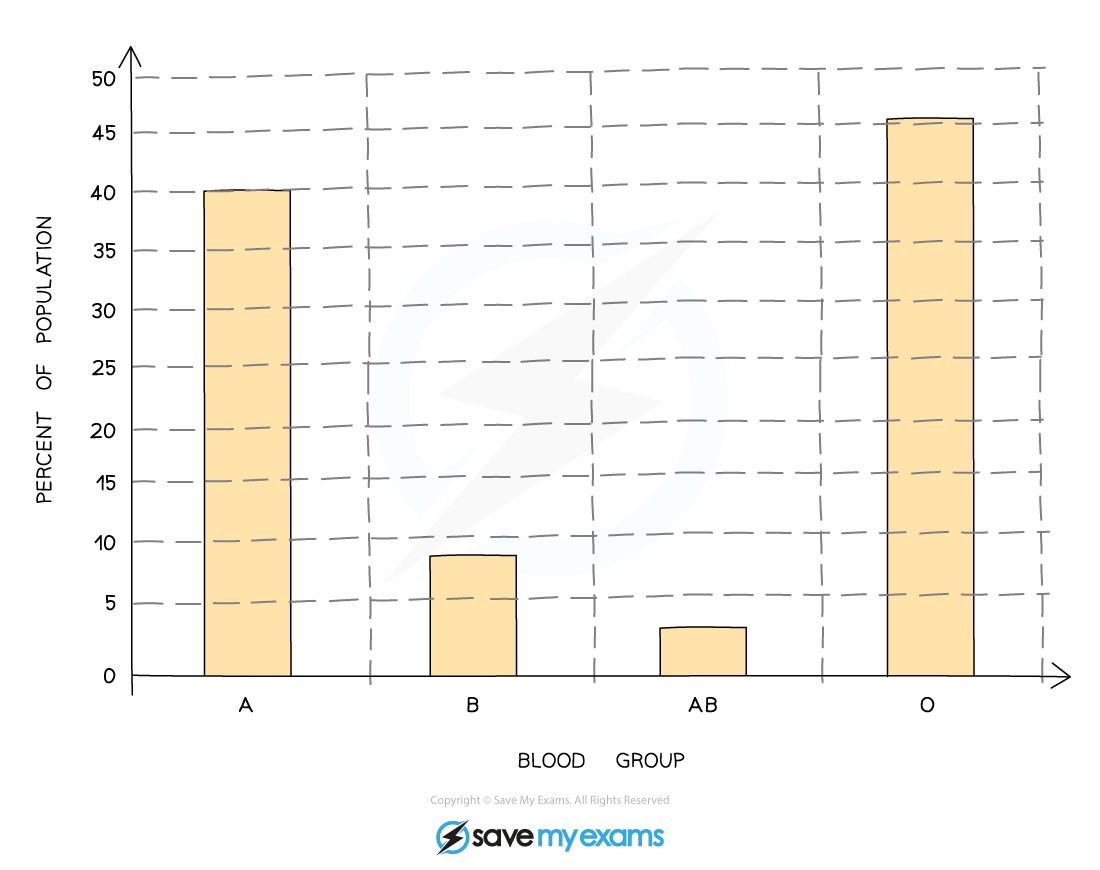
Blood group is an example of discontinuous variation; it gives rise to a step-shaped bar graph
Mutation
-
Mutations are genetic changes
- These changes involve alterations to the DNA
-
Mutation results in the formation of new alleles
-
Changes to an organism's alleles can give rise to phenotypic variation
Was this revision note helpful?
Build on this topic