Chemicals & Life (Cambridge International IGCSE Science)
Exam board Cambridge International · IGCSEUpdated 2026-07-02
Chemical Elements
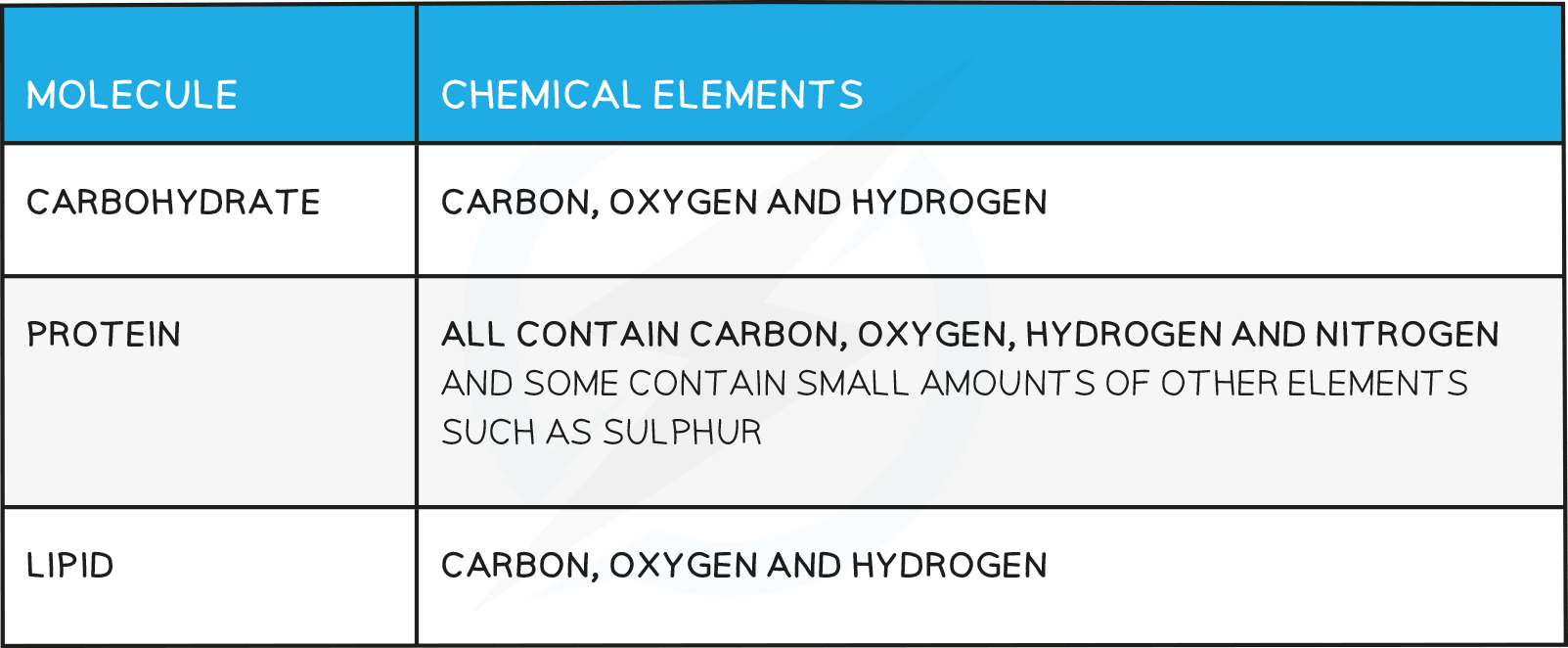
- Most of the molecules in living organisms fall into three categories: carbohydrates, proteins and lipids
- These all contain carbon and so are described as organic molecules
Chemical Elements Table
Large Molecules are Made from Smaller Molecules
Carbohydrates
- Long chains of simple sugars
- Glucose is a simple sugar ( a monosaccharide)
- When 2 glucose molecules join together maltose is formed (a disaccharide)
- When lots of glucose molecules join together starch, glycogen or cellulose can form (a polysaccharide)
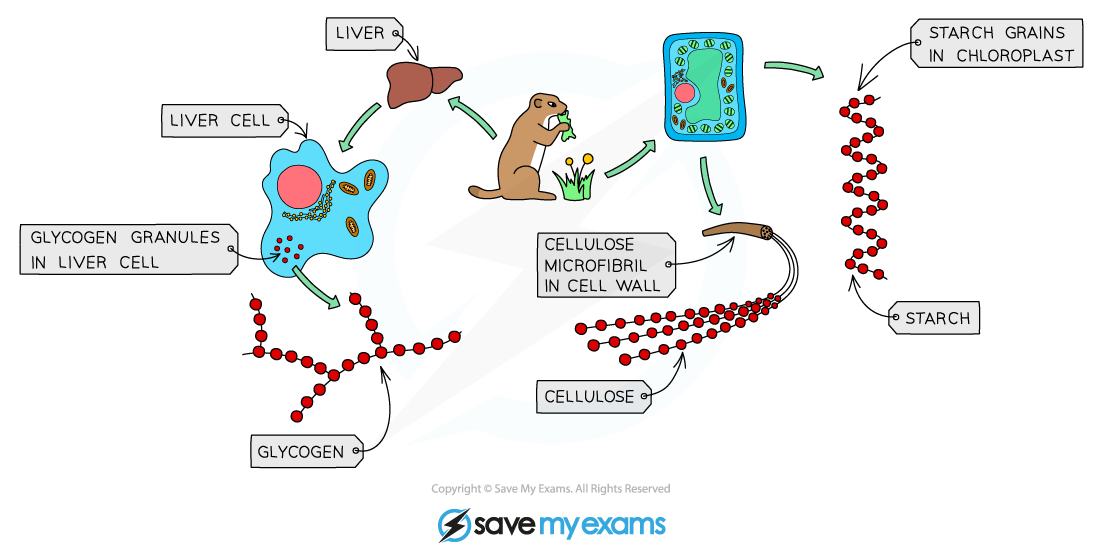
Glycogen, cellulose and starch are all made from glucose molecules
Fats
- Most fats (lipids) in the body are made up of triglycerides
- Their basic unit is 1 glycerol molecule chemically bonded to 3 fatty acid chains
- The fatty acids vary in size and structure
- Lipids are divided into fats (solids at room temperature) and oils (liquids at room temperature)
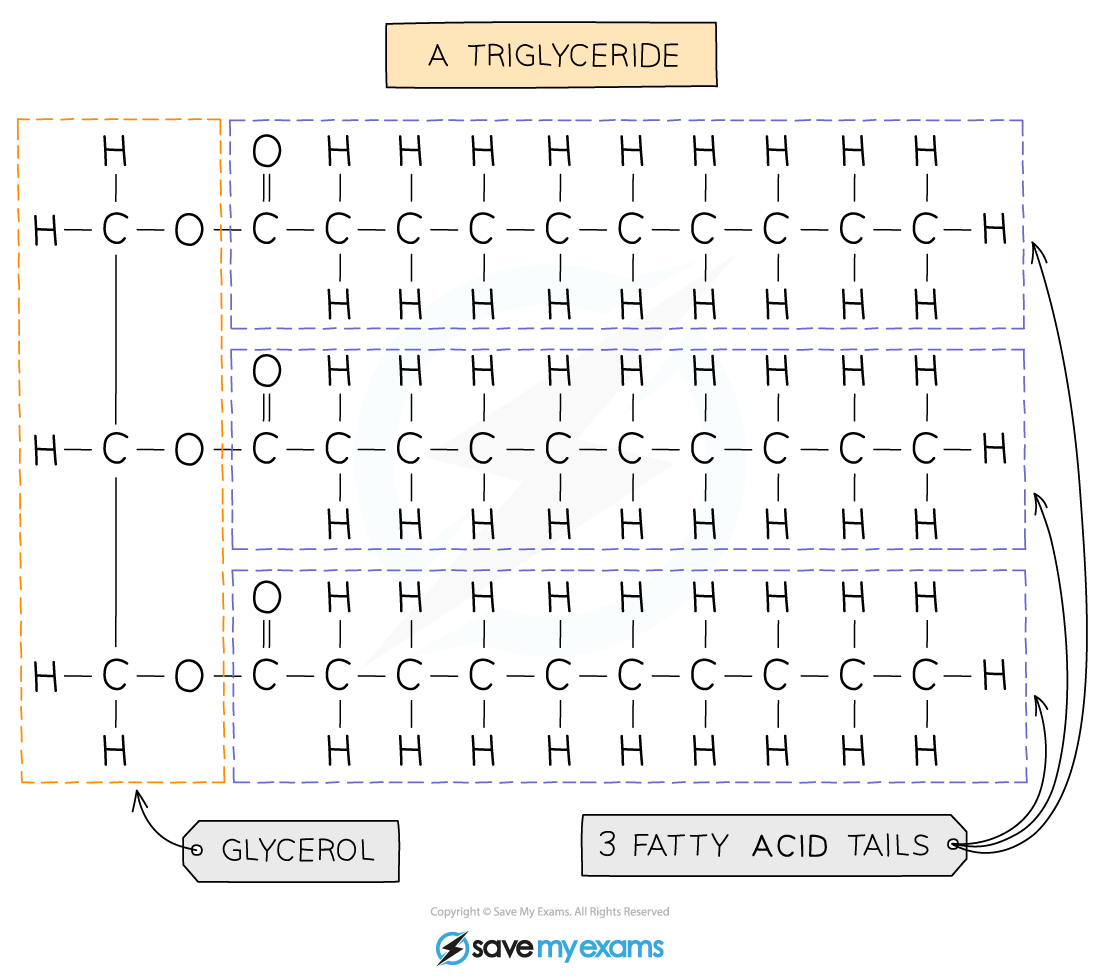
Structure of a triglyceride
Proteins
- Long chains of amino acids
- There are about 20 different amino acids
- They all contain the same basic structure but the ‘R’ group is different for each one
- When amino acids are joined together a protein is formed
- The amino acids can be arranged in any order, resulting in hundreds of thousands of different proteins
- Even a small difference in the order of the amino acids results in a different protein being formed
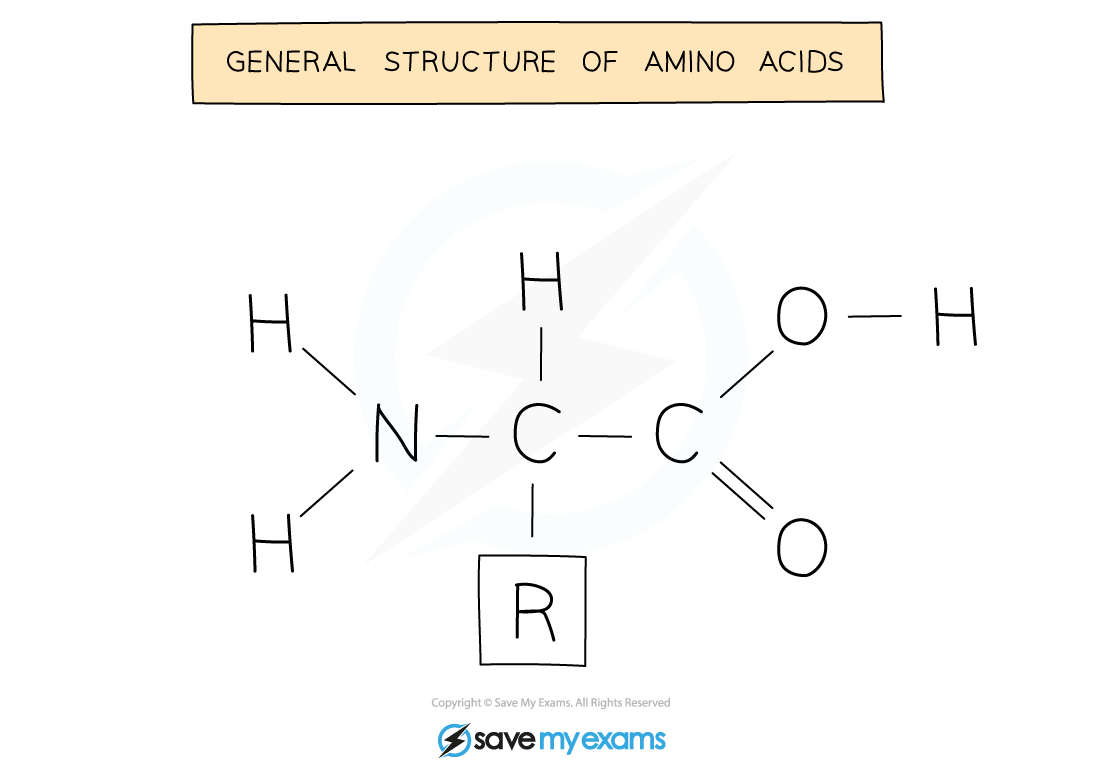
General amino acid structure
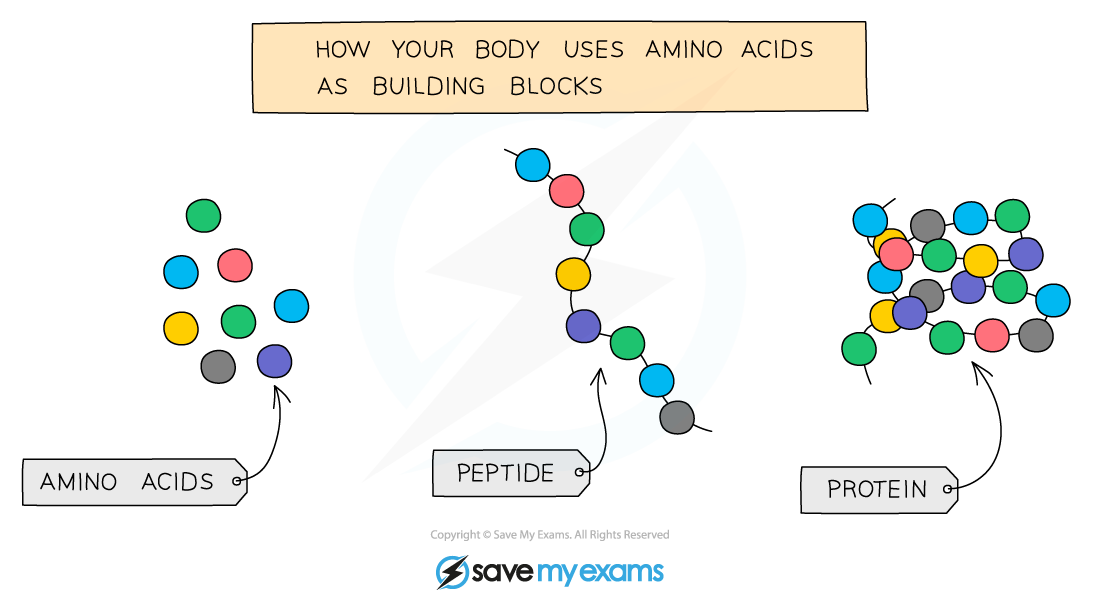
Amino acids join together to form proteins
Was this revision note helpful?
Build on this topic