Osmosis Experiments (Cambridge International IGCSE Science)
Exam board Cambridge International · IGCSEUpdated 2026-07-02
Osmosis Experiments
Immersing plant cells in solutions of different concentrations
- The most common osmosis practical involves cutting cylinders of root vegetables such as potato or radish and placing them into distilled water and sucrose solutions of increasing concentration
- The cylinders are weighed before placing into the solutions
- They are left in the solutions for 20 - 30 minutes and then removed, dried to remove excess liquid and reweighed
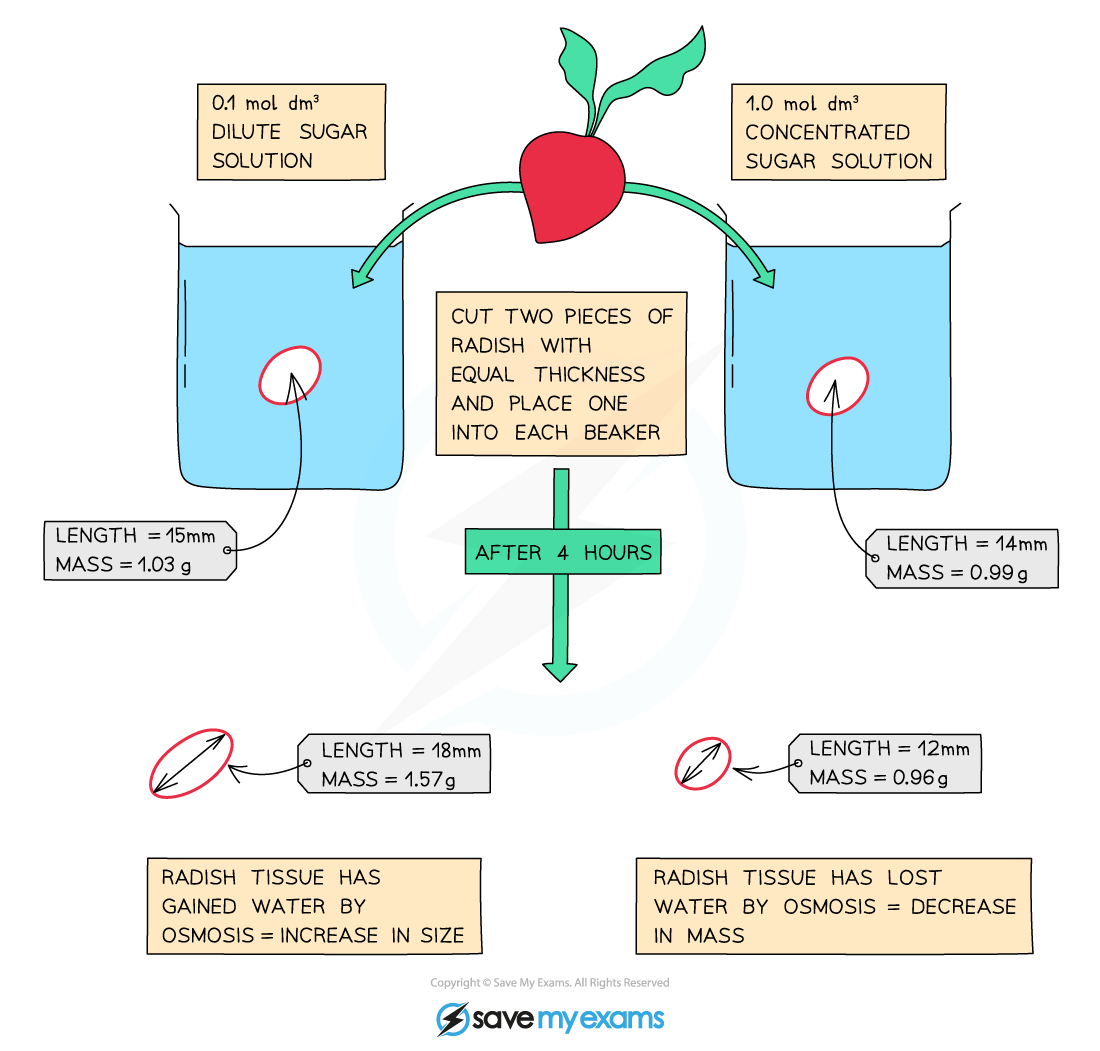
Potatoes are usually used in osmosis experiments to show how the concentration of a solution affects the movement of water, but radishes can be used too
-
If the plant tissue gains mass:
- Water must have moved into the plant tissue from the solution surrounding it by osmosis
- The solution surrounding the tissue is more dilute than the plant tissue (which is more concentrated)
-
If plant tissue loses mass:
- Water must have moved out of the plant tissue into the solution surrounding it by osmosis
- The solution surrounding the tissue is more concentrated than the plant tissue (which is more dilute)
-
If there is no overall change in mass:
- There has been no net movement of water as the concentration in both the plant tissue and the solution surrounding it must be equal
- Remember that water will still be moving into and out of the plant tissue, but there wouldn’t be any net movement in this case
Was this revision note helpful?
Build on this topic