Structure & Function of Blood Vessels (Cambridge International IGCSE Science)
Exam board Cambridge International · IGCSEUpdated 2026-07-02
How Structure of Blood Vessels is Adapted to their Function: Extended
Extended Tier Only
Arteries
- Have thick muscular walls containing elastic fibres to withstand the high pressure of blood and maintain the blood pressure as it recoils after the blood has passed through
- Have a narrow lumen to maintain high pressure
Veins
- Have a large lumen as blood pressure is low
- Contain valves to prevent the backflow of blood as it is under low pressure
Capillaries
- Have walls that are one cell thick so that substances can easily diffuse in and out of them
- Have ‘leaky’ walls so that blood plasma can leak out and form tissue fluid surrounding cells
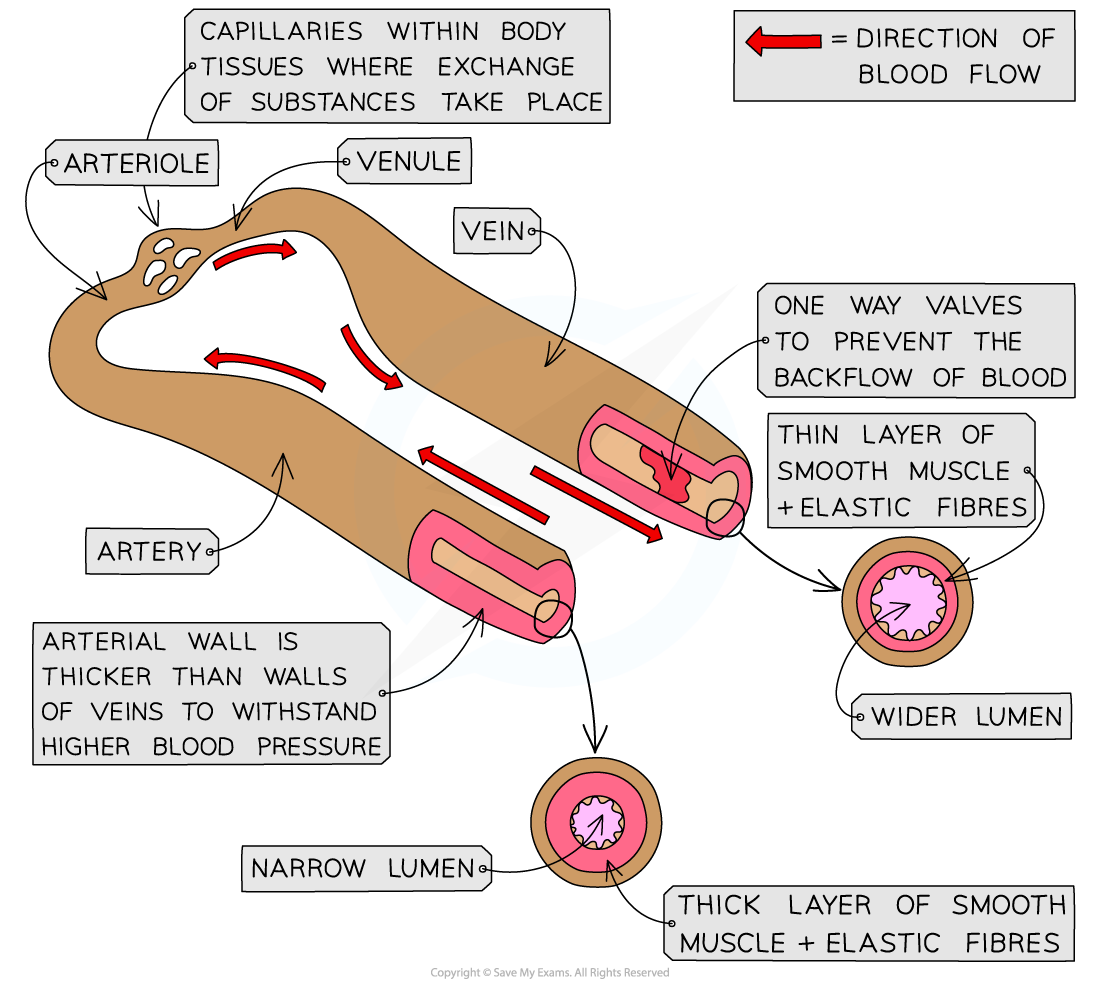
Adaptations of blood vessels
Arterioles and venules
- As arteries divide more as they get further away from the heart, they get narrower
- The narrow vessels that connect arteries to capillaries are called arterioles
- Veins also get narrower the further away they are from the heart
- The narrow vessels that connect capillaries to veins are called venules
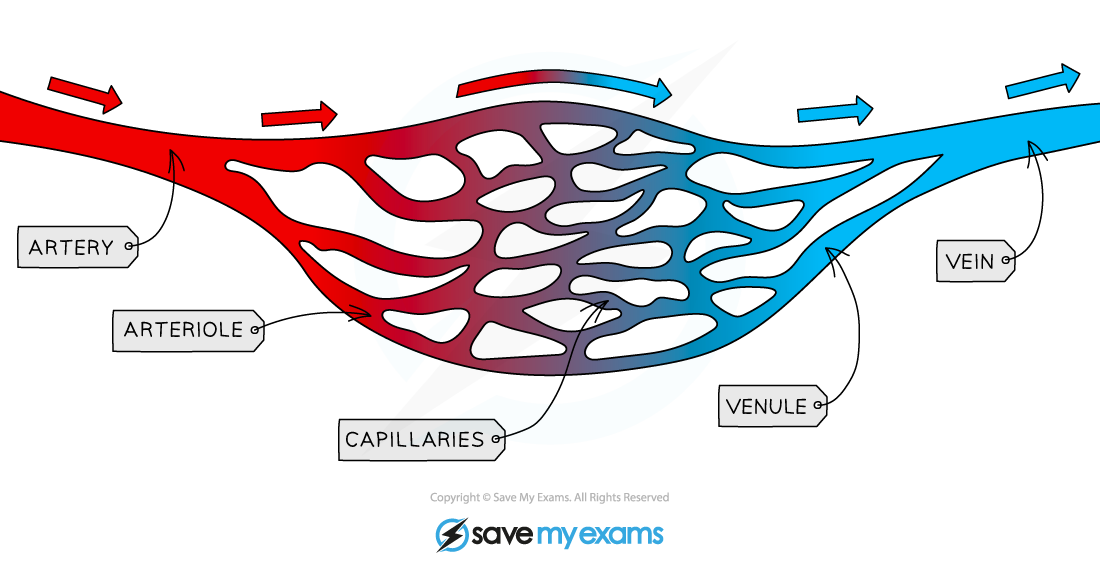
The blood vessel network
Was this revision note helpful?
Build on this topic