Respiration in Cells (Cambridge International IGCSE Science)
Uses of Energy in Living Organisms
-
Respiration is a chemical process that involves the breakdown of nutrient molecules (specifically glucose) in order to release the energy stored within the bonds of these molecules
- Respiration is enzyme-controlled
-
Respiration can take place with oxygen (aerobically) or without oxygen (anaerobically).
- Much less energy is released for each glucose molecule broken down anaerobically compared to the energy released when it is broken down aerobically
-
Respiration occurs in all living cells; most of the chemical reactions in aerobic respiration take place in the mitochondria
-
Humans need the energy released during respiration carry out many processes
- Muscle contraction
- Protein synthesis
- Cell division (to make new cells)
- Growth
- Active transport across cell membranes
- Generation of nerve impulses
- Maintaining a constant internal body temperature
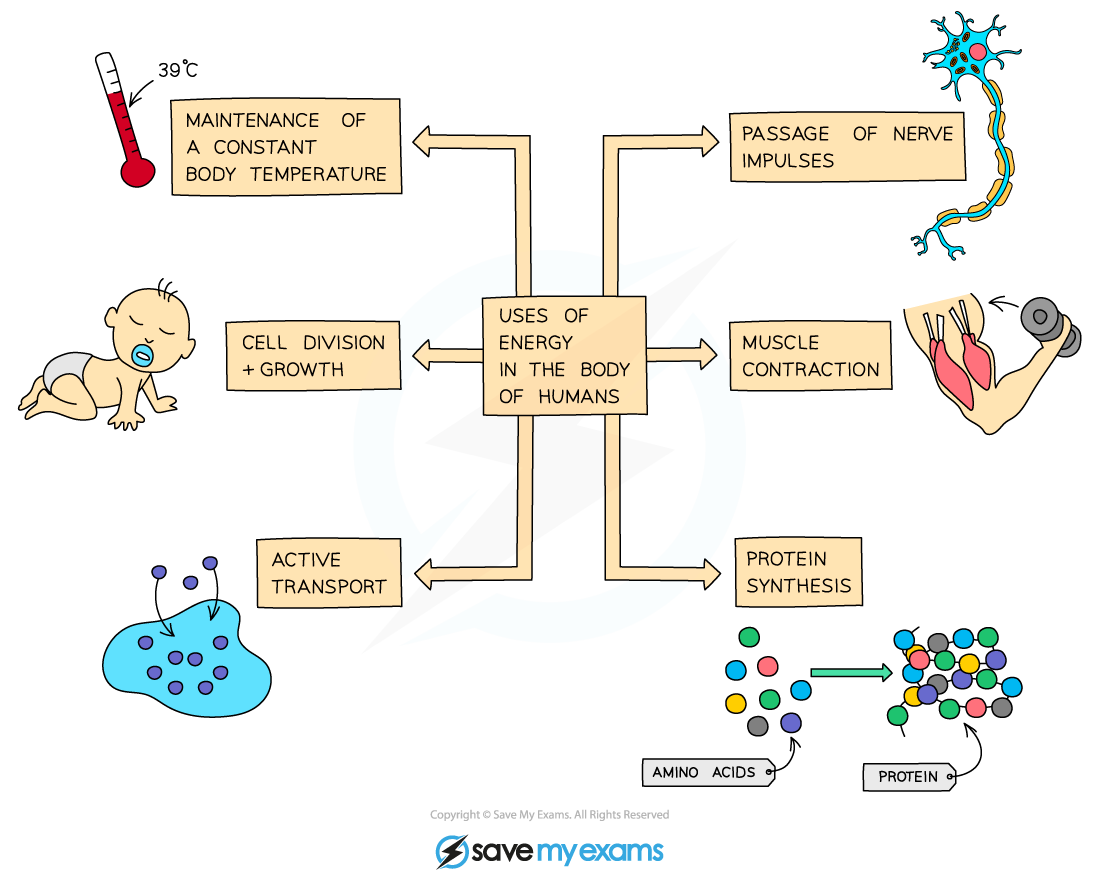
The energy released during respiration is used to fuel many processes in the human body
Exam Hint Avoid the common misconception that respiration is breathing! Respiration is a series of chemical reactions that release energy from glucose inside cells. Be careful that you always state that energy is released, it is NEVER made, produce, or created.
The respiration reactions are all controlled by enzymes. You need to be able to state this in an exam!
The Effect of Temperature on Respiration
The Effect of Temperature on the Respiration of Yeast Cells
-
There are several different experimental methods that can be used to investigate the rate of respiration in organisms
-
Some methods, such as the experiment described below, involve the use of a coloured indicator
-
An indicator can be used to investigate the effect of temperature on the rate of aerobic respiration in yeast
-
Methylene blue dye is a suitable indicator
-
This dye can be added to a suspension of living yeast cells because it doesn't damage cells
-
Yeast can respire both aerobically and anaerobically, though in this experiment it is their rate of aerobic respiration that is being investigated
-
The time taken for the methylene blue to discolour (lose its colour) is a measure of the rate of respiration of the yeast cells in the suspension
- The faster the dye changes from blue to colourless, the faster the rate of respiration
Apparatus
- Yeast suspension
- Glucose solution
- Test tubes
- Stopwatch
- Methylene blue
- Temperature-controlled water bath(s)
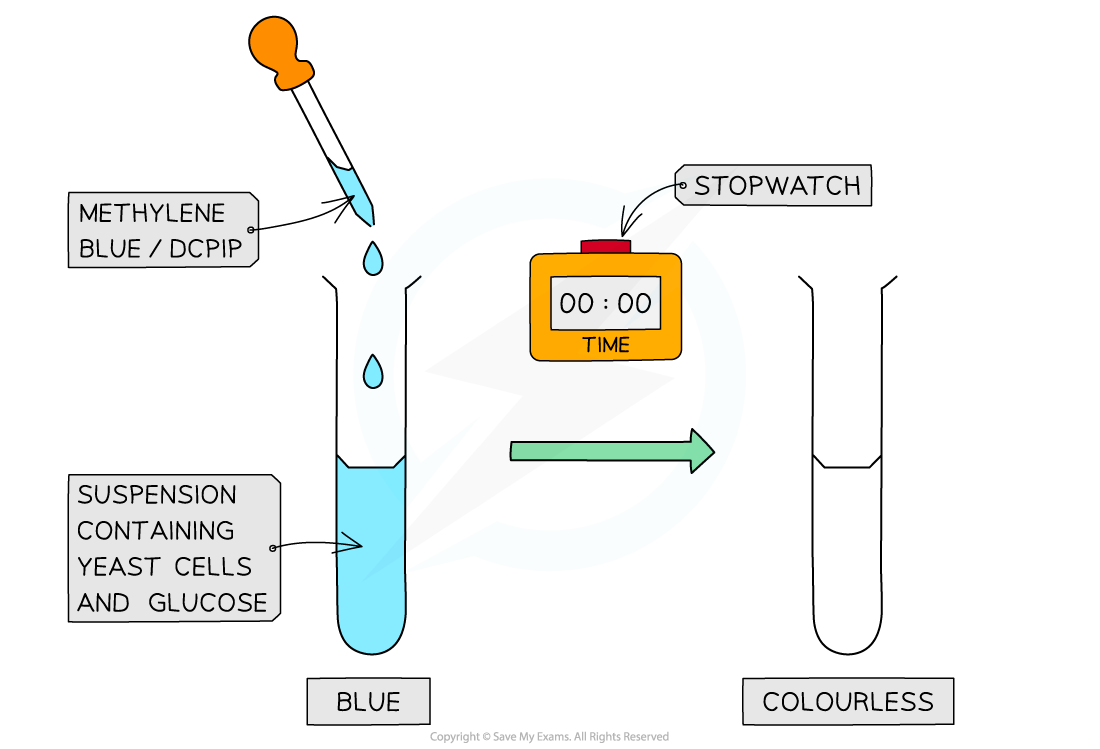
Methylene blue is added to a solution of aerobically respiring yeast cells in a glucose suspension. The rate at which the solution turns from blue to colourless gives a measure of the rate of aerobic respiration.
Independent and dependent variables
-
The independent variable is the variable that is changed on purpose
- Here the investigation studies the effect of temperature on respiration rate in yeast, so the independent variable is temperature
- Different temperatures are achieved using water baths
-
The dependent variable is the variable that is measured, i.e. the variable that depends on the independent variable for its outcome
- In an investigation into the effect of temperature on the rate of respiration in yeast, the rate of respiration is the dependent variable
- The rate is measured here by recording the time taken for methylene blue dye to change from blue to colourless
Controlling other variables
-
It is important when investigating the effect of one variable on another to ensure that any other variables that might influence the dependent variable are being controlled, e.g.
-
Volume/concentration of dye added: if there are more dye molecules present then the time taken for the colour change to occur may be longer
-
Volume/concentration of yeast suspension: if more yeast cells are present then more respiration will be occurring and the dye will change colour more quickly
-
Concentration of glucose: if there is limited glucose in one tube then the respiration of those yeast cells will be limited
-
pH: pH can influence enzyme activity, and enzymes are involved in the reactions of respiration, so pH can therefore influence the rate of respiration
- A buffer solution can be used to control the pH level to ensure that no enzymes are denatured
-
Results
-
A graph should be plotted that shows 'temperature' (x-axis) against 'time for colour change' (y-axis)
- It is also possible to convert 'time for colour change' into a unit of reaction rate; this has been done in the graph shown below
-
As the temperature increases up to 40 °C, the rate of respiration increases so the time taken for the solution to become colourless reduces
- Raising the temperature of a solution gives the molecules in the solution more kinetic energy, so they move around more and the enzymes and substrates involved in respiration collide with each other more frequently
-
As temperature increases above 40 °C, the rate of respiration decreases so the time taken for the solution to become colourless increases
- Increasing the temperature above a certain point causes the enzymes involved in respiration to denature; the shape of their active site changes and they can no longer form enzyme-substrate complexes
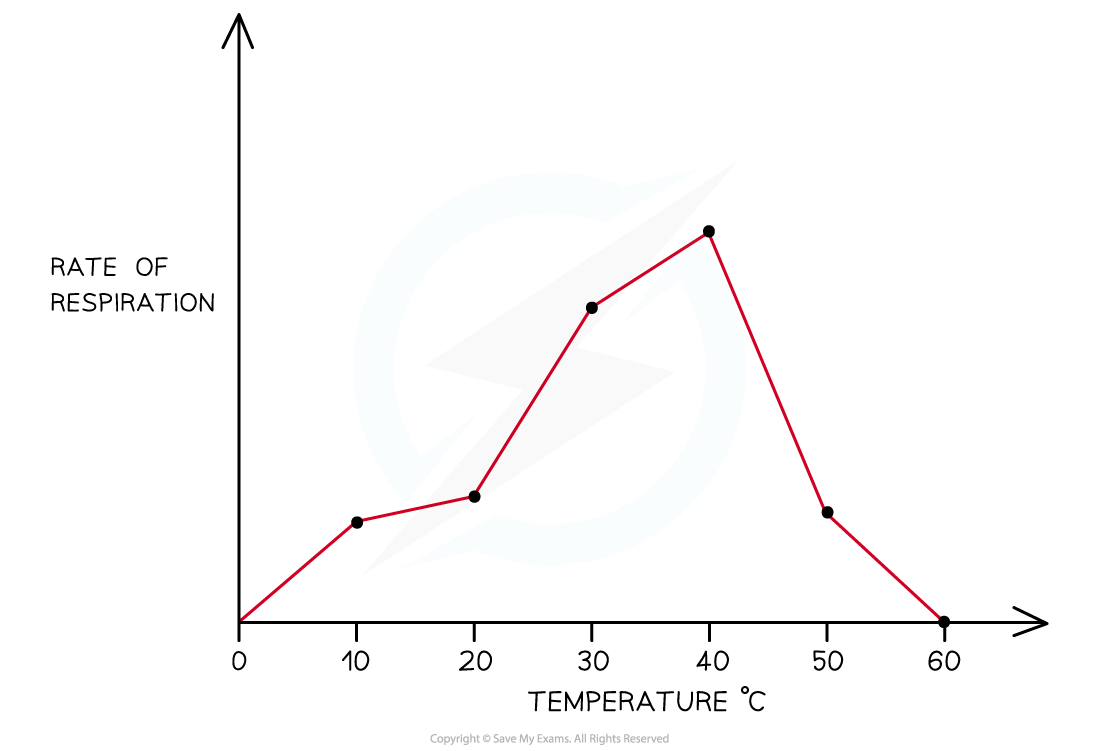
The time taken for methylene blue to change colour can be converted into 'rate of respiration' and plotted on a graph. Note that a graph of temperature against 'time for colour change' will look different to the graph shown here.
Was this revision note helpful?
Build on this topic