Artefacts used in Islamic Worship (Cambridge International IGCSE Religious Studies)
The Qur’an and respectful treatment
-
The Qur’an is the holy book of Islam
-
It is the revelation of Allah to the prophet Muhammad (pbuh)
- It is regarded as more important than any other book
-
It is treated with great respect and care
-
When not in use, the book is kept on a high shelf above other books and is often wrapped in cloths
-
Before handling it, Muslims wash their hands to show their respect for the word of Allah
-
The Qur’an is placed on a special stand before being read
-
When reading it, Muslims show great respect
- They make sure they are not speaking, eating or drinking, or making any distracting noise while it is being recited out loud in the mosque
-
Even translations of the Qur’an need to be treated with great care
-
Although there are no specific teachings about how to handle the Qur’an in any sacred texts, all Muslims respect the importance of the text in how they handle the book
The meaning & importance of the compass
-
Muslims must face the Ka’aba in Makkah for prayer
- This is important because it connects every Muslim in the world to the spiritual centre of their faith
-
When in a mosque, the mihrab in the qiblah wall helps them find the correct direction
-
If a Muslim is not in a mosque for their prayer, they may use a compass to help them find the direction of Makkah
- Some prayer mats have built-in compasses for this purpose
-
Apps are available to help Muslims find the direction of prayer and remind them of prayer times
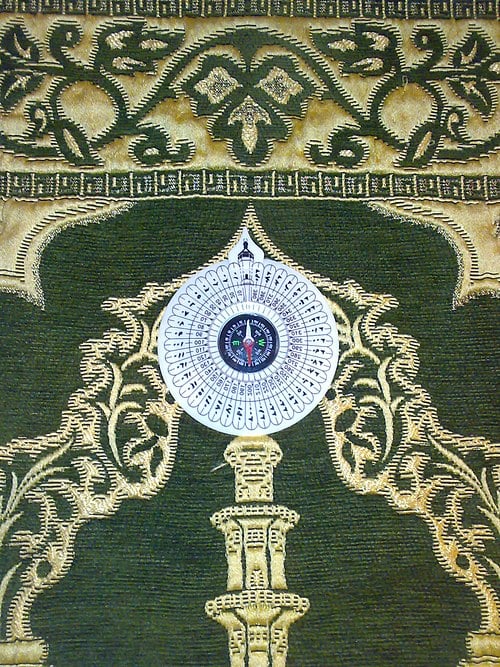
Prayer mat with a compass
Prayer rug with a compass by Maqivi is licensed under CC BY 3.0
The meaning & importance of prayer mats
-
Salah is the duty of prayer that Muslims must perform each day
- It has to be performed on a clean surface
-
Although prayer mats are not mandatory, they are widely used
- They ensure that a Muslim can pray on a clean surface, even if they are in a location where that would be difficult
- Using a prayer mat ensures there is always a suitable space that a believer can use to dedicate themselves to prayer
-
Prayer mats are often decorated with Islamic art to reflect the beauty and intricacy of Allah’s creation
-
Prayer mats may include a built-in compass to help the person find the right direction to face Makkah for prayer
-
In the mosque, prayer mats are not generally required, as the carpet in the prayer hall is often marked with individual spaces for each person to perform their prayer sequences
The meaning & importance of the turbah
-
The turbah is a small block of wood or earth
- It is also known as the prayer stone
-
Shi’a Muslims place a turbah on the ground during prayer so that their head touches something natural when they prostrate themselves
-
This reminds them that they have come from the earth and will return to it after death
-
It also represents the martyrdom of the third Imam al-Husayn, the grandson of the Prophet Muhammad (pbuh)
The meaning and importance of misbahah
-
Misbahah (or misbaha) are prayer beads
- There are usually 99 beads on a string: one bead to represent each of the 99 beautiful names of Allah and the 99 short prayer sentences known as dhikr
-
Muslims repeat the prayer sentences to help them focus on their worship of Allah, and holding the beads can help them concentrate and calm their minds
-
Misbahah can be made from a variety of materials, including wood, natural stone or plastic
-
Some Muslims choose not to use misbahah and prefer to use their fingers to count while reciting dhikr
Worked Example Give two ways in which Muslims show respect for the Qur’an
[2 marks]
Final answer: Answer:
They wash before reading from the Qur’an [1 mark]
It is stored higher than any other book when not in use [1 mark]
Exam Hint For this part of the course, you will be asked questions about how Muslims use and show respect for artefacts such as the Qur’an in worship. Later in these notes, you will delve deeper into the importance of the Qur’an and prayer for believers. Studying these topics will enable you to provide more detailed answers on why Muslims carry out the actions described here.
Was this revision note helpful?
Build on this topic