Dangers of Radiation (Cambridge International IGCSE Physics)
Dangers of radioactivity
Spec point —
5.2.1d· State the effects of ionising nuclear radiations on living things, including cell death, mutations and cancer
-
Ionising nuclear radiation can damage living things such as human cells and tissues at high doses:
-
This can include:
- Cell death
- Mutations
- Cancer
-
If the atoms that make up a DNA strand are ionised, then the DNA strand can be damaged
-
If the DNA is damaged, then the cell may die, or the DNA may be mutated when it is replicated
-
If a mutated cell replicates itself then a tumour may develop
- This is an example of cancer, which is a significant danger of radiation exposure
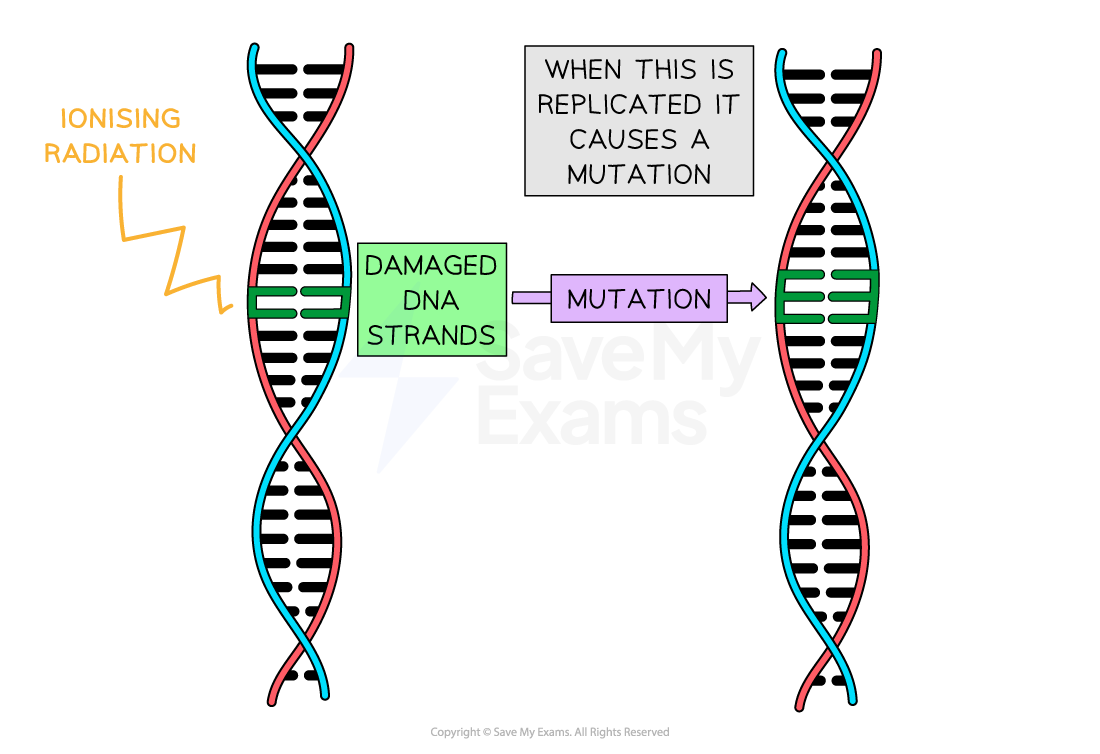
Diagram showing the damage caused to DNA by ionising radiation. Sometimes the cell is able to repair the DNA during replication successfully, but incorrect repairs can cause a mutation
-
Acute radiation exposure can have other serious symptoms:
- It can cause skin burns, similar to severe sunburn
- Radiation can reduce the amount of white blood cells in the body, making a person more susceptible to infections by lowering their immune system
-
Because of this, it is very important to handle radioactive sources carefully
Safe storage
Spec point — Describe how radioactive materials are moved, used and stored in a safe way
- Radioactive materials are moved, used and stored in a safe way
Safe handling to minimise the dangers of radioactivity
-
The risks associated with handling radioactive sources can be minimised by following a few simple procedures:
- Store the sources in lead-lined boxes and keep them at a distance from people
- Sources should be handled for as little time as possible and returned to their boxes immediately after use
- During use, keep every person as far from the sources as possible
- When handling the sources do so at arm’s length, using a pair of tongs
A sign indicating the dangers of radioactivity
Radioactivity warning sign
Safe transportation to minimise the dangers of radioactivity
- Radioactive materials such as used nuclear fuel are transported in special containers called casks
- These casks can withstand extreme conditions such as fire, cold and being submerged in water
Disposing of radioactive waste to minimise the dangers of radioactivity
-
If an isotope has a long half-life then a sample of it will decay slowly
- Although it may not emit a lot of radiation, it will remain radioactive for a very long time
-
Sources with long half-life values present a risk of contamination for a much longer time
-
Radioactive waste with a long half-life is buried underground to prevent it from being released into the environment
Correct disposal of radioactive waste reduces the dangers of radioactivity
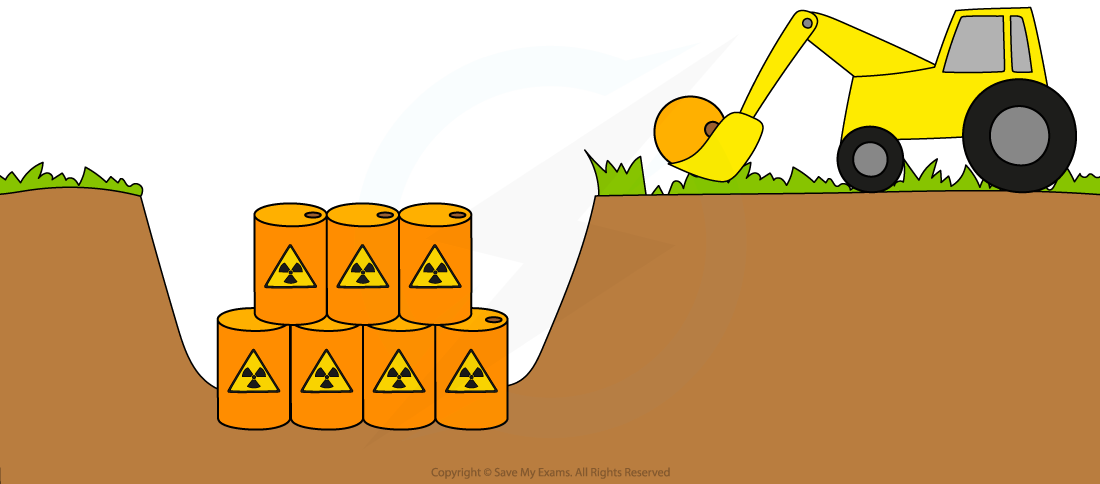
Radioactive waste with long half-lives is buried deep underground
Worked Example A student plans to use a gamma source to conduct an experiment. List four things that the student should do in order to minimise the risk to themselves when using the source.
[4]
Answer:
Any four from:
- Keep the source in a lead-lined container until the time it is needed
- Use tongs to move the source, rather than handling it directly
- The source should be kept at as far a distance from the student as possible during the experiment
- The time that the source is being used should be minimised
- After the experiment, the student should wash their hands
- The date and the time that the radiation has been used should be recorded
[4 marks]
Safety precautions
Spec point —
5.2.3b· Explain safety precautions for all ionising radiation in terms of reducing exposure time, increasing distance between source and living tissue and using shielding to absorb radiation
Extended Tier Only
-
Safety precautions for all ionising radiation include:
- reducing exposure time
- increasing the distance between the source and living tissue
- using shielding to absorb radiation
Reducing exposure time reduces the dangers of radioactivity
-
Limiting the amount of time spent near a radioactive source reduces the amount of radiation dose received
-
The amount of radiation received by a person is called the dose and is measured in sieverts (Sv)
-
One sievert is a very big dose of radiation
- It would cause acute radiation poisoning
Increasing the distance reduces the dangers of radioactivity
-
Increasing the distance the radiation is away greatly reduces the size of the dose received
- Using tongs instead of your hand when handling a radioactive source can help with this
-
Constructing nuclear power plants in remote areas increases their distance from people if there is a problem
-
Burying nuclear waste far from places where people live also increases the distance to people
Shielding reduces the dangers of radioactivity
-
Radiation shielding is a barrier placed between a radiation source and a person or area to protect them
- The purpose of shielding is to limit exposure to radiation at a certain location or time
-
Barriers absorb the energy from radioactive sources
-
Barriers are normally made of lead, water or concrete
- People handling radioactive sources should wear a lead apron to reduce their exposure
-
When X-rays are taken:
- the area around where the image is needed is shielded
- the radiologist stands behind a barrier or leaves the room
Reducing the dangers of radiation for a radiologist
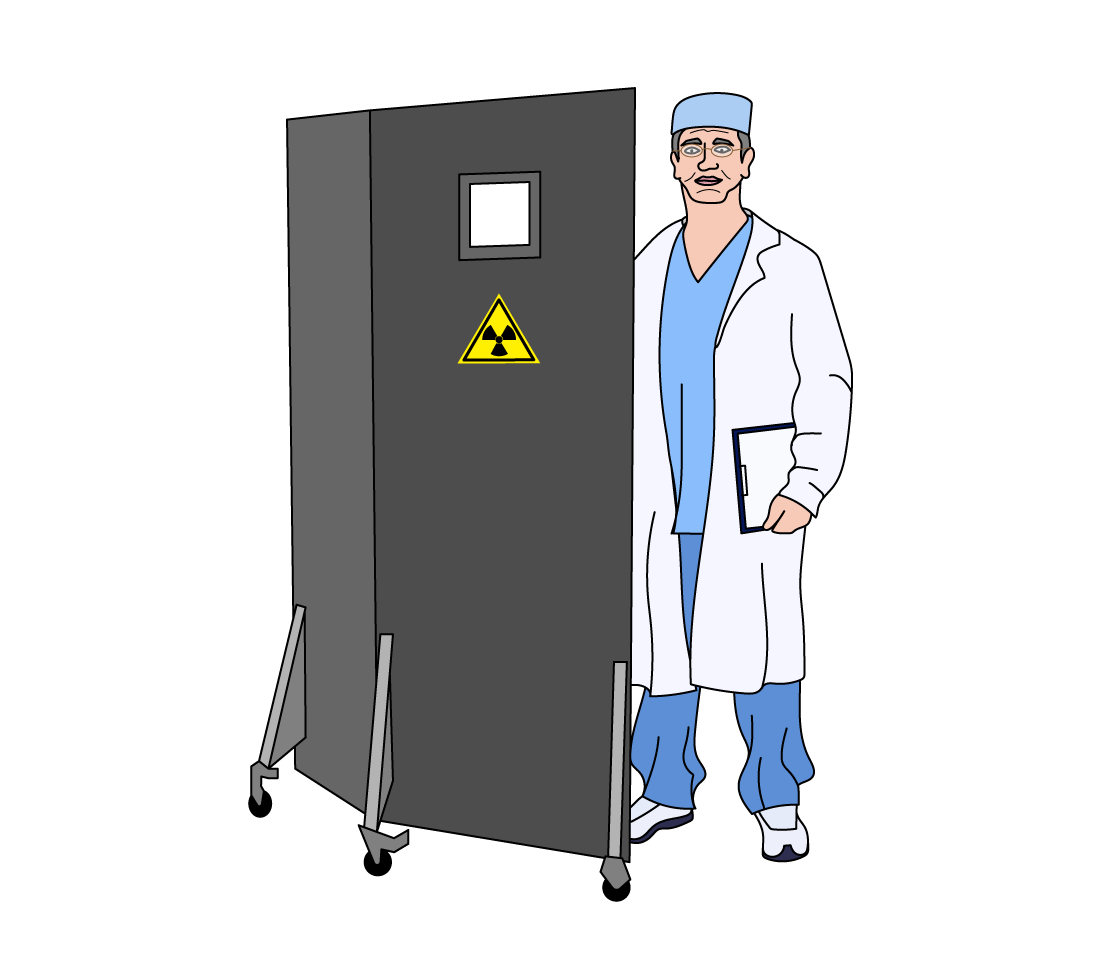
A radiologist can stand behind a lead barrier to reduce the amount of radiation they are exposed to
Was this revision note helpful?
Build on this topic