Ordering Fractions, Decimals & Percentages (Cambridge International IGCSE Maths)
Ordering FDP
How do I put fractions in order of size?
-
When comparing only fractions, write them over a lowest common denominator
- For , the lowest common denominator is 60
- So change them to and then order them by their numerators
- From smallest to largest:
- Rewrite in their original form:
How do I put fractions, decimals and percentages in order of size?
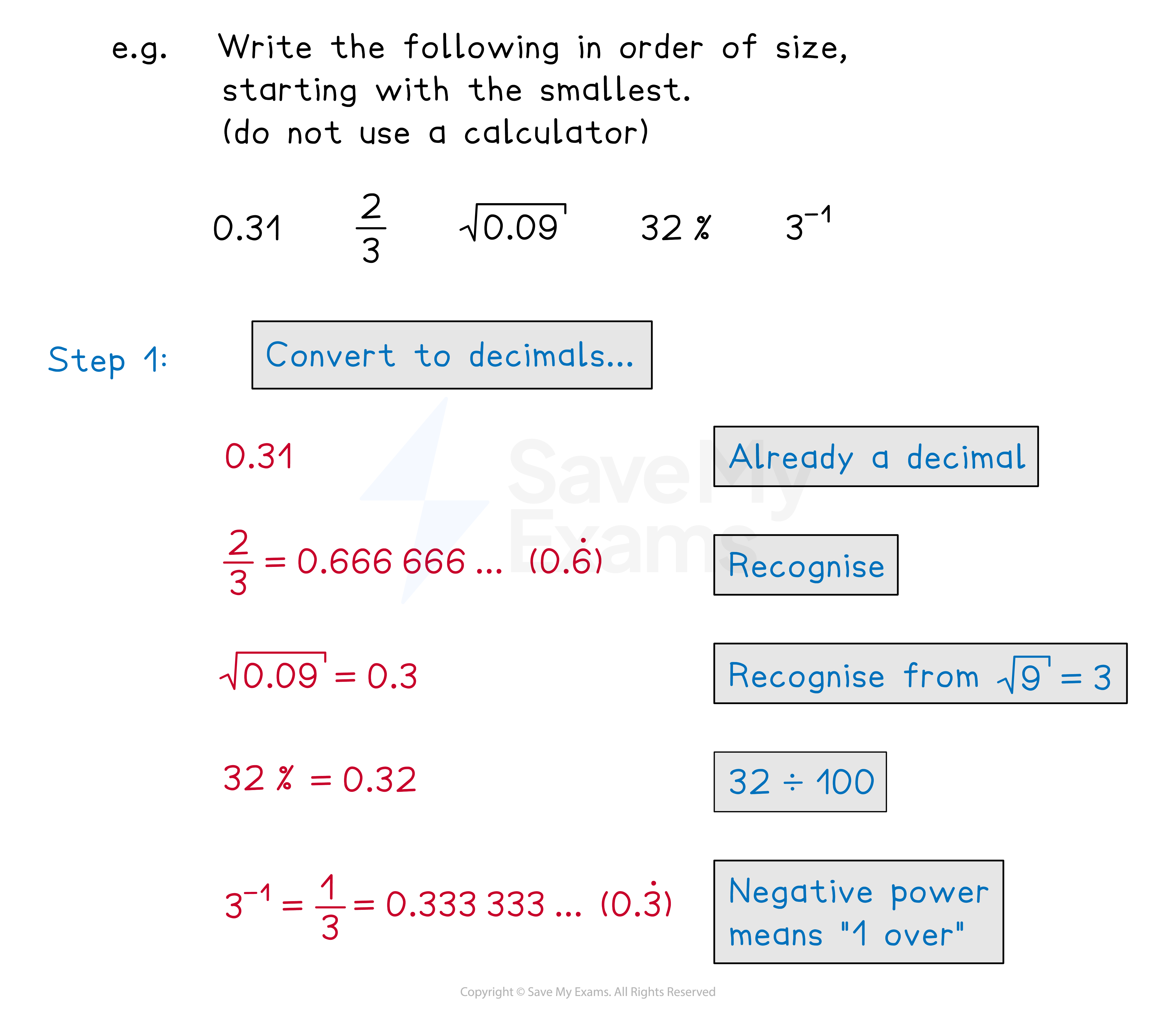
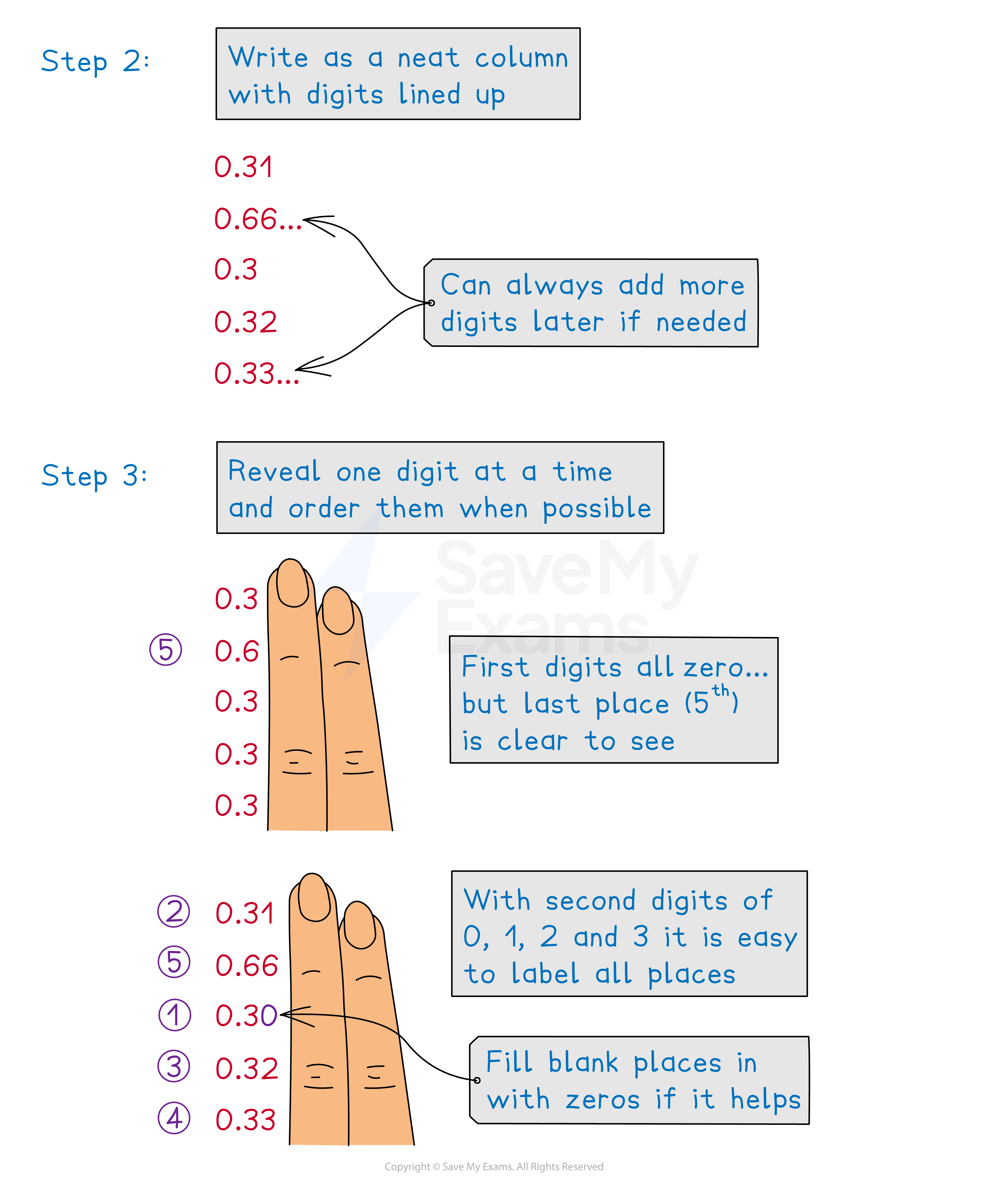
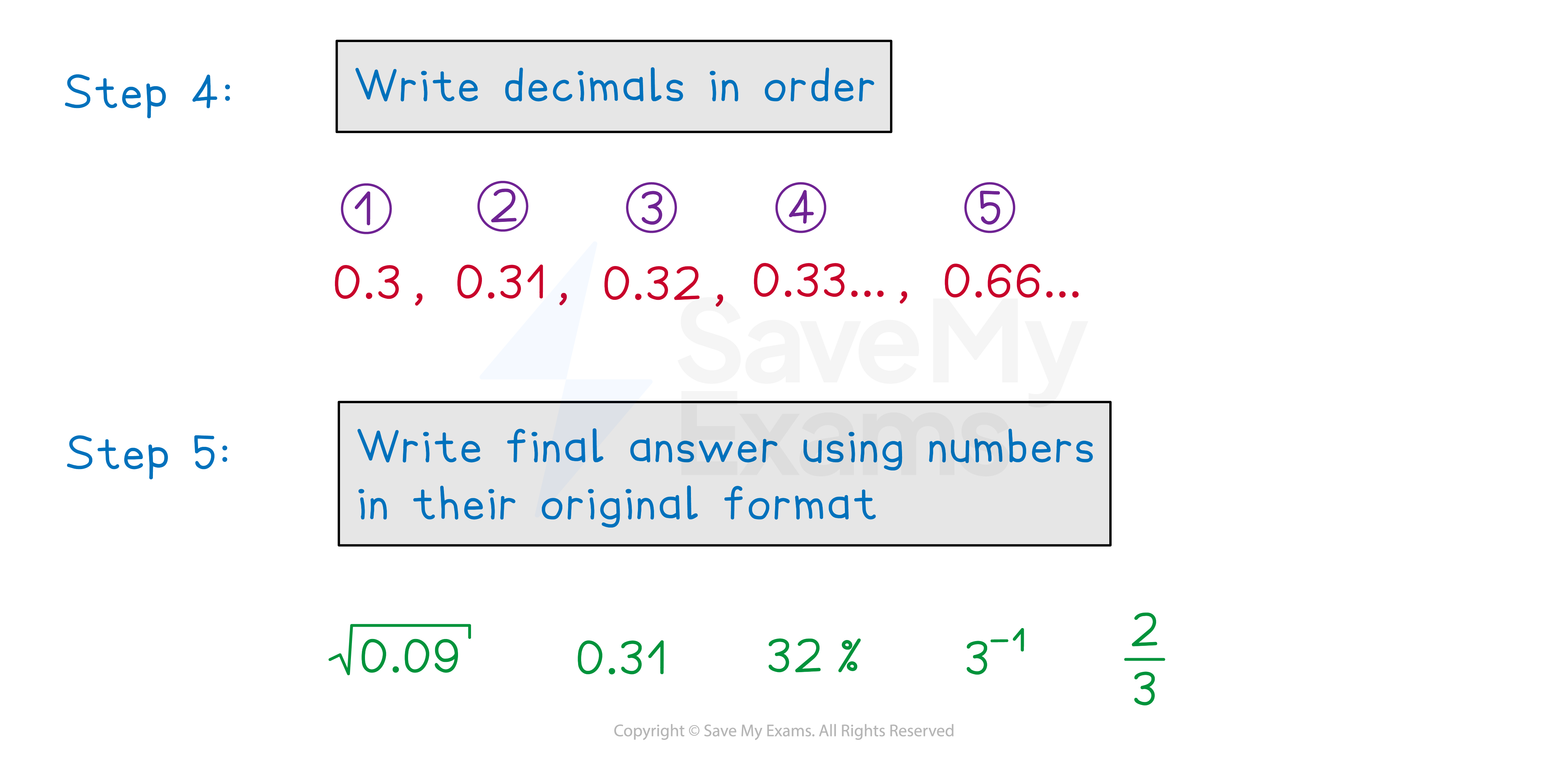
- When comparing a mixture of fractions, decimals and percentages, change everything into decimals
Which symbols can I use?
-
Rather than just listing values in order, symbols can be used to compare them
- For example,
-
Recall that means greater than and means greater than or equal to
- Similarly, means less than and means less than or equal to
-
You may also see and (which means "not equal to")
Exam Hint A calculator can be used to quickly convert any quantities into decimals.
E.g. A fraction can be entered as a division.
Worked Example Without use of a calculator, write these numbers in order, starting with the smallest.
, , ,
Answer:
As they are all fractions, write them with a common denominator The lowest common denominator is 75 Rewrite each fraction with a denominator of 75
*
Compare and write in order from smallest to largest
Rewrite in their original form
Worked Example Without use of a calculator, write these numbers in the spaces below.
, , ,
..... < ..... < ..... < .....
Answer:
As there is a mixture of fractions, decimals, and percentages, rewrite each as a decimal
0.8 is already a decimal
Convert 78% to a decimal by dividing by 100
Convert to a decimal by either using short division, or halving three times
so
Convert to a decimal by using short division
equationso
Write them all with 3 decimal places to determine the order
Rewrite the decimals in order
Rewrite in their original form, and recall that < means "less than", so the smallest value will be first
Was this revision note helpful?
Build on this topic