Introduction to Fractions (Cambridge International IGCSE Maths)
Exam board Cambridge International · IGCSEUpdated 2026-06-10
Introduction to fractions
What is a fraction?
-
A fraction is written as where a and b are integers
- The number on the top, a, is called the numerator
- The number on the bottom, b, is called the denominator
-
The values of the numerator and denominator tell us about the size of the fraction
-
The denominator is how many parts each whole number is split into
-
The numerator is how many parts you have
- For example, means that each whole number is divided into 3 parts and you have 2 of these parts
-
-
A fraction is less than 1 if the numerator is smaller than the denominator
-
A fraction is more than 1 if the numerator is bigger than the denominator
How do I shade a fraction on a diagram?
-
Divide by the denominator and multiply by the numerator
-
To shade of a grid of 20 squares
- Divide 20 squares by 5 to get 4 squares
- Multiply this amount by 3 to get 12 squares
- Shade 12 squares
-
To shade of a circle
- Divide the circle into four quarters by drawing a horizontal and a vertical line through the centre
- Shade one of these quarters
-
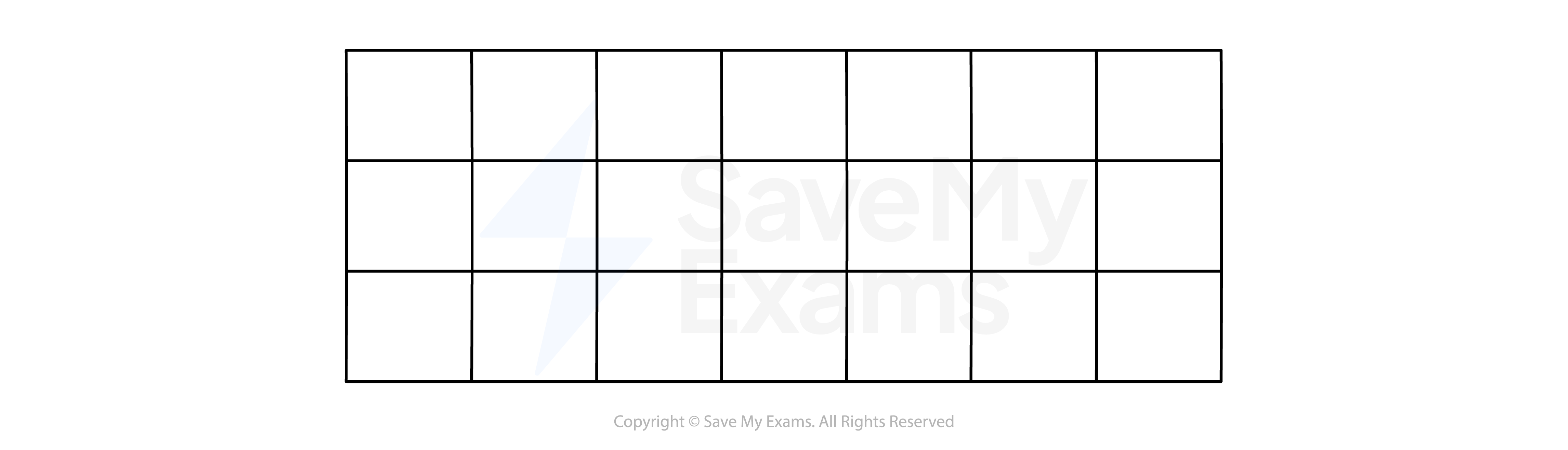
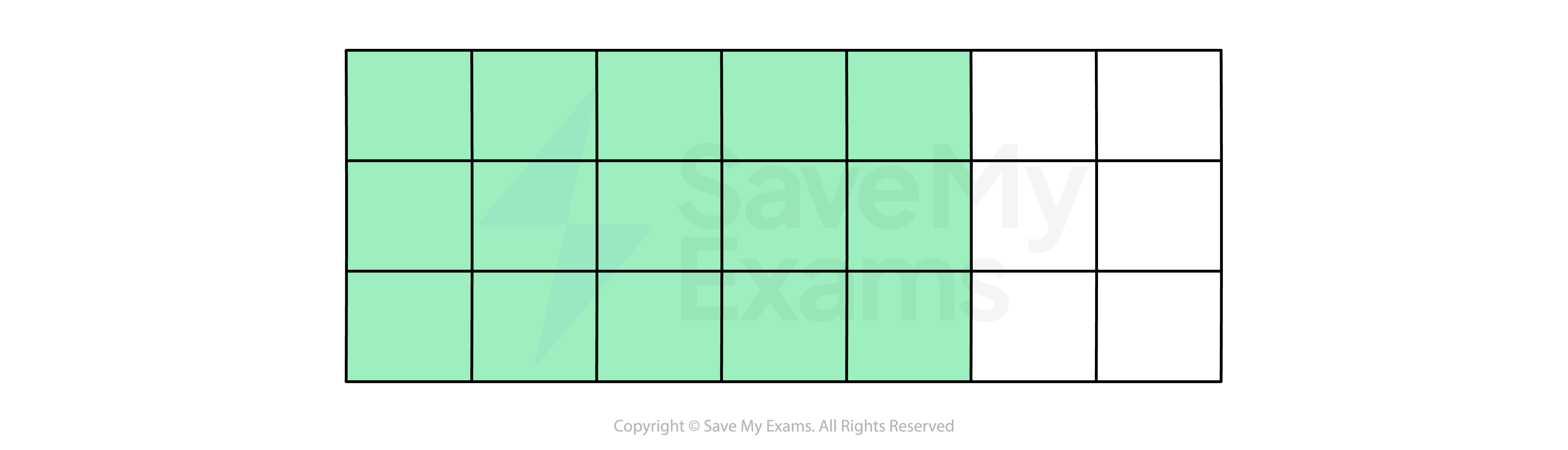
Worked Example Shade of the grid below.
Answer:
Count the total number of squares in the grid
*Total of 21 squares ***
Divide 21 by 7
21 ÷ 7 = 3** *
Multiply by 5
*3 × 5 = 15 *
Shade 15 squares
- It doesn't matter which 15 you shade
- It's neater to group them together
Was this revision note helpful?
Build on this topic