Why were Groups Persecuted in Nazi Germany? (Cambridge International IGCSE History)
The Treatment of Minorities - Summary
To establish a Third Reich, Hitler and the Nazis focused on creating a strong and ‘pure’ society that followed Nazi beliefs.
Germany in the 1930s was home to multiple minority groups. Many of these minorities considered themselves to be German. However, the Nazis believed in a hierarchy of races with the Aryan race at the top. Policy soon became directed towards the persecution of other minorities. The Nazis wanted to ensure that they did not reproduce or intervene with Hitler’s vision for Germany. Homosexuals and people with disabilities were also targeted.
Jewish people faced increased discrimination and persecution throughout the 1930s in Germany. Beginning with the boycotts *of 1933, the Nazis soon stripped away the German citizenship of thousands of Jewish people through the Nuremberg Laws of 1935. Following 'Kristallnacht'in 1938, Jewish communities were no longer safe in Germany. The Nazis sent them to ghettos and extermination camps. This only increased in the Second World War, where German expansion eastwards increased the number of Jews in Nazi-occupied territory.
While many German citizens disliked what was happening to Jewish communities and other minorities, the use of censorship and the secret police reduced the level of opposition.
The Aryan Race and Eugenics
-
The Nazis aimed at making Germany as ‘strong’ as possible:
- Policies towards women, children, the Church and culture were all to strengthen the state
-
Their beliefs in eugenics and racial hygiene showed that they also wanted to increase the strength of the ‘German’ population
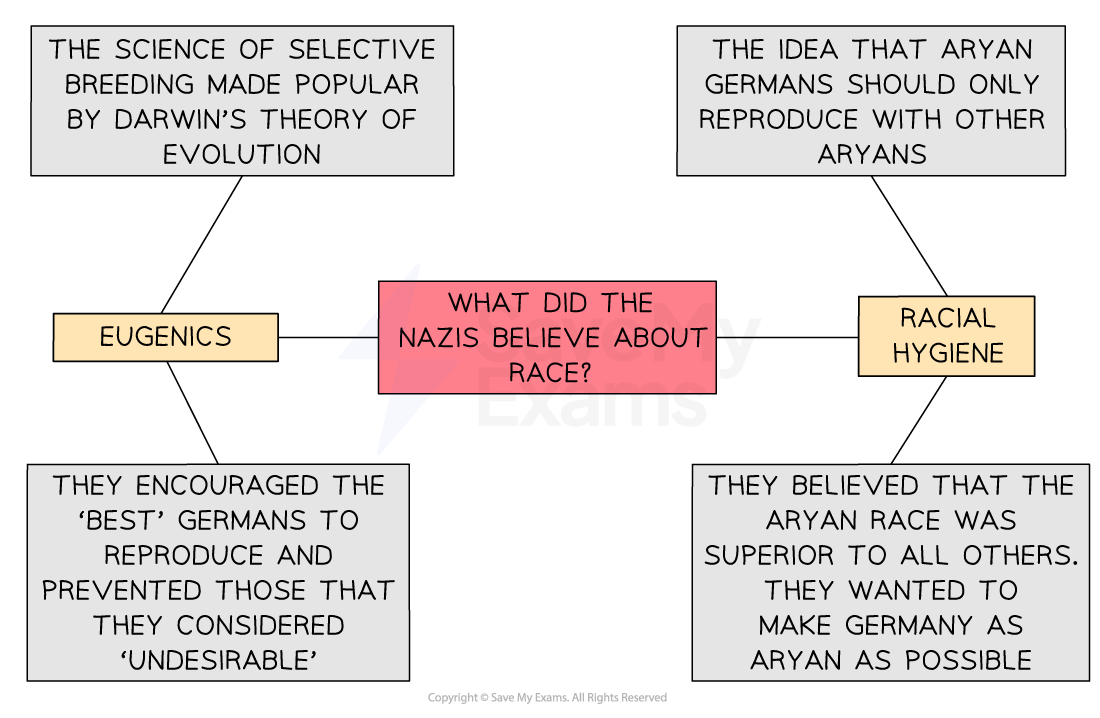
What did Nazis believe about race?
-
In Mein Kampf, Hitler stated about a racial hierarchy:
-
Aryans were the superior race - blonde, blue-eyed and athletic
- Hitler blamed Germany’s defeat in the First World War on the ‘pollution’ of the Aryan race
-
Other white Western races were respected, but lower than Aryans
-
Races of Eastern Europe like Slavs were seen as Untermenschen (sub-humans)
-
Hitler considered Jewish people and Black people as the lowest races
-
| Group | Reason for Nazi persecution |
|---|---|
| Roma | There were around 26,000 Roma in Germany in the early 1930s. The Nazis did not believe they worked enough or contributed enough taxes |
| Homosexuals | The Nazis believed that homosexuals lowered moral standards as they could not procreate or be part of a traditional family unit |
| Slavs | The Nazis wanted to invade Slavic countries like Russia to achieve Lebensraum for the German people |
| Jewish people | Anti-semitic feelings had been common for centuries across Europe. Anti-semitism was strong in Germany throughout the 1920s and 1930s. They were blamed in part for the surrender of Germany during the First World War and the two economic depressions |
| ‘Asocials’ | The Nazis claimed that certain people were a drain on the German economy and ruined society |
| People with disabilities | The Nazis believed that people with disabilities were a burden on society |
Exam Hint Students struggle to understand how the Nazis viewed Jewish people. Hitler and the NSDAP considered Jewish people as a race, not a religion. A race is a permanent state that you are born in. A religion can be changed if the person desires. Therefore, the Nazis wanted to view Jewish people as a race. This means that no Jewish person could escape persecution, whether they practised Judaism or not.
How did the Nazis Persecute Minorities?
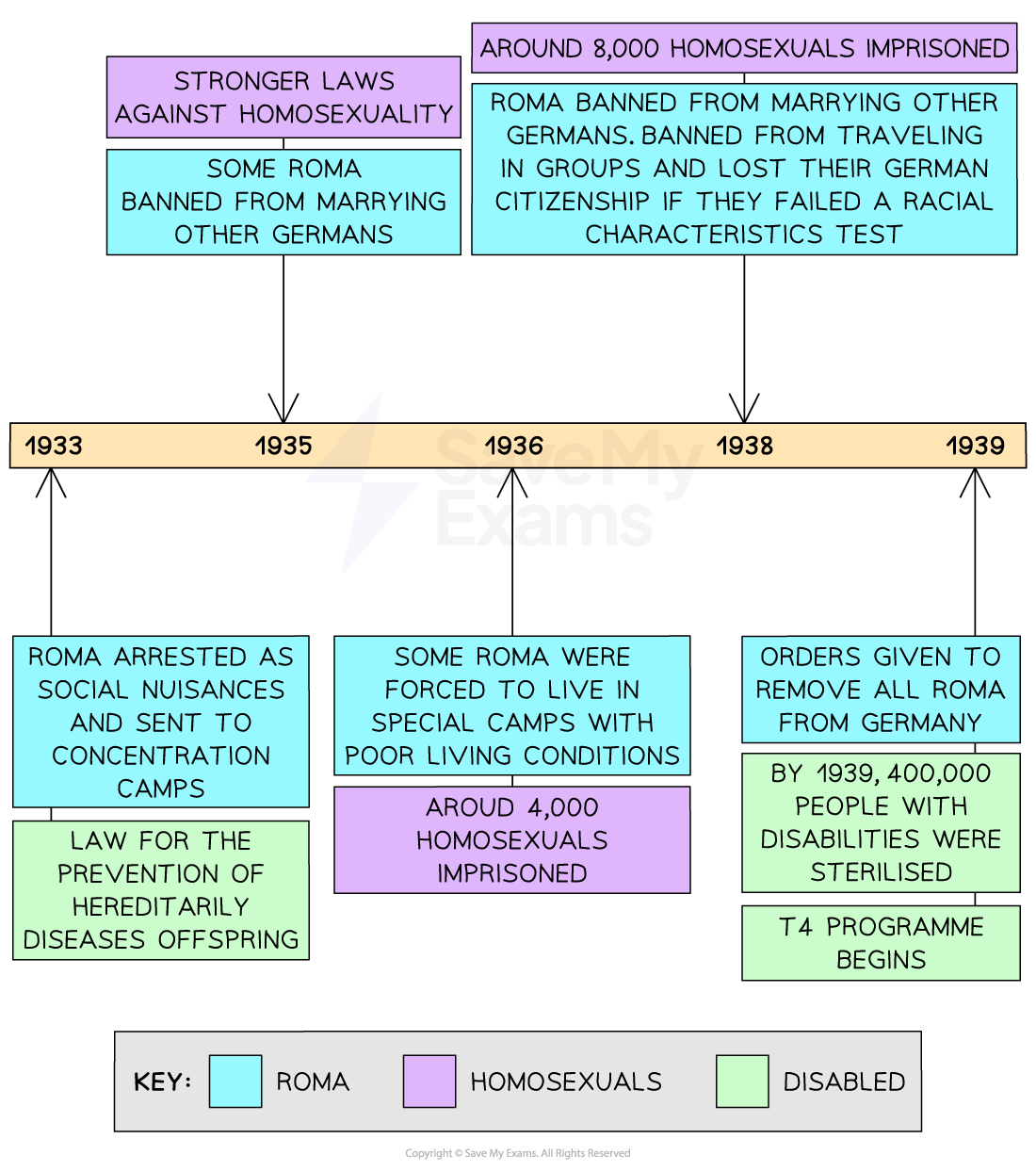
Timeline of persecution against minorities
| Group | Methods of persecution |
|---|---|
| Racial minorities | - Propaganda to turn the German public against the Jewish and Roma communities - Sent to concentration camps and, from 1942, extermination camps |
| Homosexuals | - Banning of gay organisations - The arrests of 100,000 people - 10,000 people were sent to concentration camps. They had to wear a pink triangle for identification |
| Physically and mentally disabled | - Forced sterilisation of 400,000 people - The T-4 Programme killed disabled people through carbon monoxide. The Einsatzgruppen developed techniques that the Nazis would use in the Final Solution - Public outrage caused the official end of the T-4 Programme in 1941. However, it continued secretly throughout the war. Historians estimate the T-4 Programme killed 250,000 people |
| ‘Asocials’ | - The Gestapo and the SS arrested many ‘asocials’ and sent them to concentration camps. They were forced to wear black triangles for identification - Many people died in concentration camps due to exhaustion, beatings and executions |
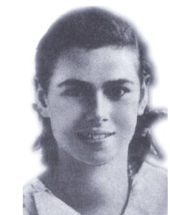
Theresia, aged 12, had been paralysed by polio when she was two. On 13th January 1941, she was one of 59 people transported to Hartheim Castle, where she was murdered.
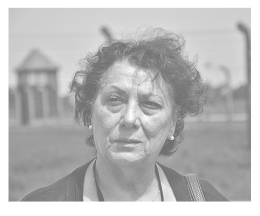
Rita Prigmore – born in 1943, with her twin Rolanda, Rita was a Sinti (Gypsy). In April 1943, her parents faced deportation and the Nazis took Rita and Rolanda. Her mother attempted to rescue the girls. Rolanda was found dead with a bandage around her head. The girls had both been experimented on. Rita and her mother survived the Second World War. Rita continued to experience severe health problems as an adult due to the experiments.
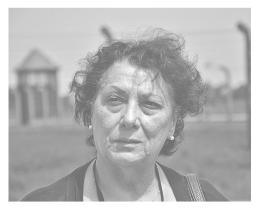
Rita Prigmore – born in 1943, with her twin Rolanda, Rita was a Sinti (Gypsy). In April 1943, her parents faced deportation and the Nazis took Rita and Rolanda. Her mother attempted to rescue the girls. Rolanda was found dead with a bandage around her head. The girls had both been experimented on. Rita and her mother survived the Second World War. Rita continued to experience severe health problems as an adult due to the experiments.
Worked Example Describe how the Nazi regime treated minorities other than the Jews
4 marks
Final answer: Answers:
Many Roma and Sinti gypsies were sent to concentration camps (1). Homosexuals were arrested and forced to wear pink triangles in concentration camps (1). The Nazis sterilised physically and mentally disabled people (1). The T-4 Programme, which began in 1939, killed 250,000 people by carbon monoxide poisoning (1).
Exam Hint In four-mark questions, ensure each detail you select is as specific as possible. The worked example above provides dates for and number of casualties from the T-4 Programme.
Anti-Semitism and the Persecution of Jewish People
Spec point —
S13.035
- There were only 437,000 Jewish people in Germany by 1933, less than 1% of the population
- When Hitler became chancellor *in 1933, persecution against Jewish people began immediately:
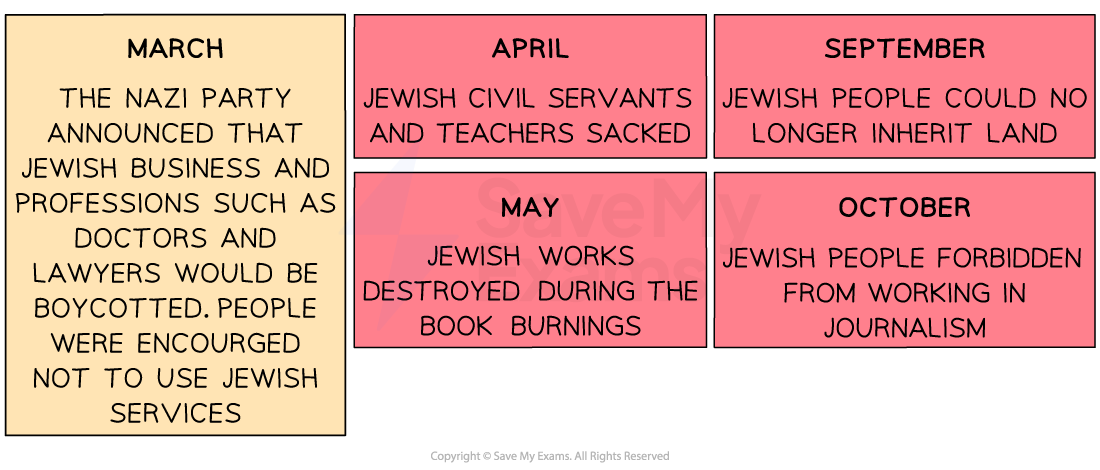
Jewish persecution in 1933
-
The Nazis used propaganda and censorship to target Jewish culture
-
Children were taught in schools:
- How to identify Jewish people
- That Jewish people were Lebensunwertes (unworthy of life)
-
More restrictions on Jewish people followed:
- From 1934, some councils banned them from parks and swimming pools
- From 1935, Jewish people could not join the army
The Nuremberg Laws, 1935
- The Nuremberg Laws of 1935 included two laws that drastically increased the persecution of all Jewish people in Germany:
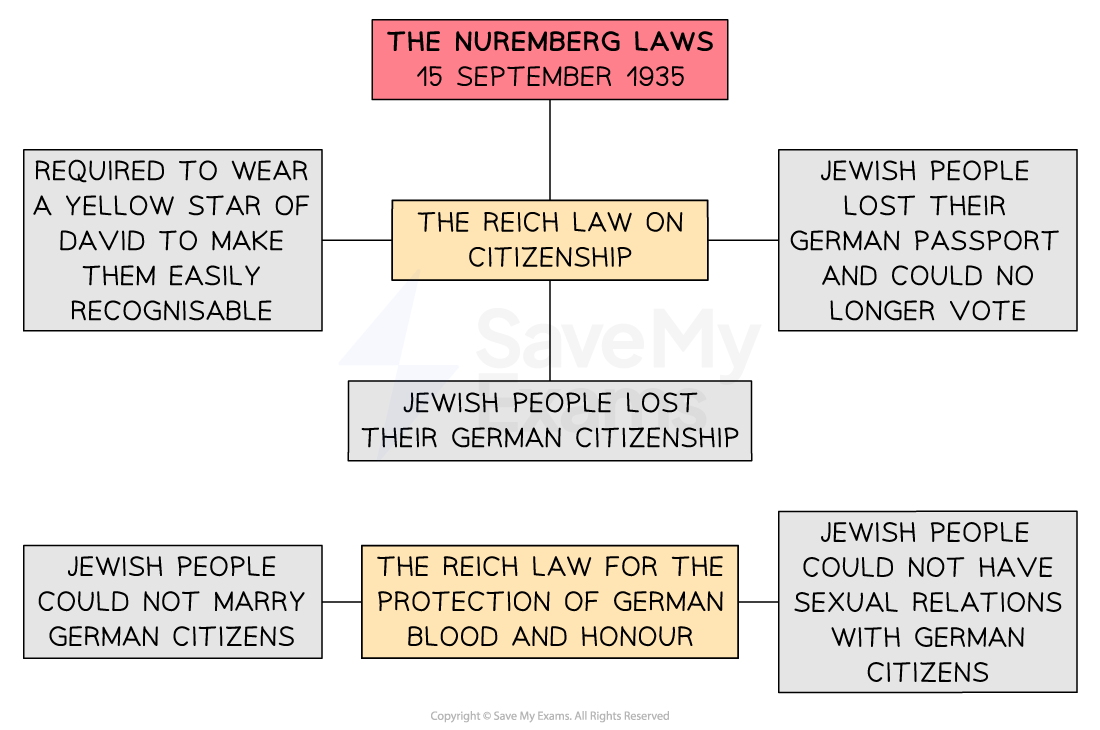
The Nuremberg Laws
-
Anyone with three or four Jewish grandparents was considered Jewish, regardless of whether they practised Judaism
- Many people who had converted to Christianity still faced persecution
-
From 1938, Jewish people had to register their possessions and also had to carry identity cards
The Events of ‘Kristallnacht’
- Persecution of Jewish people became much worse in November 1938 following an event known as ‘Kristallnacht’ (Night of Broken Glass):
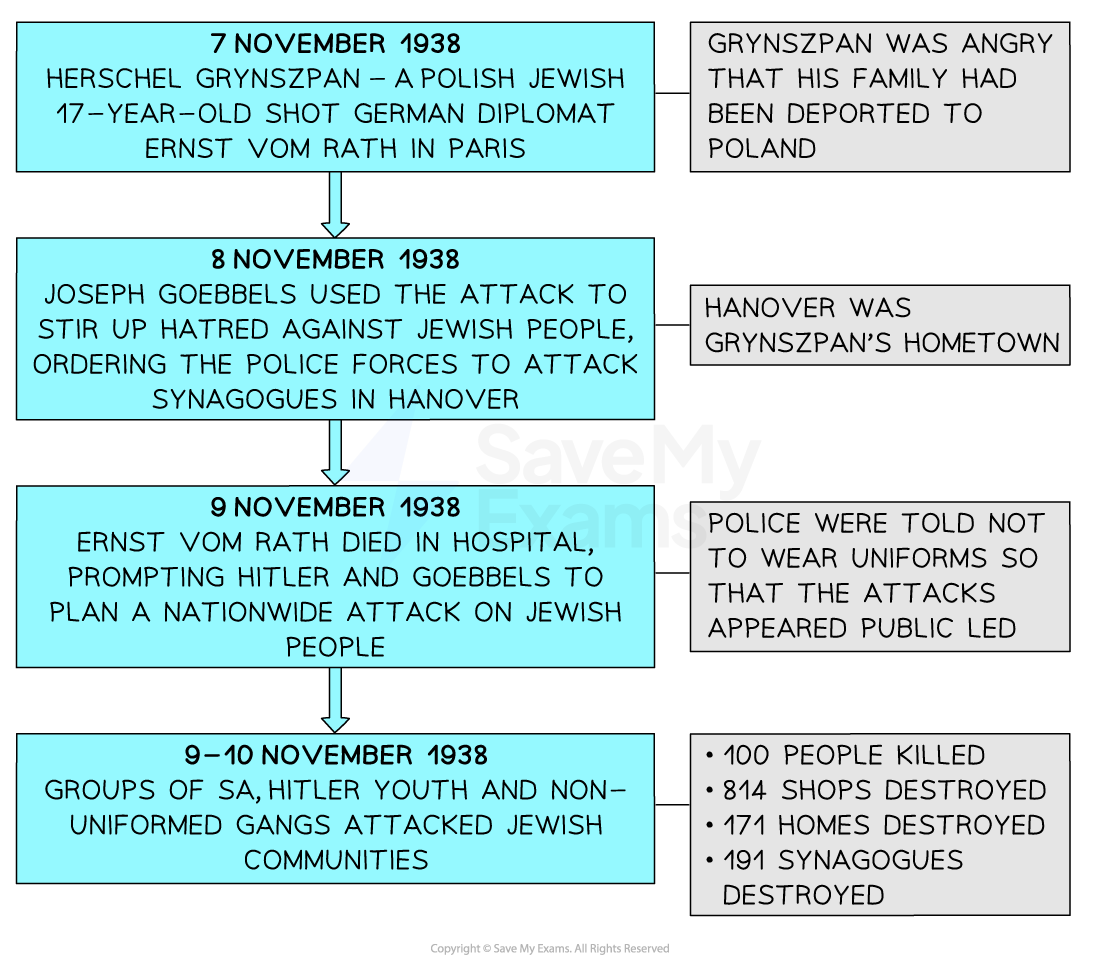
‘Kristallnacht’ The Night of Broken Glass
-
Jewish people were punished for causing ‘Kristallnacht’
- They had to pay a combined total of 1 billion marks to repair the damage
- By 12th November, around 20,000 Jewish people had been sent to concentration camps like Dachau
Worked Example What impact did Kristallnacht have on the Jews?
4 marks
Final answer: Answer:
Around 800 Jewish businesses were attacked and their windows broken (1). 191 Synagogues were destroyed (1). Jewish people were made to pay 1 billion marks for the damage (1). Around 20,000 Jewish people were sent to concentration camps (1).
Exam Hint This style of question does not require you to explain your answer. The Cambridge IGCSE gives you a point for each relevant piece of information that you write in your answer.
How Did Germans React to Jewish Persecution by 1939?
-
All Germans knew how the Nazis were treating Jewish people
-
Acts of violence and discrimination towards Jewish people shocked many Germans
- They were too scared to help because of groups like the SS and Gestapo
-
Other people took part in acts of persecution, like during the boycotts in 1933 and ‘Kristallnacht’ in 1938
-
Some Germans chose to ignore Jewish persecution
-
Persecution in the Second World War
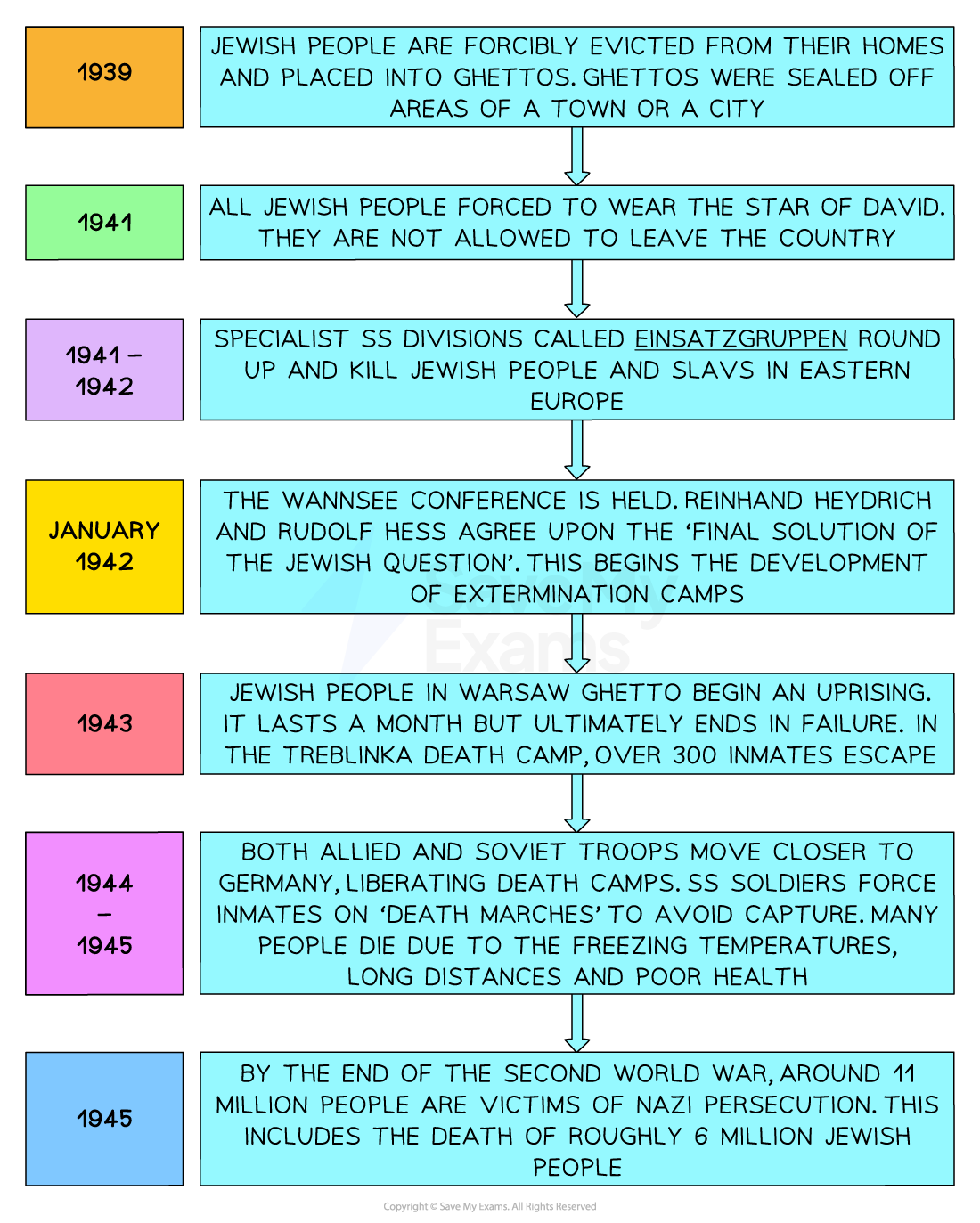
A flow diagram showing the development of Jewish and non-Jewish persecution during the Second World War
Was this revision note helpful?