How high am I?
Excerpt: This offers an opportunity to apply some basic trigonometry to a situation that students start by visualising. Asking students to explain why their solutions work for all angles from to could help to make links with graphs of trigonometric functions and how these relate to the original situation.
Problem
How does an angular change on a Ferris wheel affect the height of a rider above the ground level?
After looking at this resource you may like to take a look at Proving the half-angle formulae and Inspecting identities in which you may notice the appearance of similar expressions.
Suggestion
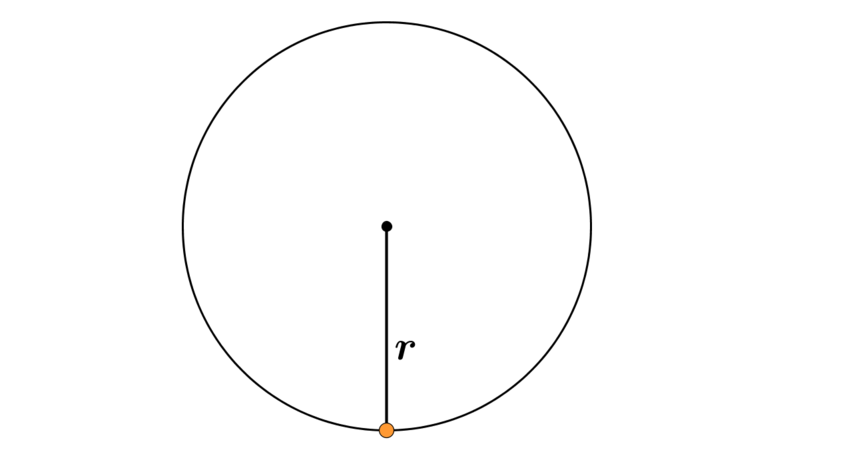
Try to draw a diagram to represent the situation. You might find that two diagrams are useful, one to show the initial situation and one to show the situation after the ride has moved a little.
Keep it simple, label what you know and what you want to find.
Solution
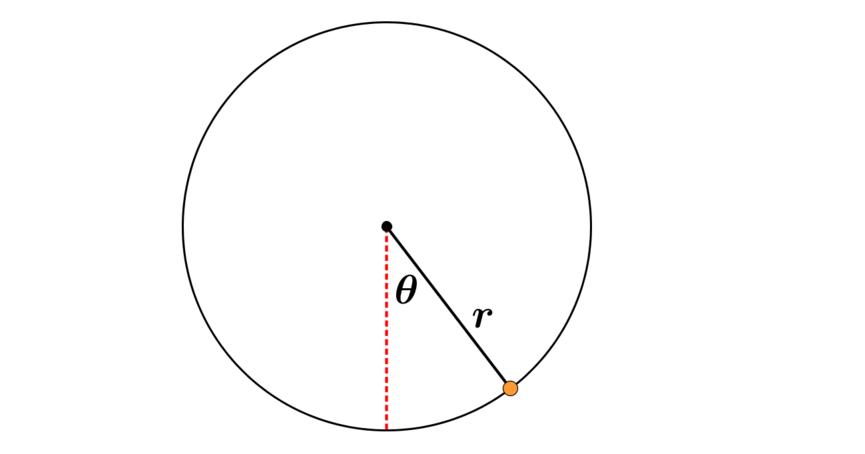
We need to select a starting point - an initial position for the rider. It makes sense to choose this to be at the bottom of the wheel, where the rider first gets on. Once the wheel starts moving the rider will begin to move around the circumference of a circle. After some time the rider will have moved through an angle, , relative to the starting position and will be a height, , above the ‘ground’ (we are assuming that at the starting position the rider has a height of ).
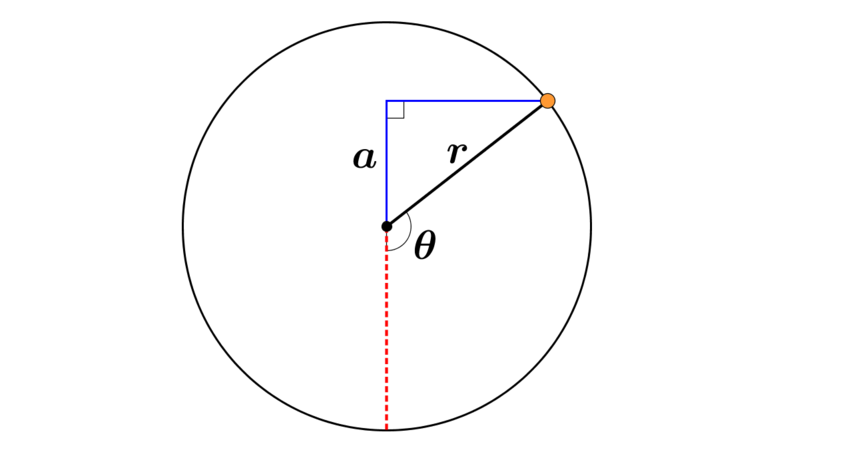
We can now add to our initial diagram, labelling the radius of the Ferris wheel, , and the angle through which the rider has turned, .
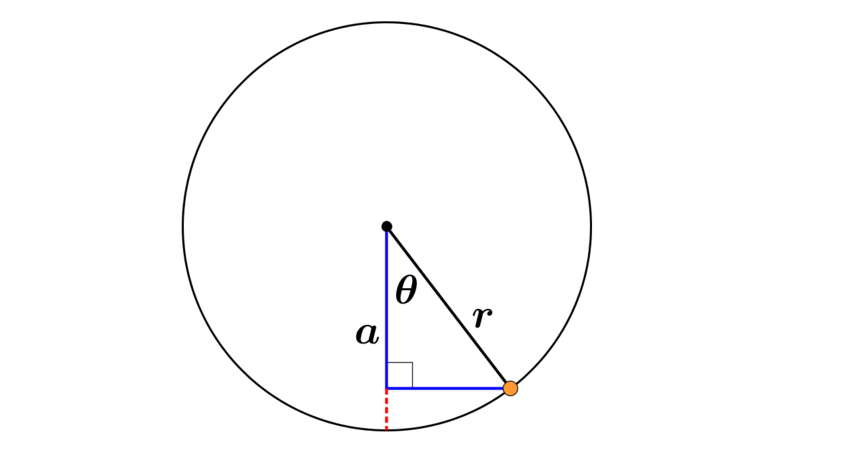
We are interested in finding the vertical height of the rider at this position. Notice that we can construct a right-angled triangle as shown in the following diagram.
Using trigonometry we can show that the length is equal to
Then the vertical height of the rider above their starting position (the ground), , is
It makes sense to check this result. We know that when , should equal and that when , should equal . Substituting into our formula for the height gives as required.
Similarly, substituting into the formula for the height gives
We found this formula by considering the acute value of in my original diagram. We have confirmed that the formula returns expected results for two specific values of but it’s worth thinking a little further about why it works for all values of .
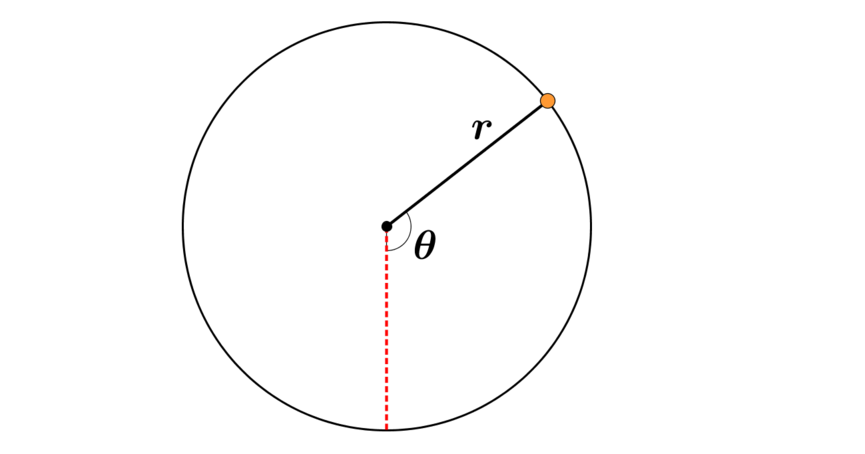
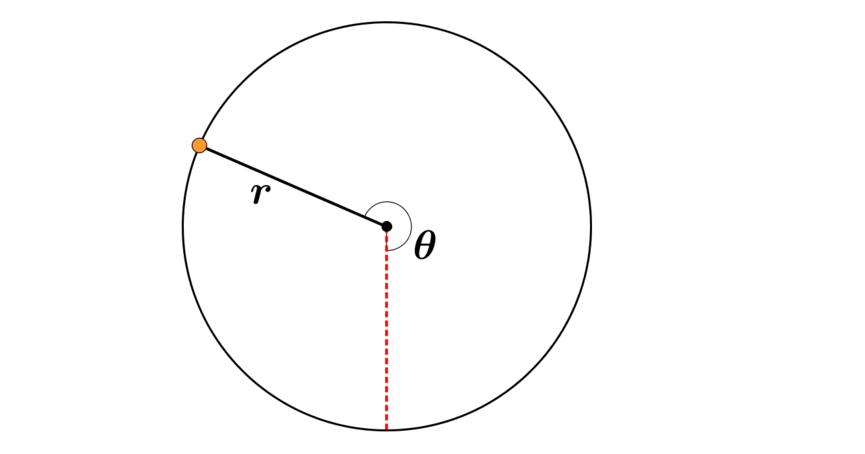
Consider the following two diagrams:
Can you use these diagrams to explain why the formula also works for obtuse and reflex values of ?
Thinking graphically
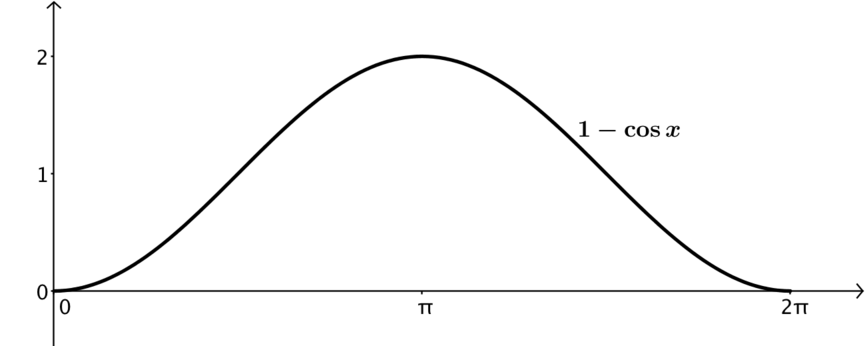
One way of approaching this would be to consider the graphical representation of the formula that we have found.
How does each diagram relate to this graph? Does this help to explain why the formula works for all values of ?
Thinking algebraically
| If we had considered this diagram in the first place we may have decided that the height of the rider above the ground is given by Is this formula equivalent to the original, |
|---|