Graphs of Cubic Polynomials (Cambridge International IGCSE Further Maths)
Graphs of cubic polynomials
What is a cubic polynomial?
-
A cubic polynomial is a function of the form
-
and are constants
-
it is a polynomial of degree 3
- so and/or could be zero
-
-
To sketch the graph of a cubic polynomial it will need to be in factorised form
- e.g. is the factorised form of
What does the graph of a cubic polynomial look like?
-
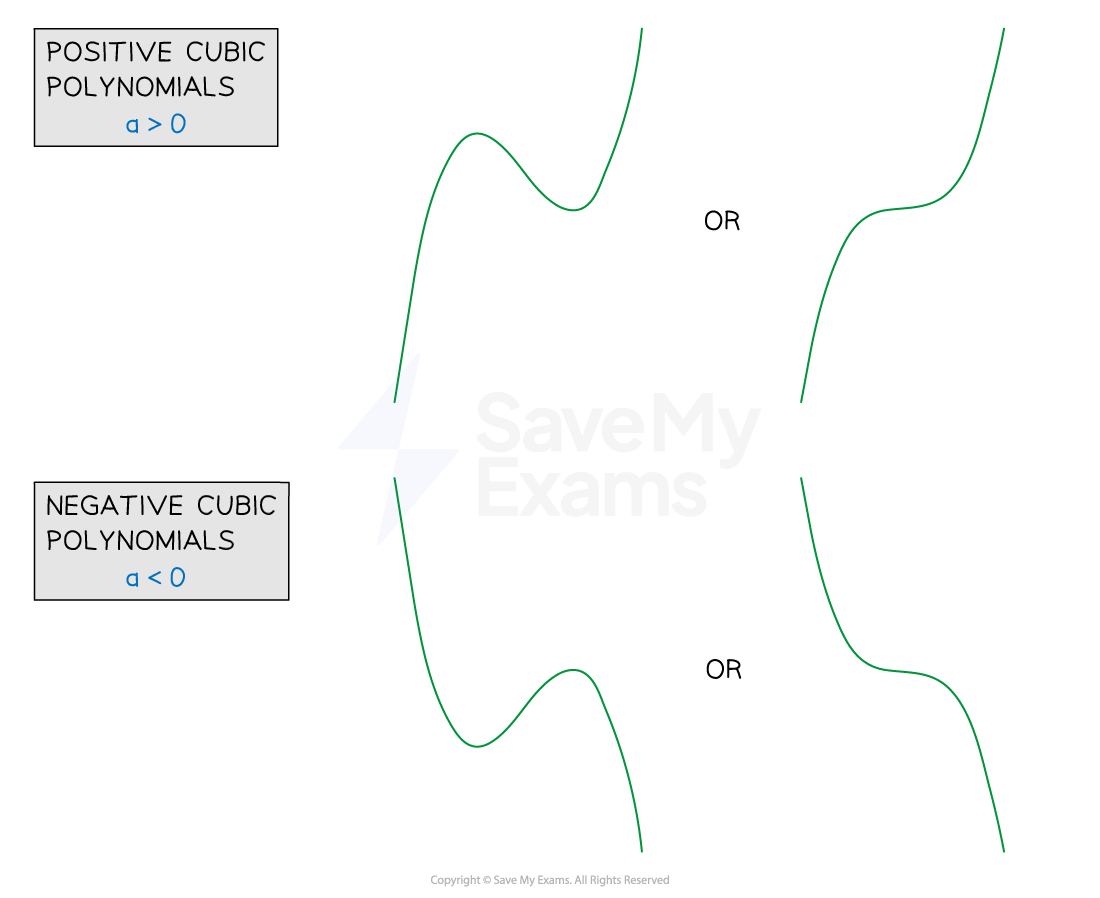
In general the graph of a cubic polynomial will take one of the four forms
- All are smooth curves that take some practice to sketch!
-
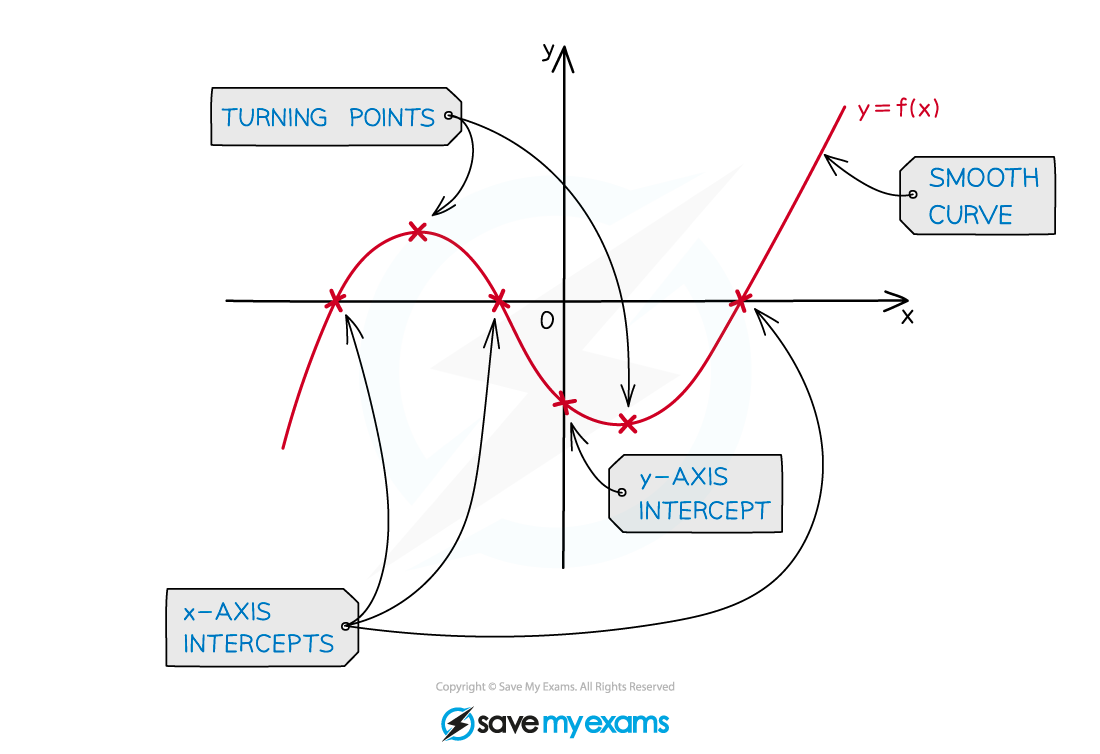
The exact form a particular cubic polynomial will depend on
-
The number (and value) of roots (-axis intercepts) of the cubic polynomial
-
The -axis intercept
-
The sign of the coefficient of the term ()
- If the graph is a positive cubic ('starts' in the third quadrant, 'ends' in the first)
- If the graph is a negative cubic ('starts' in the second quadrant, 'ends' in the fourth)
-
Turning points
-
How do I sketch the graph of a cubic polynomial?
STEP 1 Find the -axis intercept by setting
STEP 2 Find the -axis intercepts (roots) by setting (Any repeated roots will mean the graph touches - rather than crosses - the -axis)
STEP 3 Consider the shape of the graph - is it a positive cubic or a negative cubic? Where does the graph 'start' and 'end'?
STEP 4 Consider where any turning points should go
STEP 5 Sketch the graph with a smooth curve, labelling points where the graph intercepts the and axes
Exam Hint
In the exam, a cubic polynomial that requires sketching will be given in factorised form
- i.e. as the product of three linear factors
- a factor could be repeated
Build your sketch up as you work through each step to gradually build a mental picture of it
- If you need to redraw the graph for your final answer, that's fine!
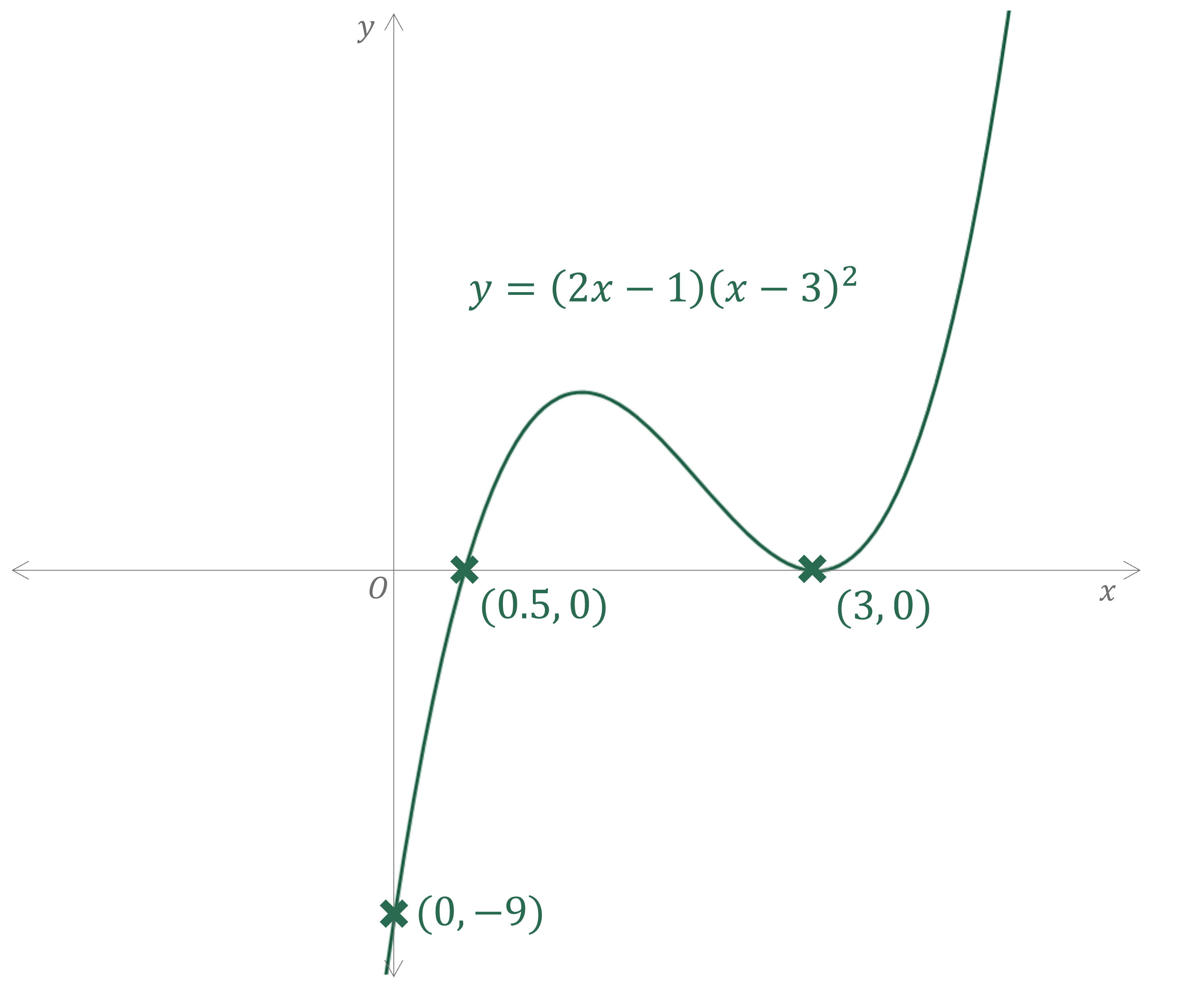
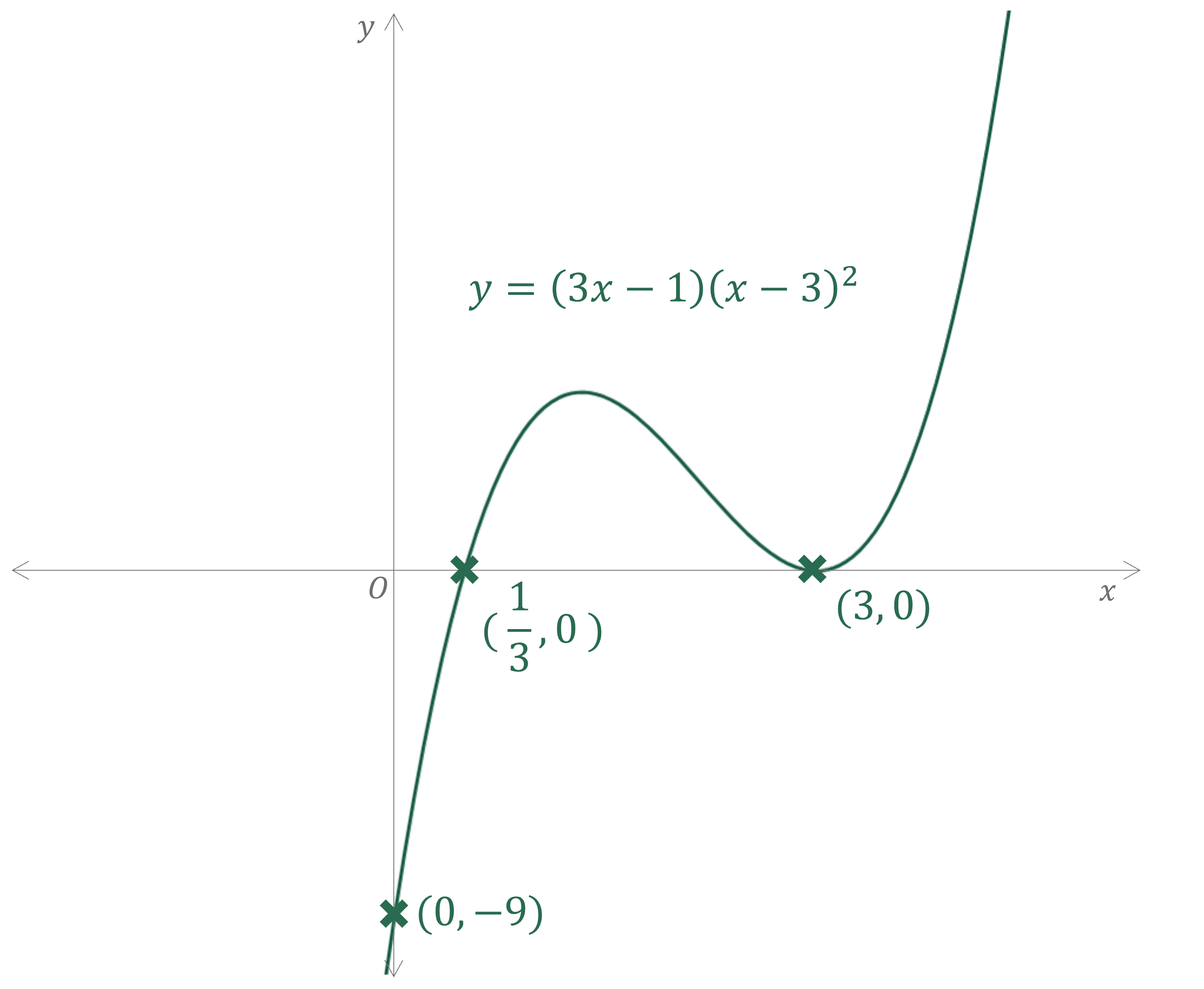
Worked Example Sketch the graph of .
STEP 1 - -axis intercept
STEP 2 - -axis intercepts
(repeated)
STEP 3 - shape, 'start'/'end'
so it is a positive cubic is a repeated root so the graph will touch the -axis at this point
STEP 4 - turning points
One turning point (minimum) will need to be where the curve touches the -axis The other (maximum) will need to be between and
STEP 5 - smooth curve with labelled intercepts
Modulus Cubic Graphs
What is a modulus cubic graph?
-
A (factorised) cubic polynomial is of the from
-
The graph of must cross the -axis at least once
- therefore must take both positive and negative values
-
The modulus cubic graph, will mean all values of are positive
-
Any negative values become their positive equivalents
- e.g. If then , but
-
-
A modulus cubic graph will not have any negative values
- the graph will not cross the -axis
- the graph will touch the -axis (at least once)
How do I sketch a modulus cubic graph?
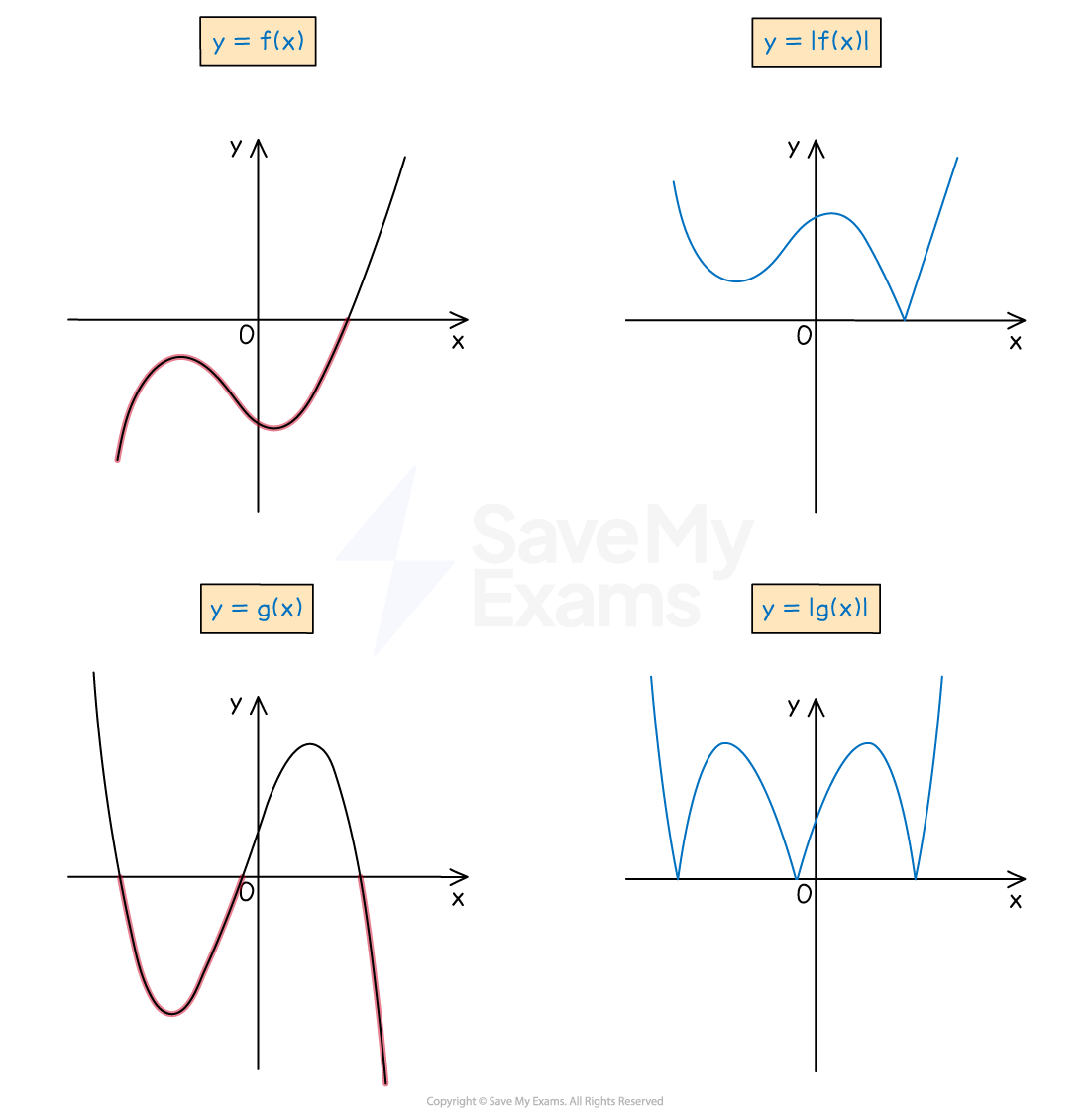
- Sketch the graph of the (original) cubic polynomial,
- Any parts of this graph that are below the -axis should be reflected in the -axis to sketch the graph of
-
The points at which a modulus graph touches the -axis are the same as the points at which the original graph intercepts the -axis (i.e. the roots of )
- Label these points, and the -axis intercept, on a sketch
-
Notice that the points at which a modulus graph touches the -axis are not smooth
- they are 'pointy' (V-shaped)
- turning points are smooth (U-shaped)
How do I find a cubic function from its modulus graph?
-
To deduce a cubic expression from its modulus graph consider
-
whether the (original) expression could be a positive or negative cubic
-
a positive cubic 'starts' in the third quadrant and 'ends' in the first
-
a negative cubic 'starts' in the second quadrant and 'ends' in the fourth
- a negative cubic can have a "-" at the start of its expression
-
-
the -axis intercepts - the roots
- for the roots and , write the factors
-
the -axis intercept - to deduce the expression in the form
-
lots of cubic functions have the same roots but have different coefficients
-
the -axis intercept should be the product
- may often, but not always, be 1
-
-
Exam Hint
Sketching the (original) graph of first is often helpful rather than trying to sketch the modulus graph from scratch
If asked to find a cubic function from a given graph
there may be more than one possibility
- consider which parts of the graph may have been reflected in the -axis
- could it be either a positive or negative cubic polynomial?
the factorised form is usually sufficient (unless a question says otherwise)
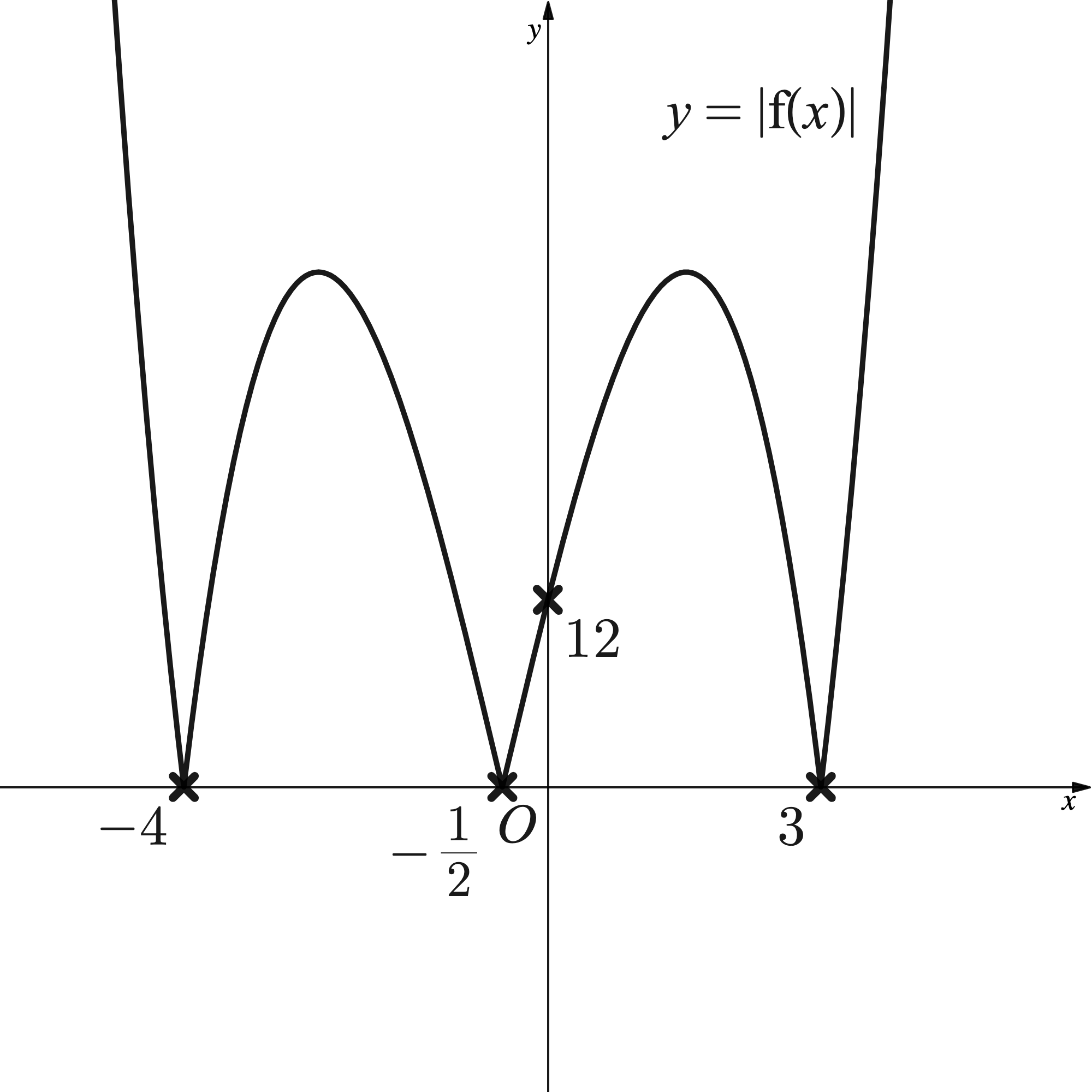
Worked Example The diagram below shows the graph of where is a positive cubic polynomial.
Deduce an expression for leaving your answer in factorised form, with each factor having integer coefficients.
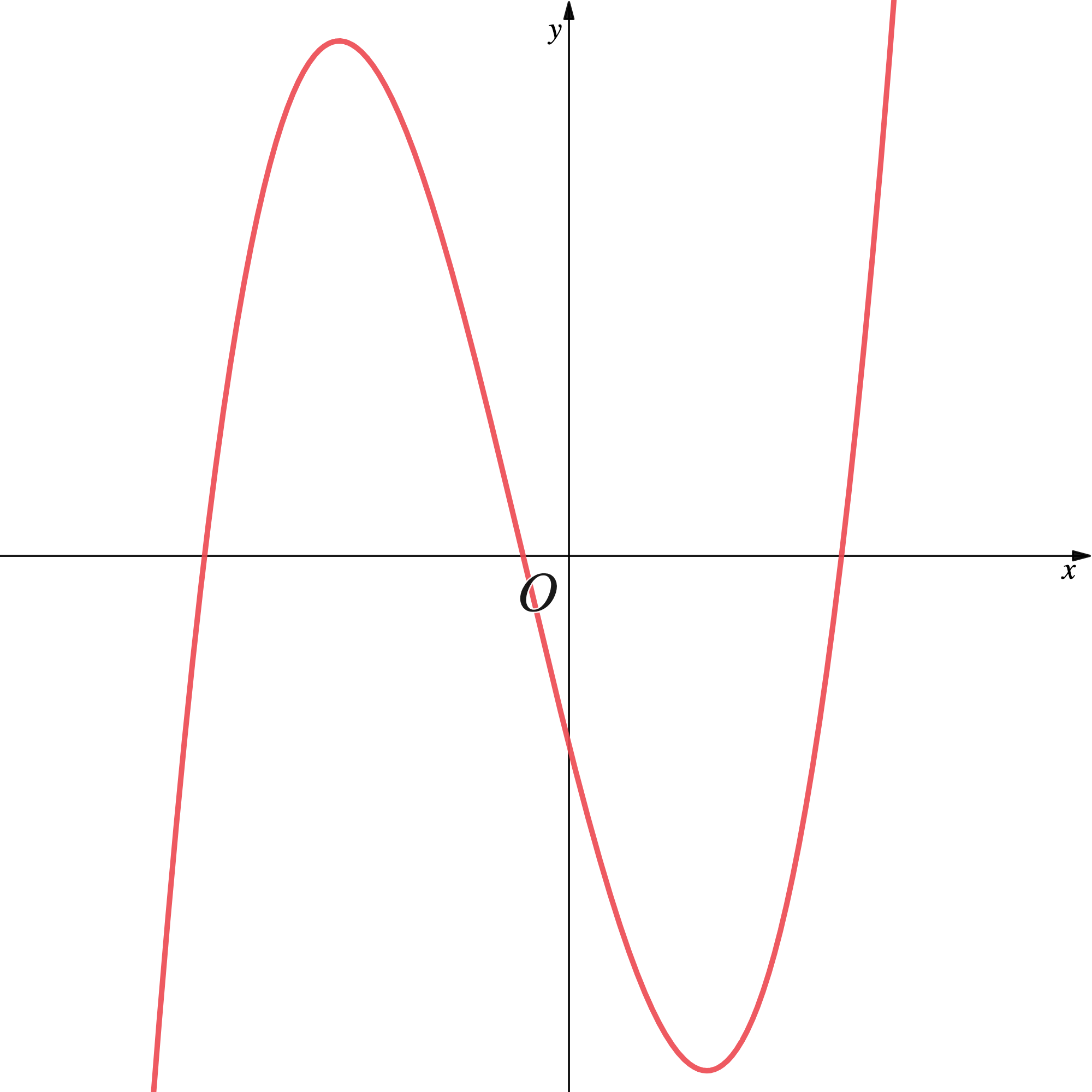
is a positive cubic polynomial so the graph should 'start' in the third quadrant and 'end' in the first. A quick sketch (without labels) can help.
The -axis intercepts indicate the roots.
The expression for is of the form . Use the -axis intercept to deduce the value of . From the sketch of the -axis intercept is -12 (not 12).
The final answer requires each factor to have integer coefficients so multiply 2 into and write down .
Solving Cubic Inequalities Graphically
What is a cubic inequality?
-
A cubic function is of the form where and are constants
-
A cubic inequality can be any of the following
-
An inequality may need rearranging into one of these forms first before solving
-
Furthermore, solving cubic equations graphically is easiest when the expression has been factorised
- e.g. for a cubic with three (real) roots this would be where and are the roots
-
How do I solve a cubic inequality graphically?
STEP 1 If need be, rearrange the inequality so that one side of the inequality is zero This should leave a cubic polynomial on the other side Factorise the cubic polynomial if required e.g.
STEP 2 Sketch the graph of the cubic polynomial The -axis intercepts (roots) are crucial to finding the solution but the -axis intercept is not needed e.g.
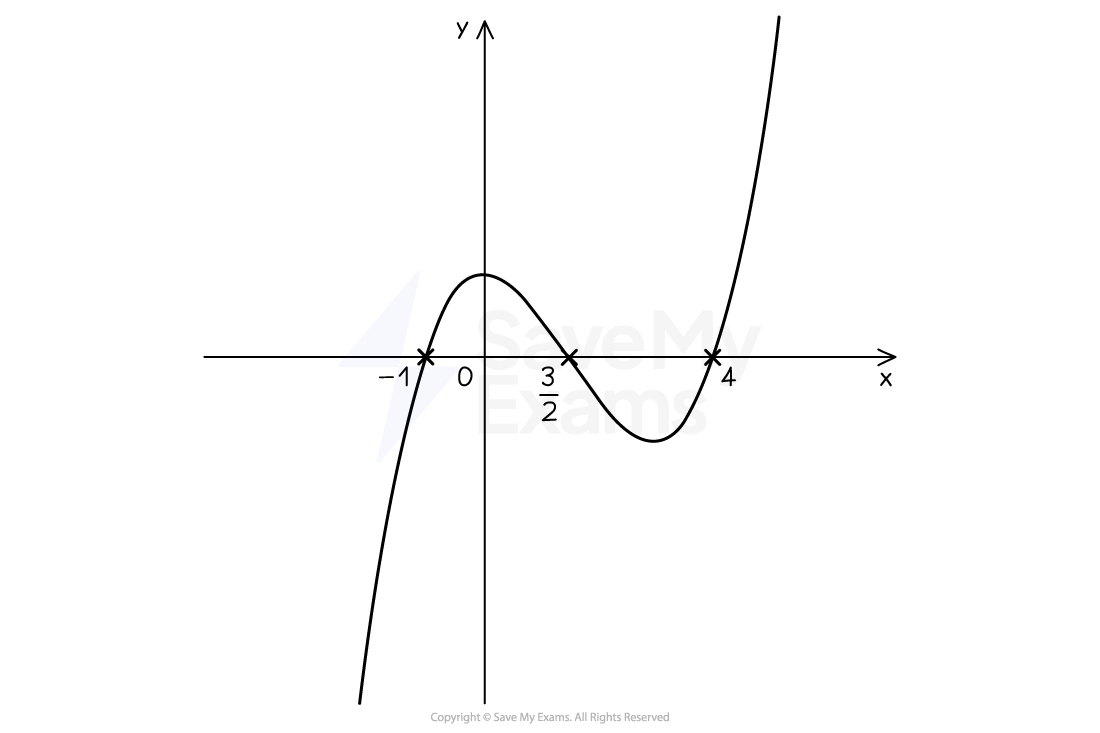
STEP 3 Identify the part(s) of the graph that satisfy the inequality Highlighting this on the sketch will help Consider whether you need to include (≤, ≥) or exclude (<, >) the roots e.g.
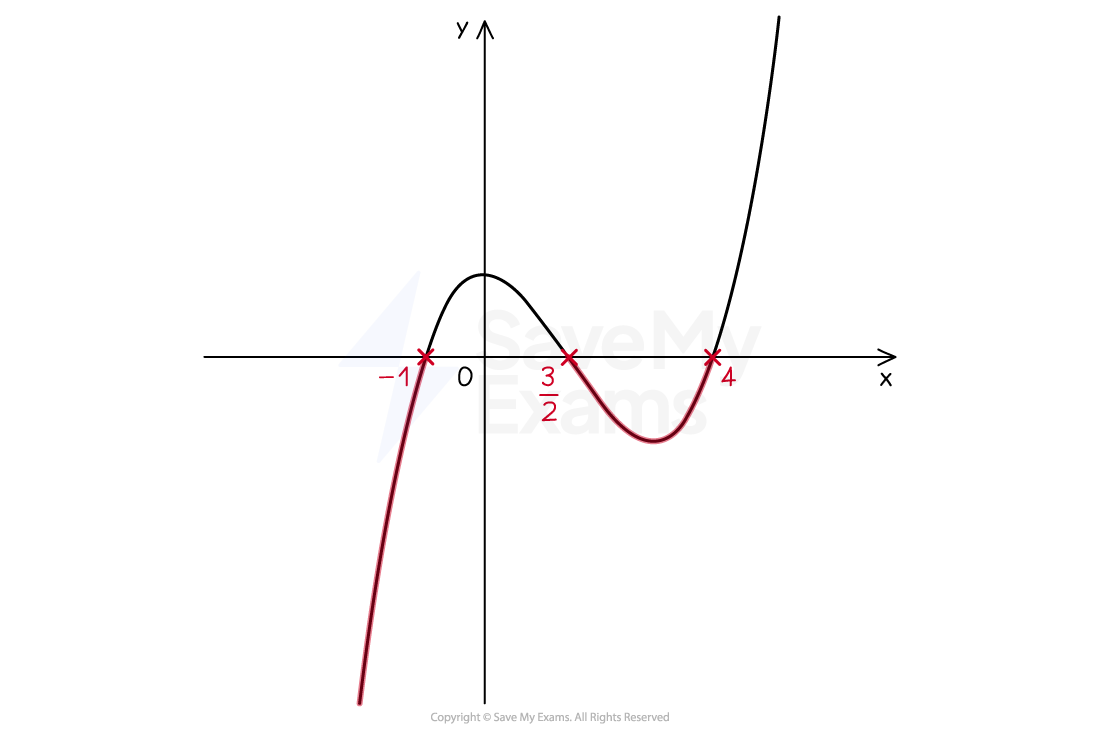
STEP 4 Write down the solutions to the inequality e.g.
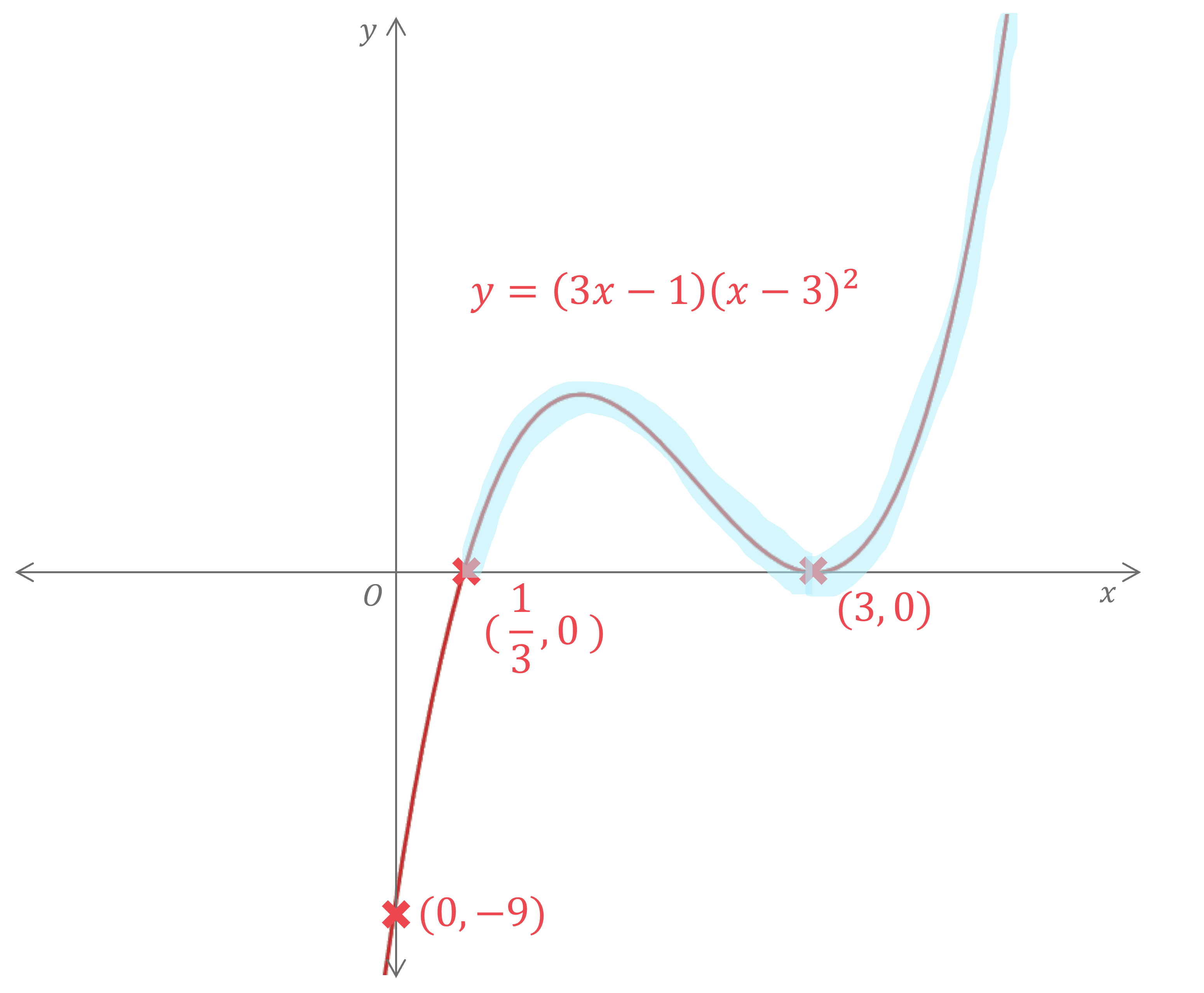
Worked Example a) Sketch the graph of where .
*This is a positive cubic polynomial with roots * and
* is a repeated root so the graph will touch the -axis at this point*
a) Hence solve the inequality .
STEP 1 - the cubic polynomial is already in factorised form
STEP 2 - the graph has been sketched in part (a)
STEP 3 - Highlight the graph to show the parts of the graph which lie above zero
STEP 4 - Write the solution mathematically. Remember that in this case it is a strict inequality, so it cannot be equal to 3 or
Was this revision note helpful?
Build on this topic