Earth Structure (Cambridge International IGCSE Environmental Management)
How is the earth structured?
- Understanding the Earth’s internal structure is essential to understanding tectonic hazards
- The planet is made of several layers, each with different compositions, temperatures, and physical states
- The Earth is composed of three main layers: the crust, mantle and core
Crust
-
The thin, outermost layer of the Earth
-
Made of solid rock
-
Broken into tectonic plates that move slowly across the planet
-
The thickness varies and it is made up of two types of crust: oceanic and continental
- Oceanic crust is thin and dense
- Continental crust is thicker and less dense
Mantle
- The mantle is the thickest layer, reaching a depth of approximately 2900 km
- Mostly semi-molten rock (magma) in the upper mantle and solid in the lower mantle
- Heat from the core drives convection currents within the mantle
- These convection currents are the engine of plate movement, shaping earthquakes and volcanic activity
Core
-
Divided into:
- Outer core: liquid iron and nickel
- Inner core: solid iron and nickel due to immense pressure
-
Temperatures exceed 5000°C
-
Heat from the core powers mantle convection
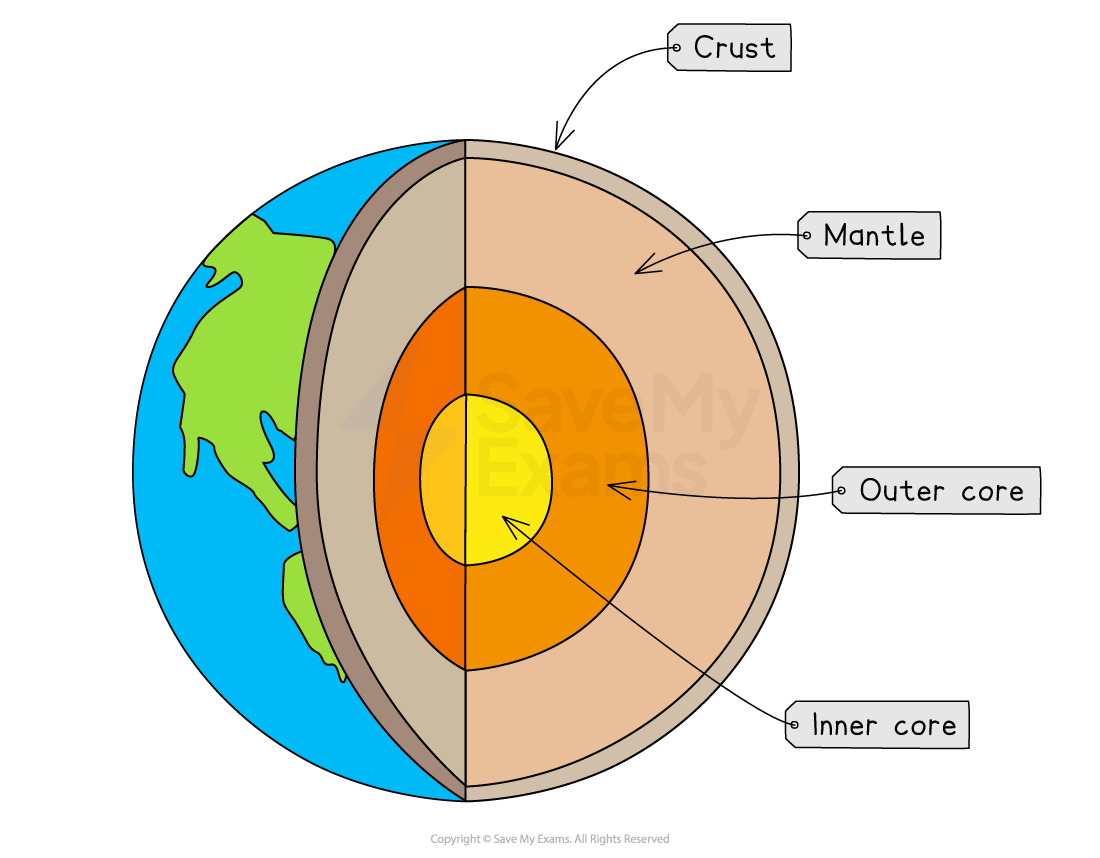
Earth's structure
Earth’s continents
-
Understanding continents helps visualise plate boundaries, earthquake zones and volcano belts
-
The continents include:
- Africa
- Antarctica
- Asia
- Europe
- North America
- Oceania (including Australia and surrounding islands)
- South America
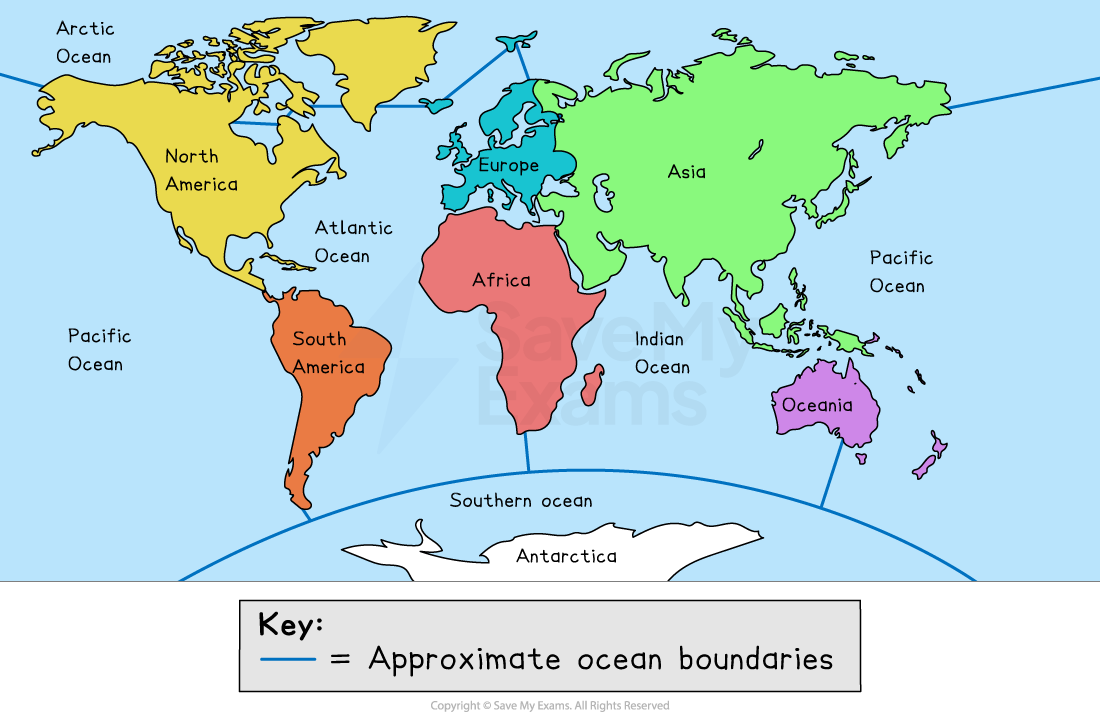
Seven continents of the world
Distribution of earthquakes & volcanoes
-
Earthquakes and volcanoes do not occur randomly
-
Their distribution is mainly controlled by the structure and behaviour of tectonic plates
-
The surface of the Earth is divided into tectonic plates that have moved throughout geological time
- The Earth's crust is broken into 15 major tectonic plates and several minor ones
- Plates move slowly (mm–cm per year) because of convection currents in the mantle
- The place where plates meet is called a plate boundary or plate margin
-
Tectonic plates move apart, slide against each other, or collide
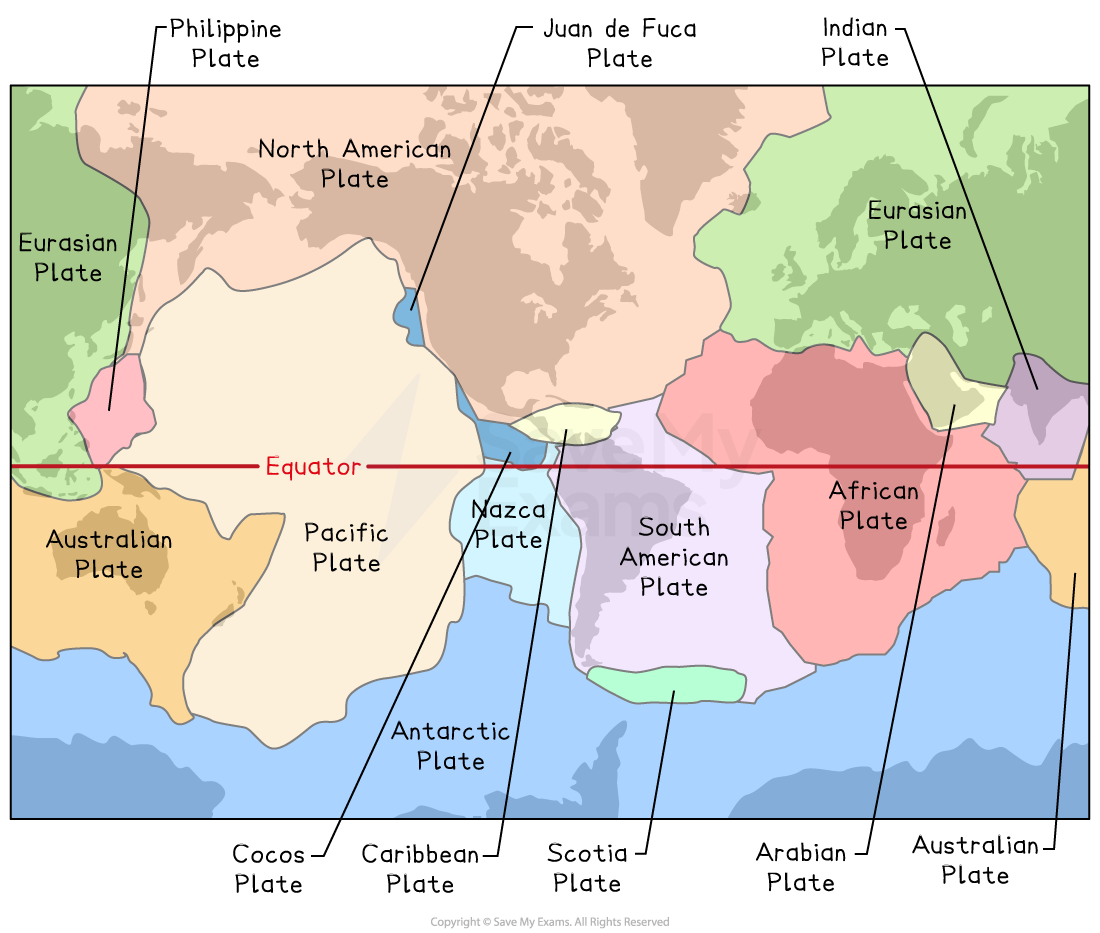
Tectonic plates
Earthquakes
- The majority of earthquakes (about 95%) occur close to or at a plate boundary
- Plates are constantly moving due to mantle convection
- Where plates interact—colliding, separating or sliding—stress builds up
- This stress is released suddenly as earthquakes
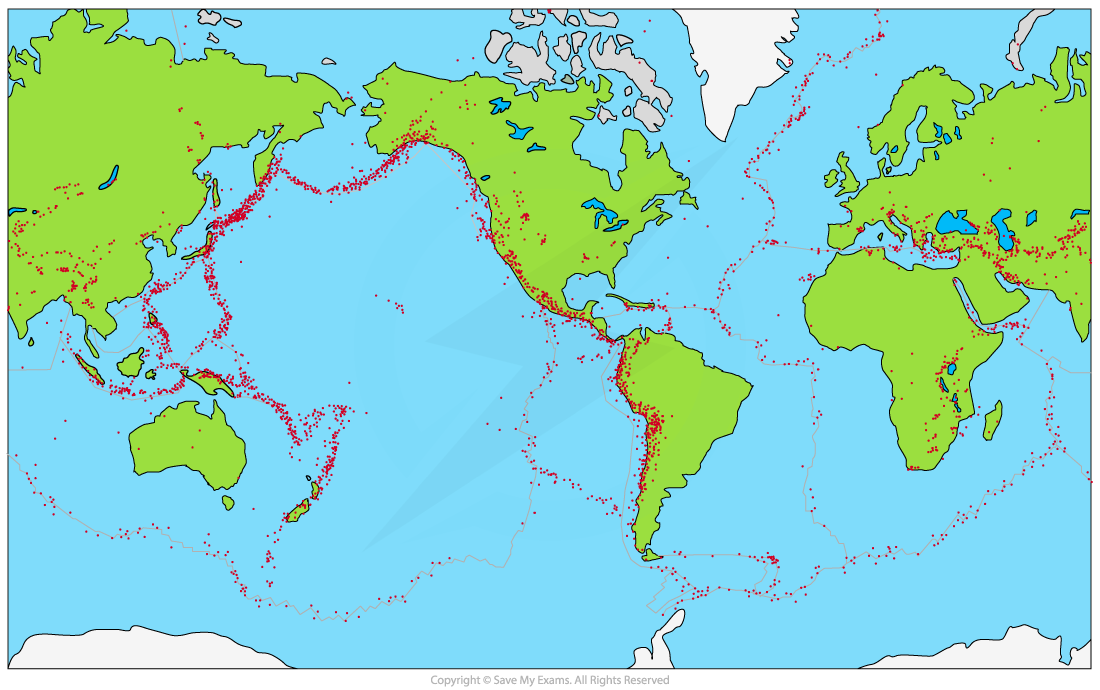
Map showing global earthquake distribution
Volcanoes
- Like earthquakes, most active volcanoes occur at or near plate boundaries
- Many (about 75%) occur around the 'Ring of Fire' surrounding the Pacific Ocean
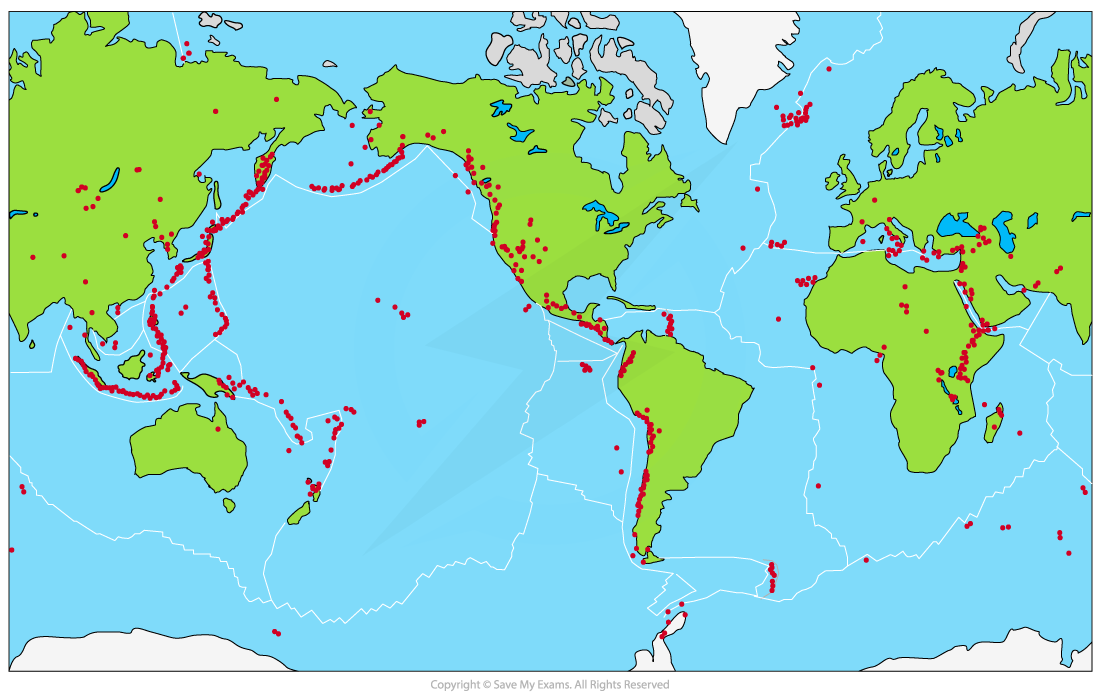
Global distribution of active volcanoes
Patterns to remember:
-
Pacific Ring of Fire:
- A tectonically active region surrounding the Pacific Ocean
- It contains ~75% of the world’s volcanoes and frequent major earthquakes
-
Mid-Atlantic Ridge:
- A divergent boundary where new oceanic crust forms, creating volcanic activity and seafloor spreading
-
San Andreas Fault:
- A transform boundary in California known for frequent earthquakes
Hotspots
-
Volcanic activity can occur far from plate boundaries
-
A hot spot is an area where plumes of very hot mantle rise towards the surface
- The magma rises to the surface through cracks in the crust
- Occurs away from the plate boundaries (hotspots usually occur away from plate boundaries, in the middle of tectonic plates)
- As plates move over a hotspot, a chain of volcanoes forms, e.g. Hawaii
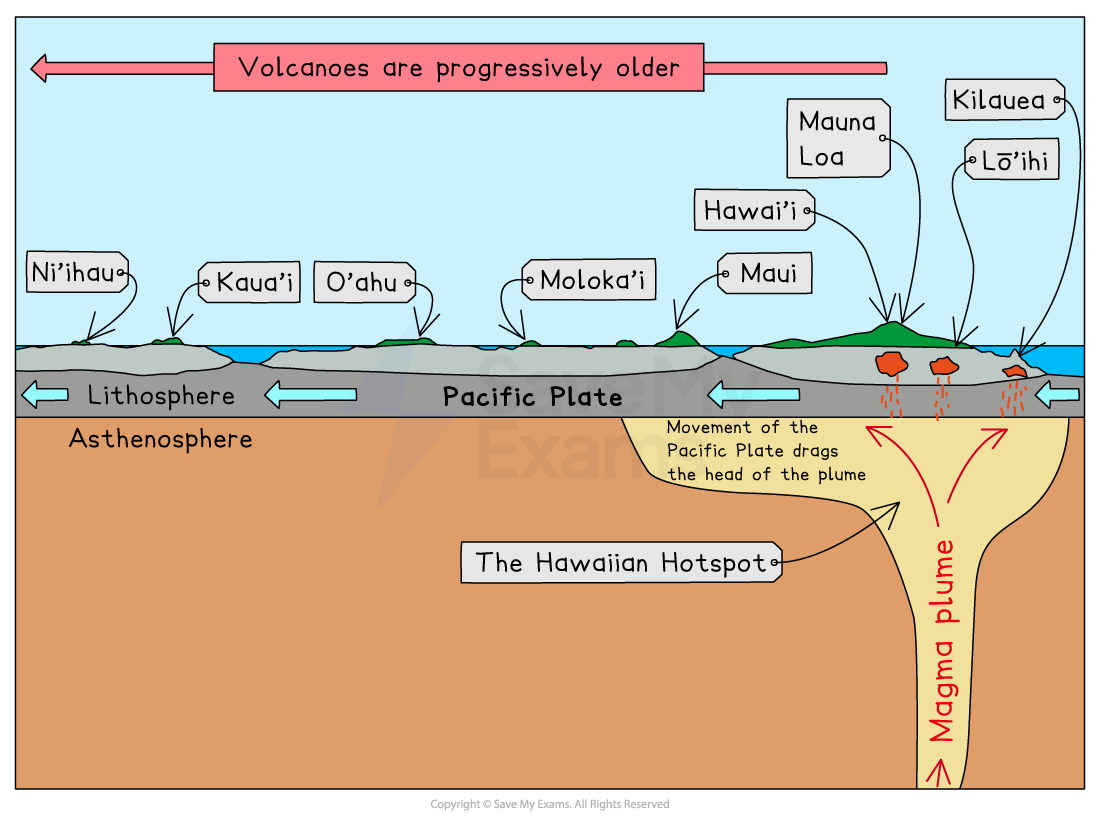
Hot spot and island formation
- Hotspot volcanoes tend to produce runny, basaltic lava and create broad shield volcanoes
Was this revision note helpful?
Build on this topic