Population Density & Distribution (Cambridge International IGCSE Environmental Management)
World population distribution
-
The spread of people across a region is referred to as population distribution
-
It shows how people are distributed (spread) or concentrated in particular areas
- East/South/Southeast Asia and Europe are densely populated because they are **fertile, temperate, and resource-rich **areas with good transport, flat land and reliable water supplies
-
Sparse populations exist in extreme climates (deserts, poles) or challenging terrains, because of physical factors (poor soil, steep land or limited access to water) and** human elements** (lack of jobs, poor infrastructure, etc.)
- Examples include the Sahara Desert, Antarctica, the Amazon rainforest and the Himalayas
-
Most people live in towns and cities, lowland areas, along rivers, and coasts
- Approximately 55% of the world now lives in cities but the UN predicts this will reach 68% by 2050 as urbanisation increases
- Most people live within 1000 km of the sea
- 90% of the population live on low ground below 500 m above sea level
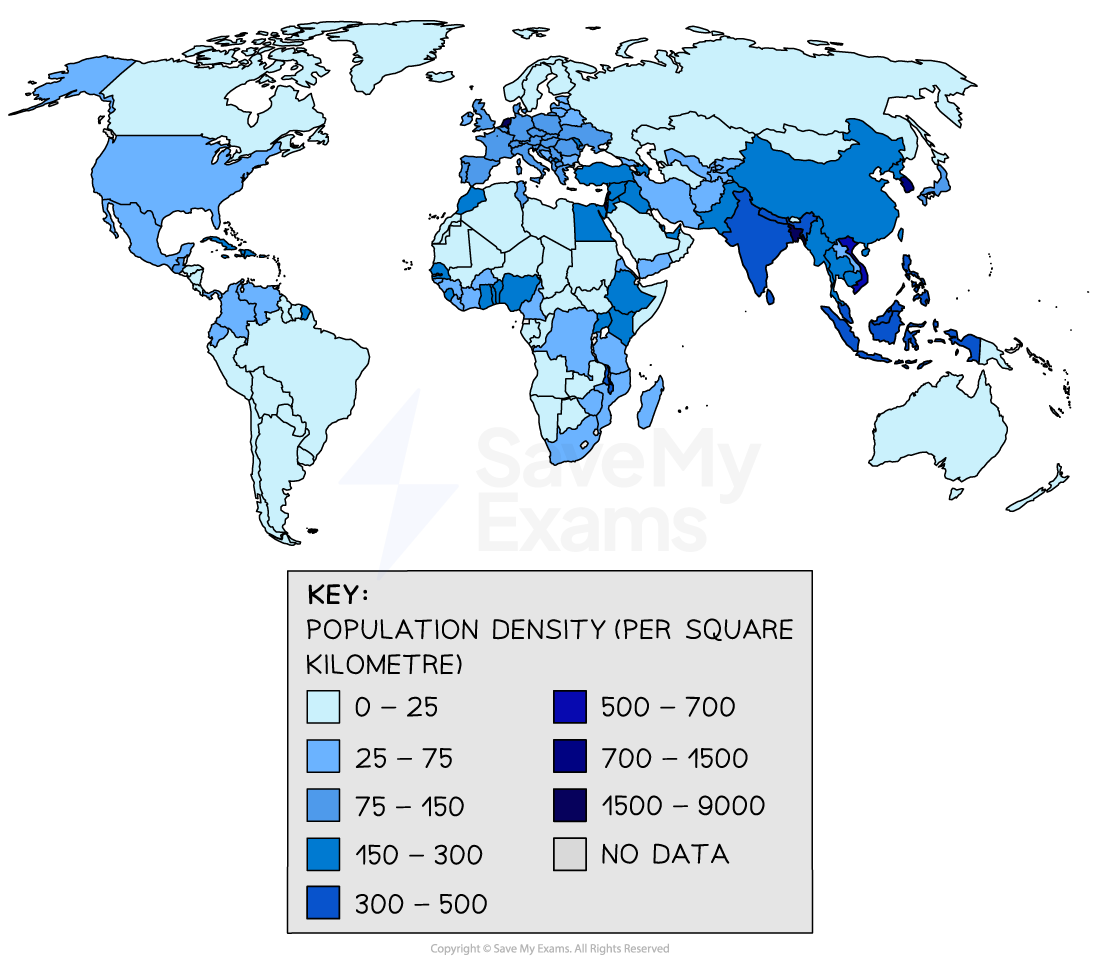
Note that the highest population densities are found in the northern hemisphere
Population density
-
Population density is the number of people living in a given area
-
It is usually measured in people per square kilometre (km²)
-
High population density means that a lot of people live in a small area
- Western Europe, Southeast Asia and the Northeast USA have high-density areas of over 200 people/km2
-
A low population density means that there are only a few people living in a large area
Worked Example Explain one factor that affects population density
[2 marks]
Answer
One factor is climate. [1] Areas with mild temperatures and regular rainfall attract people because farming and daily life are easier. [1]
Marking guidance
- 1 mark [1] for the identification of a factor
- 1 mark [1] for a clear explanation of how it affects population density
Alternative content
Alternative content could refer to:
- Relief
- Water supply
- Transport
- Employment opportunities
- Political stability
Common mistakes
- Some students fail to explain how the factor affects where people live.
Was this revision note helpful?