Formation of Earthquakes & Volcanoes (Cambridge International IGCSE Environmental Management)
Exam board Cambridge International · IGCSEUpdated 2025-12-16
Convection currents
- The heat within the Earth's core (geothermal energy), which is estimated to reach up to between 5000 and 6000°C, is generated by radioactive decay
- Heat rises from the Earth's core and creates convection currents in the mantle
- The tectonic plates which make up the crust move on top of the semi-molten mantle below
- The current theory of tectonic plate movement is called slab pull theory
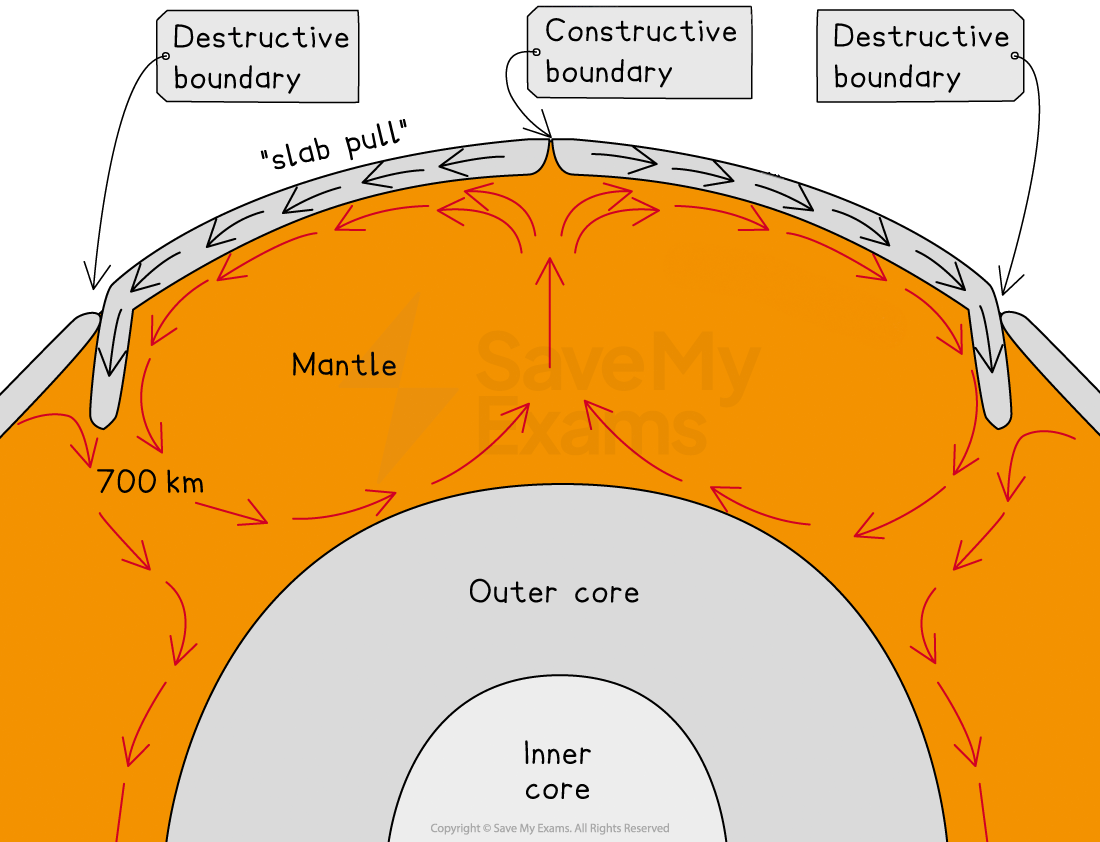
Convection currents and slab pull
- This means that plate movement is caused by more than just convection currents
- The heavier oceanic plates subduct and pull the lighter plates along with them
Plate boundaries
- Volcanic eruptions and earthquakes most commonly occur at or near plate boundaries
Divergent (constructive) boundaries
-
Plates move apart
-
Magma rises to fill the gap, creating new crust
-
Produces:
- Mid-ocean ridges
- Volcanoes (often gentle lava eruptions)
- Shallow earthquakes
-
Example: Mid-Atlantic Ridge (Iceland)
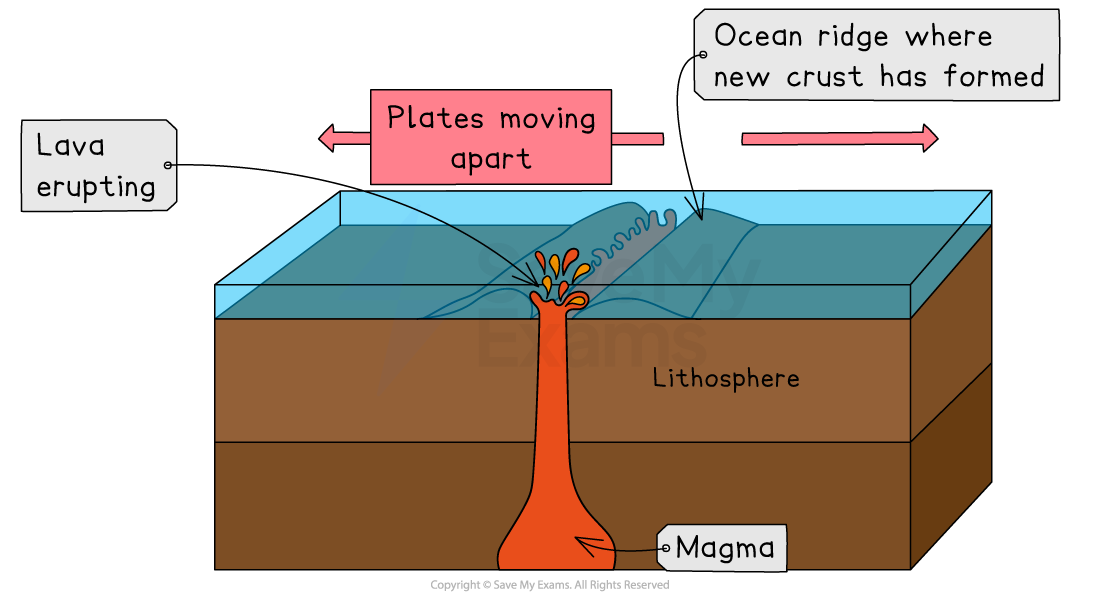
Constructive (divergent) plate boundary
Convergent (destructive) boundaries
-
Plates move towards each other
-
One plate subducts beneath another
-
The subducting plate melts, forming magma that rises to create a volcanic arc
-
Produces:
- Powerful earthquakes
- Explosive volcanoes
- Ocean trenches
-
Example: Andes (Nazca Plate beneath South American Plate)
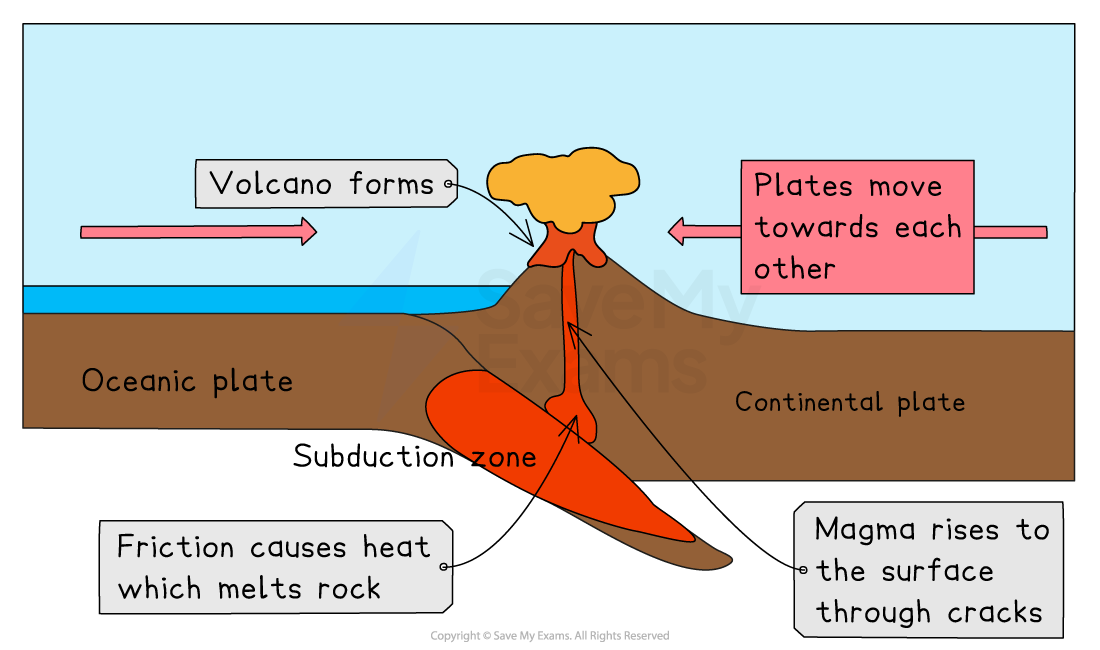
Destructive (convergent) plate boundary
Conservative (transform) boundaries
- Plates slide past one another horizontally
- No crust is created or destroyed
- Friction locks plates together until stress is released as sudden, violent earthquakes
- No volcanoes because there is no magma generation
- Example: San Andreas Fault, California
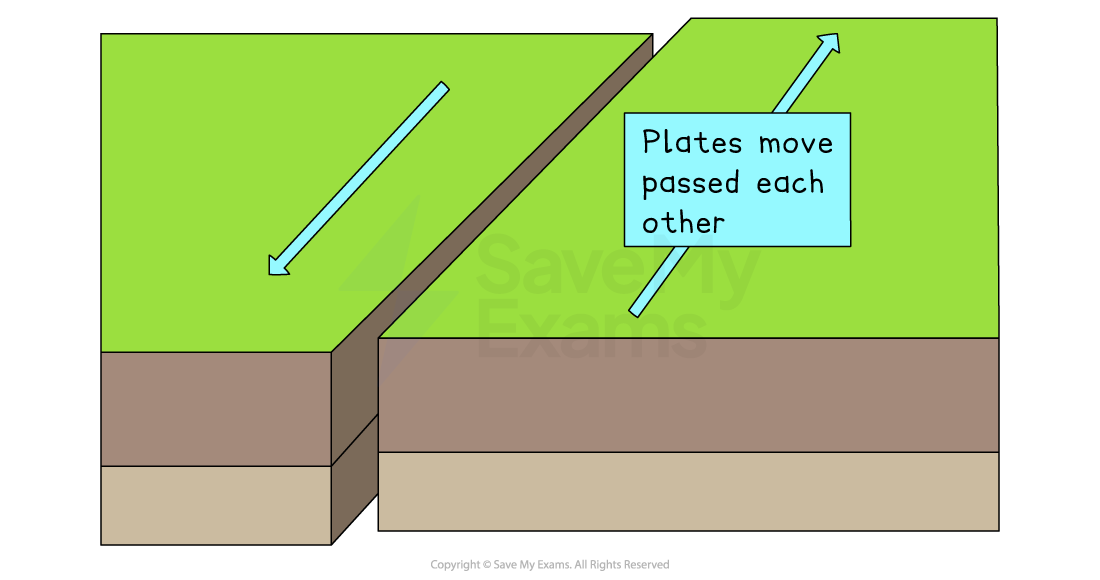
Conservative (transform) boundary
Was this revision note helpful?
Build on this topic