The Water Cycle (Cambridge International IGCSE Environmental Management)
Water cycle stores
- Water is constantly recycled through the water cycle
- The water cycle includes stores and transfers
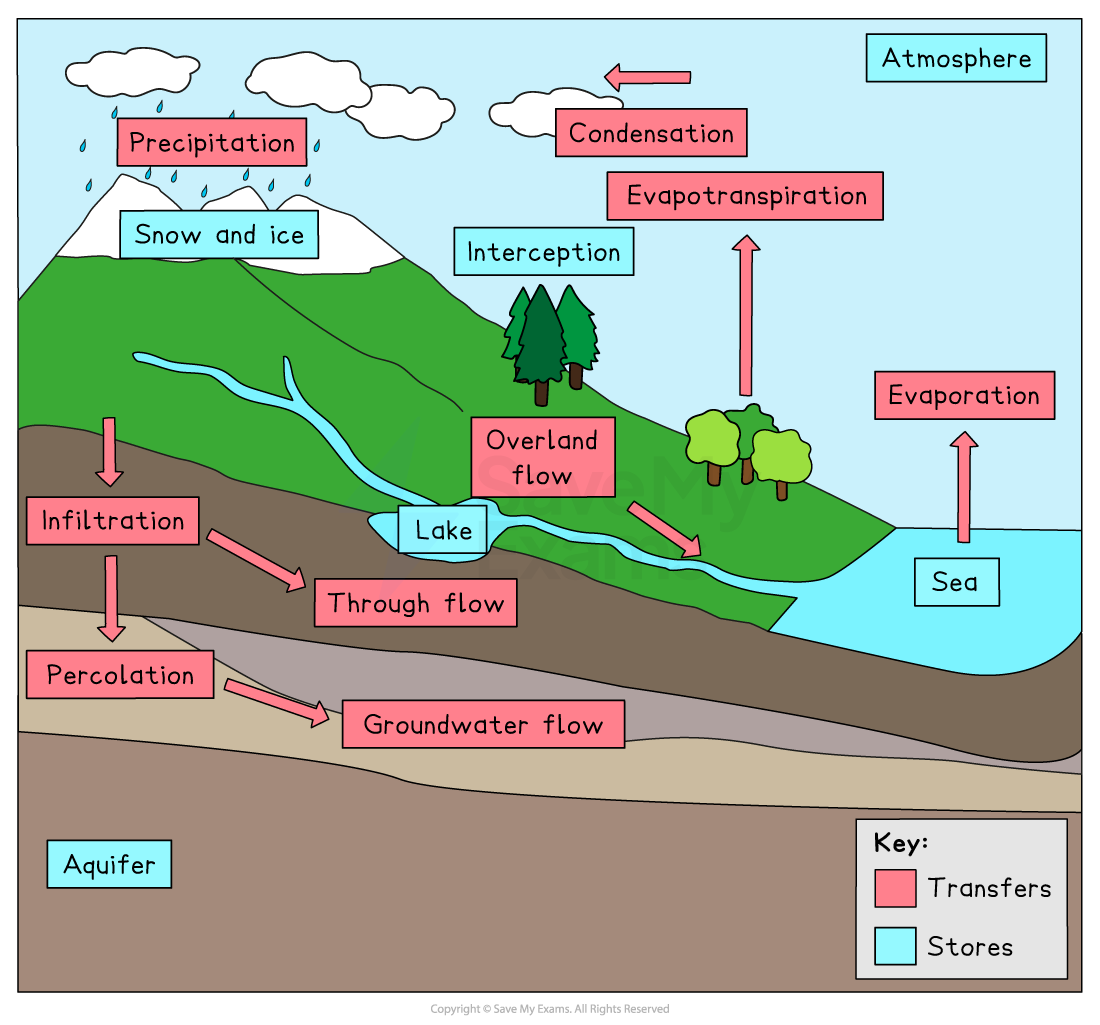
The stores and transfers of the hydrological cycle
Stores of the water cycle
-
Stores are those places where water is held for a period of time
-
Stores of the water cycle include:
- The atmosphere where water is stored in the form of water vapour or as water droplets in clouds
- Surface stores such as puddles, lakes, rivers and reservoirs
- Aquifers, which are permeable rocks such as limestone and sandstone which can hold water (known as groundwater)
- Ice and snow (including ice sheets and glaciers)
- Seas and oceans (salt water)
Water cycle transfers
- Transfers are how water is moved around the water cycle
Transfers of the water cycle
-
Transfers include:
-
Precipitation is the transfer of water from the atmosphere to the Earth's surface in the form of hail, sleet, rain or snow
-
Interception is how precipitation is prevented from reaching the ground, usually by being caught on leaves or branches
- Some of the water will be stored on the leaves and evaporate into the atmosphere
- The remaining water will flow down the leaves, branches and trunk until it reaches the ground (stemflow)
-
Surface run-off (also known as overland flow) is any water flowing across the Earth's surface
-
Infiltration is when water is transferred from the surface into the soil
-
Percolation is the transfer of water through the soil down into the rock
-
Throughflow occurs when water is transferred through the soil between the surface and the water table
-
Groundwater flow is the transfer of water through rocks
-
Transpiration occurs when plants release water vapour from their leaves
- This process transfers water from the plants into the atmosphere
-
Evaporation is the change of water from a liquid to a gas (water vapour) due to heat from the sun
- This process transfers water from the surface up into the atmosphere
- Higher temperatures and strong winds lead to increased evaporation
-
Condensation occurs when water cools and changes from water vapour into a liquid (water droplets)
- Condensation leads to the formation of clouds
-
Exam Hint Try sketching the water cycle from memory. Remember to use colours and add a key to display stores and transfers.
Was this revision note helpful?
Build on this topic