The Mobility of Labour (Cambridge International IGCSE Economics)
Occupational and geographical mobility
Spec point — Consequences of changes in the occupational mobility of labour; Causes of changes in the geographic mobility of labour
-
Labour is often one of the most expensive costs of production
- If firms can substitute capital (machinery) for labour, productivity often increases and costs decrease
-
Labour mobility refers to the ease with which workers can move between jobs, occupations, or geographical areas
-
Many firms rely heavily on labour and ensuring labour mobility helps to lower unemployment and reduce worker shortages in an economy
- For example, high labour mobility in the European Union allows workers from Spain to move to Germany for employment without visa restrictions
Occupational mobility
- This refers to the ability of a worker to change occupations when they lose a job (e.g., from teacher to sales manager), often influenced by transferable skills, training, and qualifications
- If their skill base is transferable between different occupations, then their occupational mobility is high
- In reality, many workers are not able to easily transfer between occupations, and this is a particular issue when an economy is faced with structural unemployment
Geographical mobility
- This refers to the ability to move location for work (e.g. from one city or country to another), influenced by housing availability, family ties, language and migration policies
- Barriers to mobility may include family ties, lack of information about possible jobs in different parts of the country, and the challenges in securing/affording accommodation in an unknown location
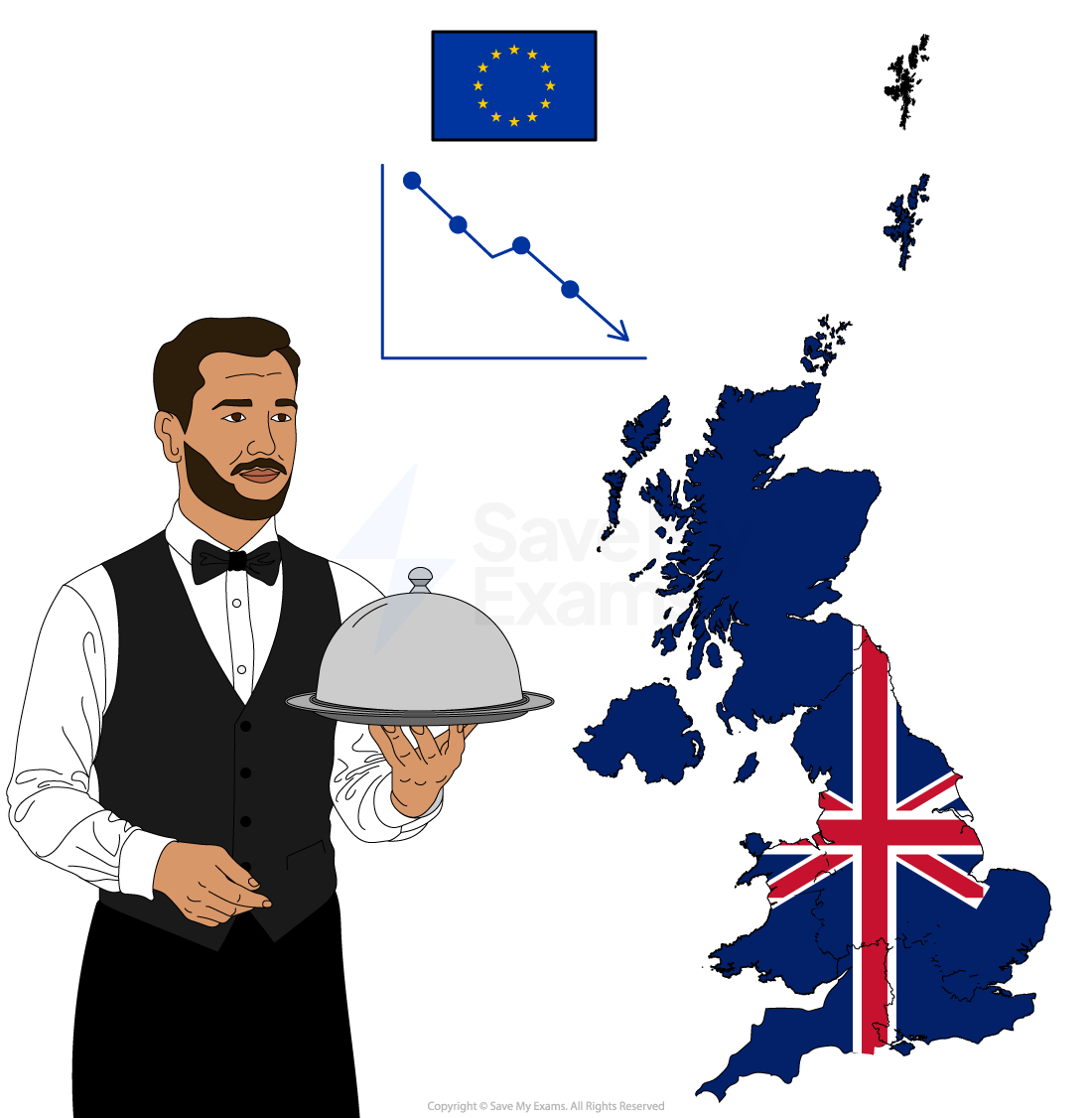
Case Study Brexit and Reduced Labour Mobility in the UK Hospitality Industry
Brexit caused geographic mobility of hospitality staff to decrease
Before Brexit, the UK was part of the European Union’s single market, allowing free movement of labour. This meant workers from across the EU could move to the UK without visas, filling roles in sectors with high labour demand, such as hospitality, catering and tourism. Many hotels, restaurants and bars relied heavily on EU nationals for both skilled and unskilled positions.
Impact of Brexit
End of free movement
- From January 2021, EU citizens (except those with settled status) needed visas to work in the UK
Reduced geographical mobility
- Hospitality businesses faced fewer job applications from EU workers who previously moved freely for seasonal or permanent work
Labour shortages
- The hospitality sector experienced significant staff shortages, particularly for chefs, waiting staff, and housekeeping roles
Knock-on effects
- Some businesses reduced opening hours, simplified menus, or closed entirely due to an inability to recruit sufficient staff
Example The British Beer and Pub Association reported that in 2022 many pubs were forced to close several days a week because they could not find enough kitchen and bar staff — a problem exacerbated by the sharp drop in EU workers post‑Brexit
Lesson Brexit highlights how policy changes can create new barriers to geographical labour mobility, especially when an industry depends on migrant workers to fill persistent vacancies
Was this revision note helpful?
Build on this topic