Exchange Rate Fluctuations (Cambridge International IGCSE Economics)
Exam board Cambridge International · IGCSEUpdated 2024-06-27
Causes of Exchange Rate Fluctuations
Spec point —
6.3.2
- Numerous factors influence floating exchange rates, resulting in an appreciation or depreciation of a currency
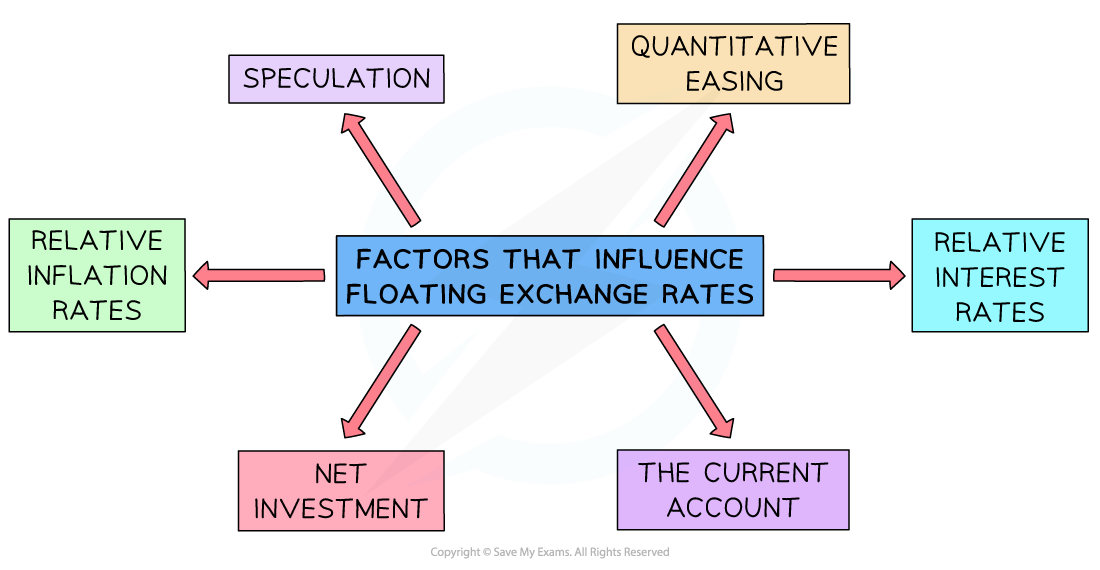
Factors influencing floating exchange rates
- Relative interest rates: influence the flow of hot money between countries. If the UK increases its interest rate, then demand for £'s by foreign investors increases and the £ appreciates. If the UK decreases its interest rate, then the supply of £'s increases as investors sell their £'s in favour of other currencies and the £ depreciates
- Relative inflation rates: as inflation in the UK rises relative to other countries, its exports become more expensive so there is less demand for UK products by foreigners, which means there is less demand for £s and so the £ depreciates 3. Net investment: foreign direct investment (FDI) into the UK creates a demand for the £ which leads to the £ appreciating. FDI by UK firms abroad creates a supply of £'s which leads to the £ depreciating 4. The current account: UK exports have to be paid for in £'s. UK imports have to be paid for in local currencies, which requires £'s to be supplied to the forex market. Due to this, an increasing net exports will result in an appreciation of the £ and falling net exports will result in a depreciation of the £
- Changes in tastes/preferences: As global demand for quinoa increased as it became fashionable, Bolivia's exports of quinoa increased dramatically which put upward pressure on their currency. Foreigners demanded the Boliviano in order to pay for the quinoa
- Speculation: the vast majority of currency trades are speculative. Speculation occurs when traders buy a currency in the expectation that it will be worth more in the short to medium term, at which point they will sell it to realise a profit
- Quantitative easing: involves increasing the money supply and much of the new supply is used to buy back gilts. Many of these gilts are owned by foreigners who then exchange the £s received for their own currency. The increase in the supply of £'s depreciates the £
- MNCs: An increase in the number of MNCs globally will result in more money flows between countries, each of which influences exchange rates
Consequences of Foreign Exchange Rate Fluctuations
Spec point —
6.3.2· The effects of foreign exchange rate fluctuations on export and import prices and spending on imports and exports via the PED.
- Changes to exchange rates may have far-reaching impacts on an economy
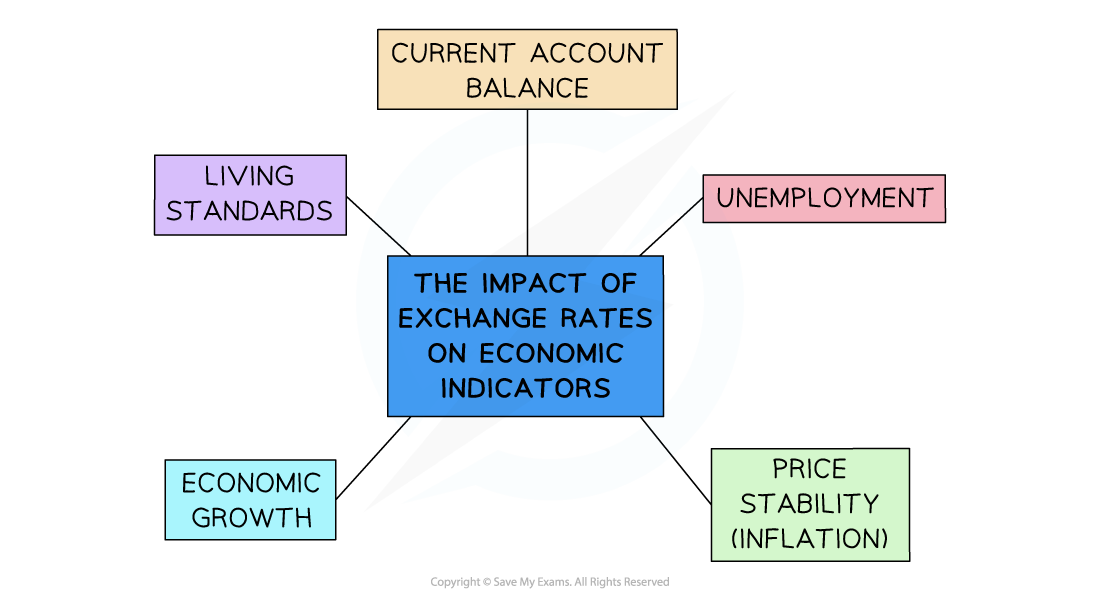
The impact of changes to exchange rates on an economy
| Economic Indicator | Explanation |
|---|---|
| The Current Account | - From a UK perspective, the depreciation of the £ causes exports to be cheaper for foreigners to buy and imports to the UK are more expensive - The extent to which a currency depreciation improves the current account balance depends on the price elasticity of demand for exports and imports - This follows the revenue rule which states that in order to increase revenue, firms should lower prices for products that are price elastic in demand - If the price elasticity of demand for UK exports is elastic, then a depreciation of the currency will result in a larger than proportional increase in demand for UK exports, which will rapidly improve any current account deficit |
| Economic growth | - Net exports are a component of total (aggregate) demand - A depreciation that results in an increase in net exports will lead to economic growth |
| Inflation | - Cost push inflation can be caused by a depreciating currency as the price of imported raw materials increases with a weaker currency - Net exports are a component of total (aggregate) demand - A depreciation that results in an increase in net exports will lead to an increase in total demand - This may lead to an increase in demand pull inflation - An appreciation of the currency will have the opposite effect |
| Unemployment | - If depreciation leads to an increase in exports, unemployment is likely to fall as more workers are required to produce the additional products demanded - An appreciation of the currency will have the opposite effect |
| Living standards | - The impact of a depreciation on living standards can be muted - As imports are more expensive, households face higher prices and less choice, which detracts from living standards - Rising exports can decrease unemployment and increase wages/income which means an improved standard of living for some households - The impact of an appreciation on living standards will be the opposite |
| Foreign direct investment (FDI) | - Depreciation of a currency makes it cheaper for foreign firms to invest in the country which can increase investment and real GDP - An appreciation has the opposite effect |
Was this revision note helpful?
Build on this topic