Reducing the Size of the Workforce (Cambridge International IGCSE Business)
Reasons for downsizing
Spec point — "e.g. automation, reduced demand for products, need to lower costs"
Reasons for downsizing
-
Workforce planning is the process of determining the human resource needs for the foreseeable future, in terms of the number and skills of employees required
- When expanding, a business often requires more employees
- However, on some occasions they need to downsize the workforce (reduce the number of employees)
Reasons for downsizing
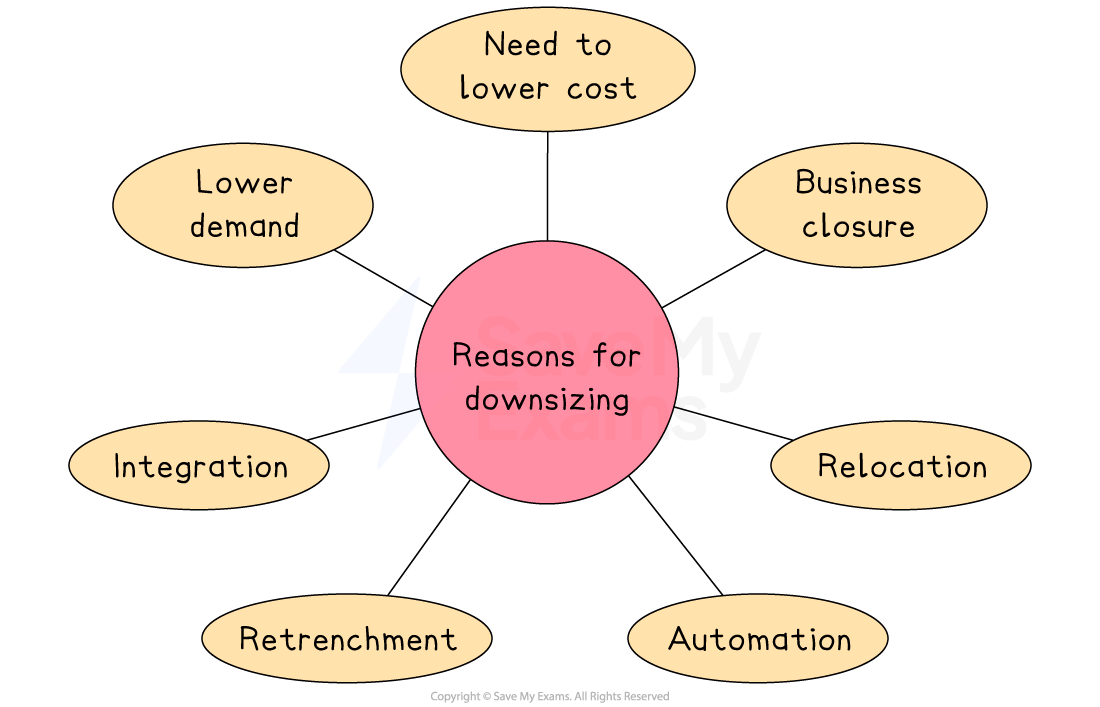
Reducing business size can be caused by a range of factors including business relocation, falling demand and automation through the introduction of technology
- Lower demand
- Is likely to reduce the volume of output a business needs to produce
- Fewer workers are required to produce a reduced level of output
- Integration with other businesses
- Mergers or takeovers could mean that some workers' roles are duplicated so some staff will no longer be required
- The need to lower costs
- Businesses that are struggling to survive look to reduce their most significant costs which, in many cases, is salaries and wages
- Business closure
- Will mean that only a few workers will be required to legally dissolve the organisation
- Automation
- involves more machinery being used in the business
- Workers' jobs are replaced, with remaining workers focused on operating machinery
- Retrenchment
- Is likely to mean that fewer resources of all types are required, including employees
- Business relocation
- may allow a business to reorganise its operations, requiring fewer employees
Redundancy
-
Redundancy is where a job role is no longer needed by a business and a worker is dismissed, usually with compensation
- The legal process for selecting workers for redundancy must be very clear and fair
The factors used to determine who is made redundant
| Worker productivity | Lateness or absence data | Length of time employed | Workers with essential skills |
|---|---|---|---|
| - Productive workers are most likely to remain employed | - Reliable workers are less likely to be made redundant | - Long-standing employees are usually more expensive to replace | - Skilled workers could be transferred to other roles |
-
Some workers are happy to be made redundant
- This may be because they have another job they can go to, they want to retire early or they want to start their own business
- Some businesses offer a good redundancy 'pay out' which is attractive to workers
Exam Hint Don’t confuse redundancy with dismissal – redundancy happens when a job no longer exists, not because of poor performance. Mixing these up is a common error
Recommending redundancies
Spec point — "recommend and justify which employee(s) to make redundant in a given situation
"
Recommending redundancies
- HR managers often have to make difficult decisions about who should be made redundant
Case Study Redundancy at EcoGlow Ltd
EcoGlow Ltd is a small Finnish business that makes and sells eco-friendly lighting products. Due to rising costs and falling sales, the manager has decided that one worker must be made redundant to save money
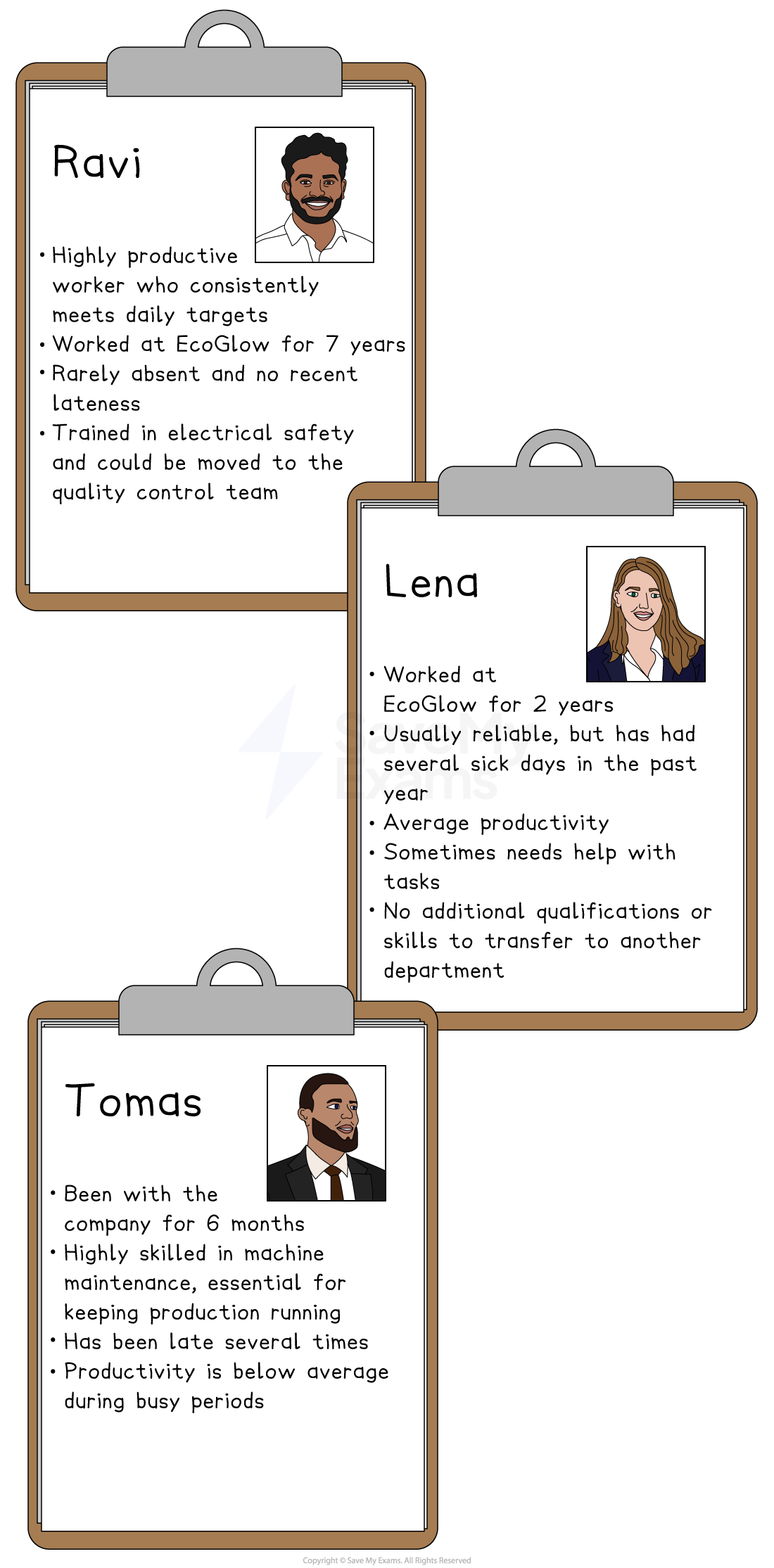
The manager is considering three employees from the assembly department
Each worker will be assessed based on their productivity, attendance, time at the business and whether they have skills useful for other roles in the company
Who is most suitable for redundancy?
Based on these factors, Lena is the most suitable for redundancy
- She has fewer years at the company than Ravi and lacks the specialist skills that Tomas has
- Her attendance has also been less reliable, and her productivity is not strong enough to justify keeping her over the others
Was this revision note helpful?