Functions of Management (Cambridge International IGCSE Business)
The main functions of management
Spec point — planning, organising, coordinating, commanding and controlling
-
The responsibilities of managers are similar, no matter the organisation in which they work
-
In schools
- Headteachers organise the school's overall curriculum and staffing
- Heads of department manage teaching staff and subject course planning
- Pastoral managers focus on pupil behaviour and reward systems
- Site managers oversee the safety and maintenance of buildings and equipment
-
Manager roles
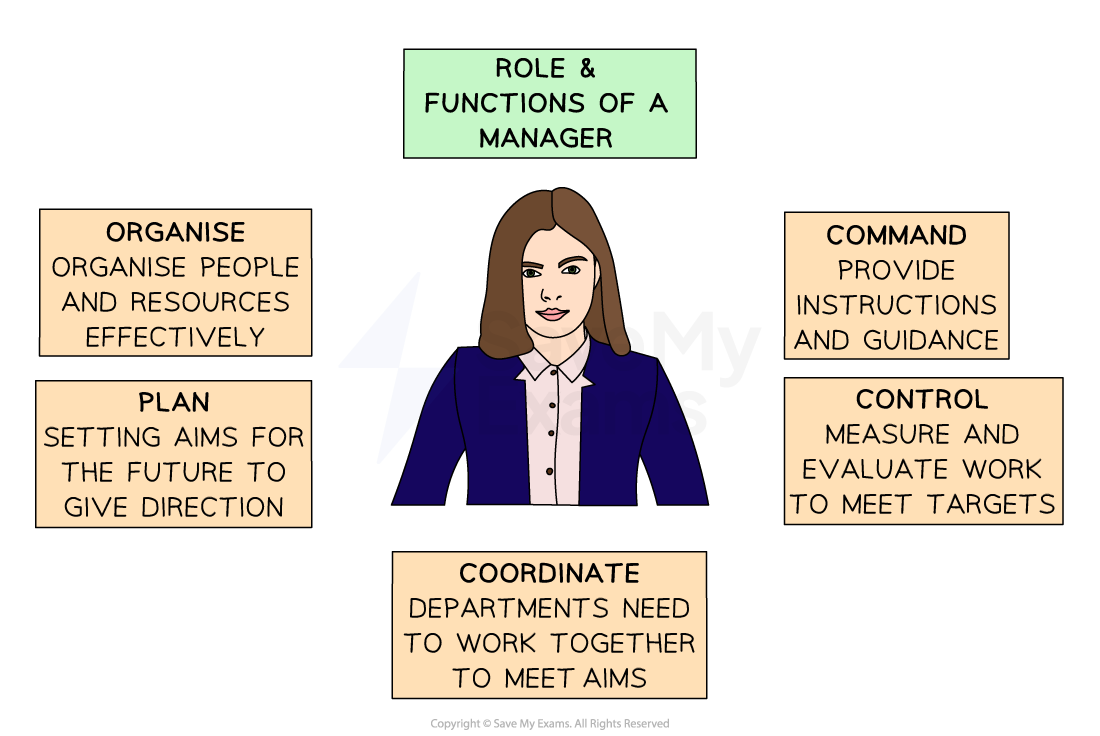
Managers roles commonly include planning, organising, commanding and controlling
1. Planning
-
Setting targets or aims for the organisation or department to achieve which provide a clear sense of purpose and direction
-
Managers also plan and budget for resources required to achieve targets
- The number of people required
- Finance and capital resources needed
2. Organising
-
Once targets have been set, managers should then organise resources including
- Allocate tasks and delegate responsibility to employees
- Make changes to ways of working to improve efficiency
3. Commanding
-
Managers need to guide, lead and supervise employees in the tasks they do
- Make sure staff meet deadlines and achieve individual or team targets
- Provide feedback and direct staff to tasks
4. Controlling
- Evaluate the performance of employees and teams
- Investigate reasons for missed targets and implement changes
- Manage budgets *and report to senior leaders
- Ensure effective coordination between departments to achieve the organisation’s aims
5. Coordinating
- Encourage groups of workers to communicate with each other and work towards the same goal
- Ensure all of the required resources are available to ensure objectives are met
Exam Hint A common mistake is to list these management functions (planning, organising, coordinating, commanding, controlling) without showing their links. In exams, show how they connect – e.g. planning decisions must be controlled and reviewed later
Delegation
Spec point — advantages and disadvantages of delegation
-
Delegation is where responsibility for specific tasks is given to subordinates by managers
- Delegation usually involves transferring authority *from manager to subordinate
- For example, the Human Resources Director of a large company delegates authority for recruitment and training to the HR Manager
The advantages of delegation
| Advantages for managers | Advantages for workers |
|---|---|
| - Allows managers to concentrate on important tasks - Managers do not have the time to do complete every task themselves - Helps managers to measure the performance of their staff, as they can judge how well subordinates carry out these tasks - Can help to reduce errors if managers delegate | - Delegation allows workers to feel empowered in decision-making. - This can motivate, as staff are trusted to perform a job well - Provides a form of training as workers learn on the job, increasing job opportunities to progress within the organisation - Makes employees work more interesting and rewarding - |
-
Some managers are reluctant to delegate, as they lose some control over decision-making
- Managers may need support to be able to balance trust and control to delegate appropriate tasks
- Autocratic leaders may not be willing to give authority to others
- Some managers may feel threatened by highly skilled subordinates seeking promotion
Was this revision note helpful?
Build on this topic