The Role of Marketing (Cambridge International IGCSE Business)
Identifying and satisfying customer needs
-
Marketing helps a business identify and satisfy the needs and wants of its customers
-
Identifying customer needs involves finding out about the
- Variety and quality of goods and services that customers want
- Prices they are willing to pay
- Promotional techniques that may persuade them to make repeated purchases
- Convenience factors, including where and how they want to purchase products
- After-sales services they anticipate
-
Satisfying these customer needs involves ensuring products are available when and where customers want to buy them, at a suitable price, at the quality expected and with effective customer service
-
The benefits of identifying customer needs
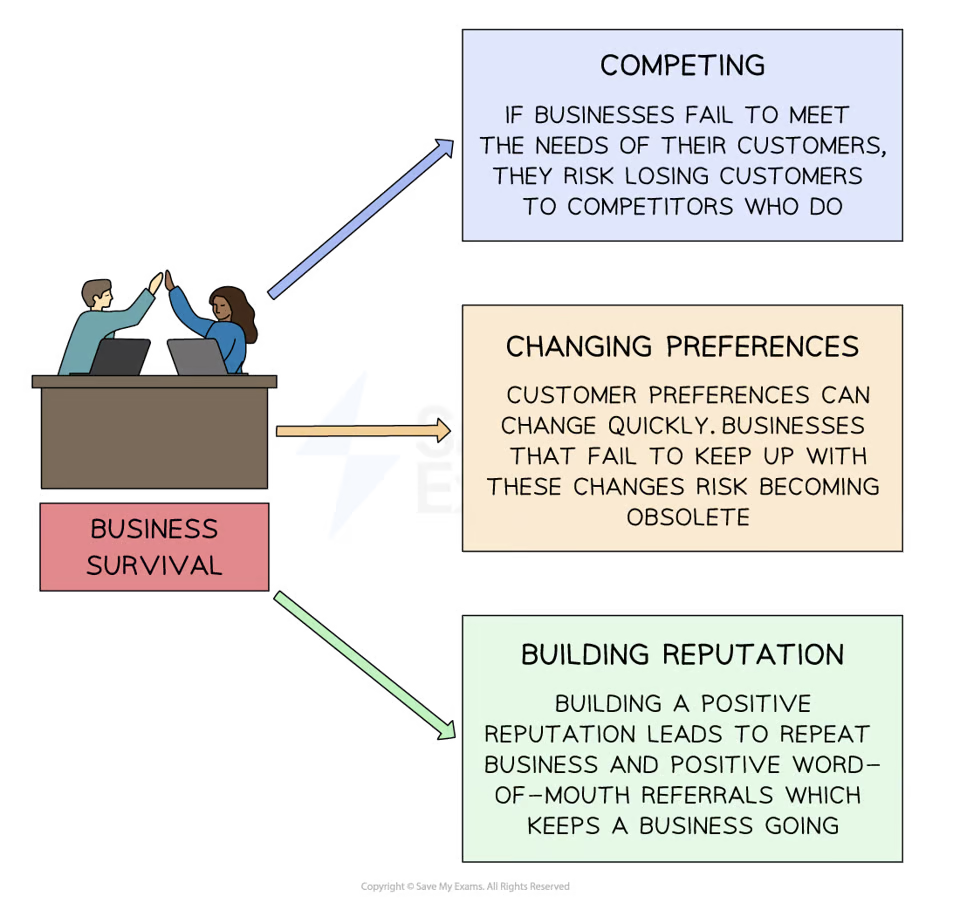
The ultimate aim of identifying and meeting customer needs is to ensure business survival and success
-
Businesses that successfully identify and satisfy customer needs
- Compete more effectively than rival businesses
- Keep up-to-date with changing tastes and preferences
- Attract positive word-of-mouth recommendations and build the brand
Benefits of satisfying customer needs
| Customer need | Explanation | Benefit to the business |
|---|---|---|
| Price | - This is the amount of money a customer is willing to pay for a product or service - Customers often have a budget and want good value | - By satisfying customers with fair, competitive pricing, the business can attract more buyers and increase sales - This also helps build trust with price-sensitive customers |
| Quality | - Quality refers to the standard customers expect from a product or service - This includes reliability and after-sales service | - Meeting quality expectations increases customer satisfaction and encourages repeat purchases - This leads to loyalty and positive word-of-mouth promotion |
| Choice | - Customers have different tastes and expect a variety of products or services to suit their needs - This may include different sizes, styles or features | - Satisfying this need by offering variety makes it more likely that customers will find something they want - This increases sales and improves brand reputation |
| Convenience | - Customers want easy access to products and services - This may include delivery options, payment methods and online ordering | - Providing convenience helps build loyalty, improves the customer experience - It can lead to more frequent and higher-value purchases |
Maintaining customer loyalty and building relationships
-
Customer loyalty is when existing customers buy products from the same business over and over again
- Customer loyalty leads to repeat purchases and a rise in market share.
- It is much cheaper for a business to try to keep existing customers(for example, with loyalty cards) than to try to gain new customers, as this can involve expensive advertising campaigns
-
Building customer relationships involves communicating with customers to encourage them to become loyal to the business and its products
-
Good relationships are maintained by
-
Developing close ties with customers and finding out if products are continuing to meet their needs
- For example, using surveys to discover if preferences are changing
-
Using technology to gather important information about customers
-
-
-
By having strong relationships with the customer, the business can respond appropriately when customers change their expectations
Exam Hint Use the phrase “building customer loyalty” in your answers – it shows deeper understanding that marketing is not only about attracting customers but also keeping them long term
Anticipating changes in customer needs
- Predicting what customers will want or need in the future helps a business stay ahead of competitors and continue meeting customer expectations
The role of marketing in anticipating customer needs
-
Market research
-
Surveys, focus groups and sales data help businesses understand what customers want now and in the future
- For example, McDonalds uses customer feedback and sales data to test new menu items like the McPlant burger, designed for the growing demand for plant-based food
-
-
Product development
-
Teams use this research to improve or create products that meet changing needs
- For example, Apple developed AirPods after noticing customer demand for wireless and portable earphones, especially among smartphone users who wanted more convenience
-
-
Promotions
-
These can be adjusted to demonstrate how products match new customer values or interests
- For example, Coca-Cola launched its World Without Waste campaign and promoted its recycled plastic bottles to appeal to environmentally conscious consumers
-
-
Pricing strategies
-
These may change if customers become more price-conscious
- For example, Netflix introduced a lower-cost plan in some countries to attract budget-conscious viewers during a time when many households were cutting back on spending
-
Was this revision note helpful?
Build on this topic