Joint Ventures and Licensing (Cambridge International IGCSE Business)
Overcoming Problems of Entering Foreign Markets
Spec point — • Benefits and limitations of methods to overcome such problems, e.g. joint ventures, licensing
-
Two common strategies used by businesses to try and overcome the problems of entering new markets are global mergers and joint ventures
-
A global merger is an agreement between two businesses from two different countries to join together
-
A joint venture occurs when two businesses join together to share their knowledge, resources and skills to form a separate business entity
- E.g., The mobile network EE is a joint venture formed by the French mobile network, Orange and the German mobile network, T-Mobile
-
-
These strategies may be more cost effective than exporting, licensing and franchising
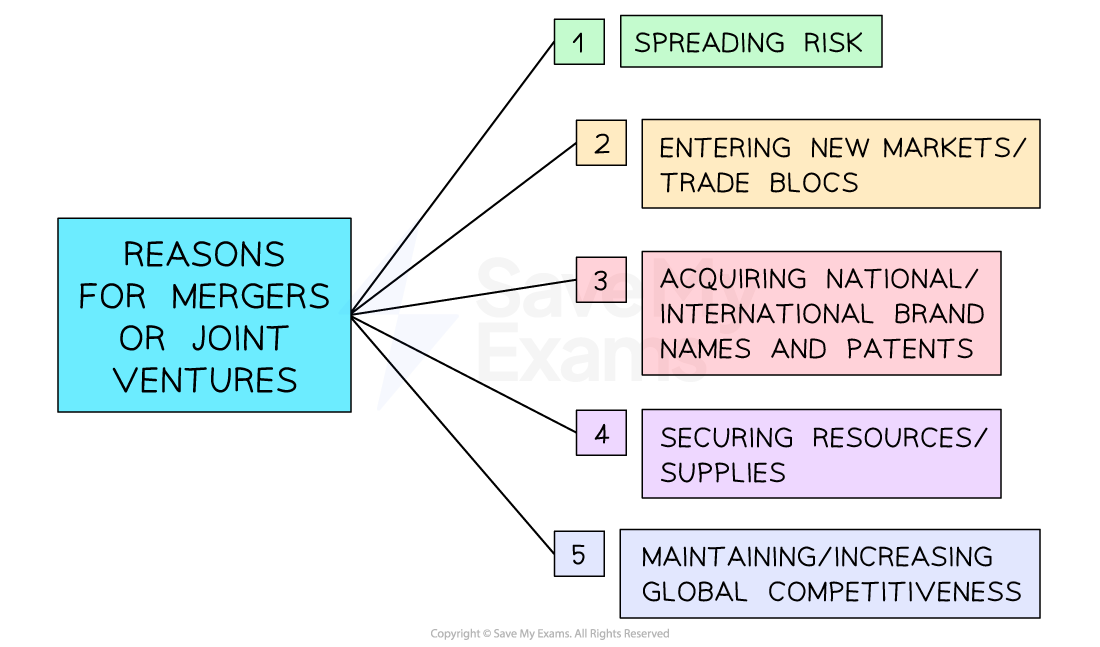
*Key reasons for global mergers and joint ventures *
Reasons for mergers or joint ventures
1. Spreading Risk
- Operating in more than one market helps to reduce reliance on one geographical market
2. Entering new markets
-
Entering a market or trade bloc using a merger/joint venture is a quicker method than using organic growth
- In emerging economies, many governments insist that foreign businesses can only operate as a joint venture as this can benefit domestic businesses
- Forming a joint venture with a local company allows the joining business to gain knowledge and business of the local markets
3. Acquiring national/international brand names/patents
-
A patent is the legal right given by the government to an individual or business to make, use or sell an invention and exclude others from doing so
-
The process of developing intellectual property can be a long and expensive process
- Using a merger/acquisition is a method businesses can use to get access to intellectual property or a business with a strong reputation
4. Securing supplies
- A joint venture with a supplier can ensure that scarce resources used in manufacture are more likely to be available
5. Increasing global competitiveness
- Mergers and joint ventures can give businesses access to new technologies, expertise, and economies of scale, helping them operate more efficiently
- Partnering with local or international firms can improve innovation and product quality, enabling the business to compete more effectively on a global scale
6. Evaluating mergers and joint ventures
| Benefits | Drawbacks |
|---|---|
| - Economies of scale gained from costs being spread over larger output can lead to increased profit margins - Diversifying risk due to having products in several markets so if there is a fall in sales of certain products, the business can still generate revenue from other products - **Opportunity to enter new markets **which otherwise may be closed to the business | - The** initial costs** of merging can be significantly high, with no guarantee a business will gain a return on their investment - Diseconomies of scale can occur due to communication issues and a lack of control as the business expands - A culture clash between the two businesses can affect the quality of the business, leading to poor sales |
Was this revision note helpful?
Build on this topic