The Dynamic Nature of Markets (Cambridge International IGCSE Business)
Changing Customer Needs & Spending Patterns
Spec point — "• Why customer/consumer spending patterns may change • The importance of changing customer needs • Why some markets have become more competitive • How businesses can respond to changing spending patterns and increased competition"
Changing customer needs and spending patterns
-
Markets and marketing strategies are constantly changing as a direct result of the changing wants and needs of customers, which affect their spending patterns
- There are many different reasons for changes in customer spending habits and patterns
-
Businesses that conduct ongoing market research are able to identify and interpret the changes that are happening in markets
Reasons for changes in spending patterns
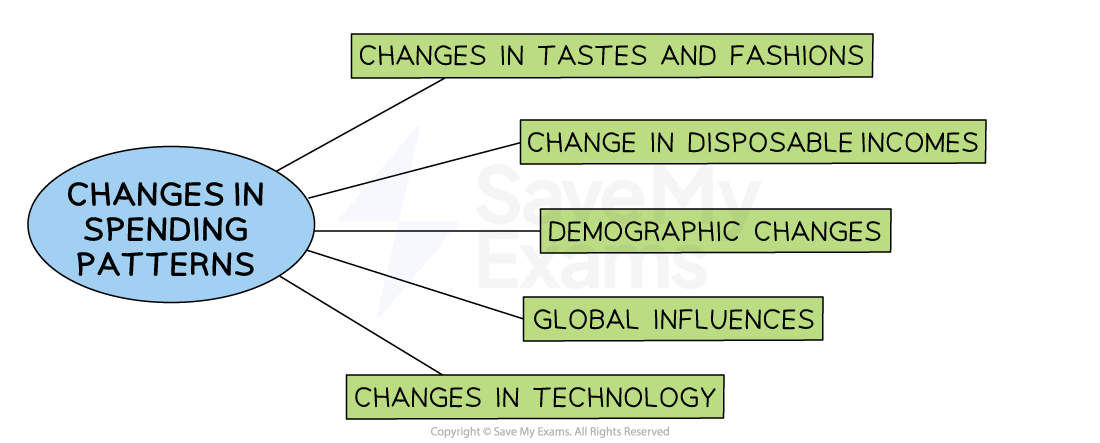
If businesses fail to respond to changing customer needs, then they are likely to fail
- Changes in tastes and fashions
-
Trends in some markets can change very quickly
- E.g., Wide-leg jeans are now more fashionable with Gen-Z customers than 'skinny' jeans worn by Millennials
- Change in disposable incomes
- High unemployment or inflation may lead to customers to buy cheaper products, e.g own brand breakfast cereal
- Demographic changes
-
Populations in most developed countries are becoming older
-
Demand for products that meet their needs has driven many market changes
- E.g., Sales of specialist travel insurance for mature holidaymakers has increased
- Global influences
-
The arrival of well-known international brands can change demand and purchasing patterns in a market
-
Increased travel, support from celebrities and extensive promotional activity drive demand
- E.g., American fast food chains now dominate the market for fast food across Europe
- Changes in technology
-
New technology makes old technology less desirable or obsolete
- E.g., Products such as smart speakers are replacing sales of radios
Increasing Competition in Markets
-
Competition occurs when at least two businesses are providing goods or services to the same target market
- The more businesses in the market, the more intense the competition
-
Competition results in many benefits for the customer, such as
- Lower prices
- Better-quality products
- Better customer service
-
However, the **absence of competition **reduces incentives for businesses to innovate, be efficient or offer consumers lower prices
-
Some** markets have become more competitive in recent years** as a result of
- Globalisation of markets has meant that products are increasingly sold all over the world
- Transportation improvements have meant that it is easier and cheaper to transport products from one part of the world to another
- Internet and e-commerce have meant that consumers can search for products and buy from overseas markets
- Increased consumer information about products and the different international businesses that produce them makes the market much more competitive
Responding to Changing Spending Patterns and Increased Competition
- Whenever there are changes to spending patterns or competition, a business will need to take action to maintain its market position
Steps a business can take to remain competitive
- New product development
-
The development of new and innovative products encourages customer loyalty and also attracts new customers
- E.g., Apple identified changing trends in the way people consumed music and switched their focus from iPods to digital downloads via the Apple Music App
- Customer focus
- Provide outstanding customer service ensures customer loyalty for longer periods of time
- Improve products
-
Customers will compare products and services to competitors so improving the product allows the firm to maintain market share and stay competitive
- E.g., Google software developments (e.g. Google Meet) differentiate Google from other search engine software
- Minimise costs
- Lower costs can sometimes be passed onto the consumer in the form of lower prices
- Increased retained profit can be used to fund promotion to raise awareness of a brand/its products or expansion, which allows a business to operate on a larger scale
Exam Hint It's important to recognise that the competitive environment is changing all the time, but the change is unpredictable in many cases. Competitive businesses can never stand still. They need to be constantly investigating and responding to changes in the market or risk losing their competitive advantage. When you're weighing up choices for a business, try to include the idea that further change is likely to happen or that current changes could be short-lived. This demonstrates a deeper understanding of how the competitive environment works.
Was this revision note helpful?