Balancing Accounts (Cambridge International IGCSE Accounting)
Balancing accounts
Why do businesses balance their accounts?
-
Businesses balance their accounts at regular intervals
- Usually at the end of a month
-
Balancing accounts helps to:
- Keep the accounts accurate
- See the current balance of an account
- Allow managers to monitor progress
How do I balance a ledger account?
-
STEP 1 Add up the entries on the debit side
-
STEP 2 Add up the entries on the credit side
-
STEP 3 Find the difference between the two totals
-
STEP 4 Put an entry with the difference on the side which has the smaller total
-
Put the date as the last day of that period
- Usually the last day of the month
-
Call this entry balance c/d
- c/d stands for carried down
-
-
STEP 5 Write the new totals on each side of the account
- The totals should be in line with each other
- Put a single line above the totals
- Put a bold or double line underneath the totals
-
STEP 6 Put an entry of equal value to the balance c/d but on the other side after the totals
-
Put the date as the first day of the next period
- Usually the first day of the month
-
Call this entry balance b/d
- b/d stands for brought down
-
Exam Hint Make sure you know how many days there are in each month.
Jan Feb Mar Apr May Jun Jul Aug Sep Oct Nov Dec 31 28 or 29 31 30 31 30 31 31 30 31 30 31
Example of balancing a trade receivable account
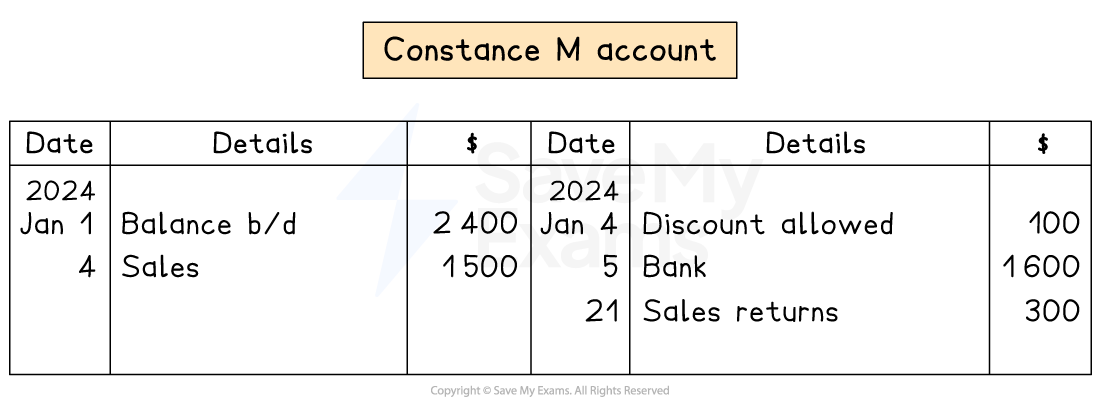
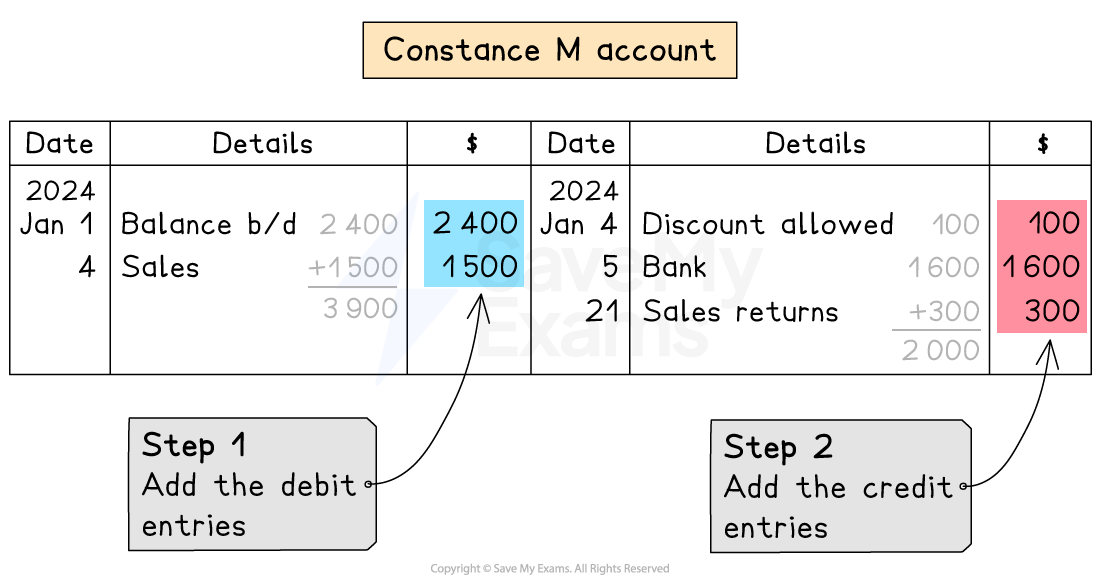
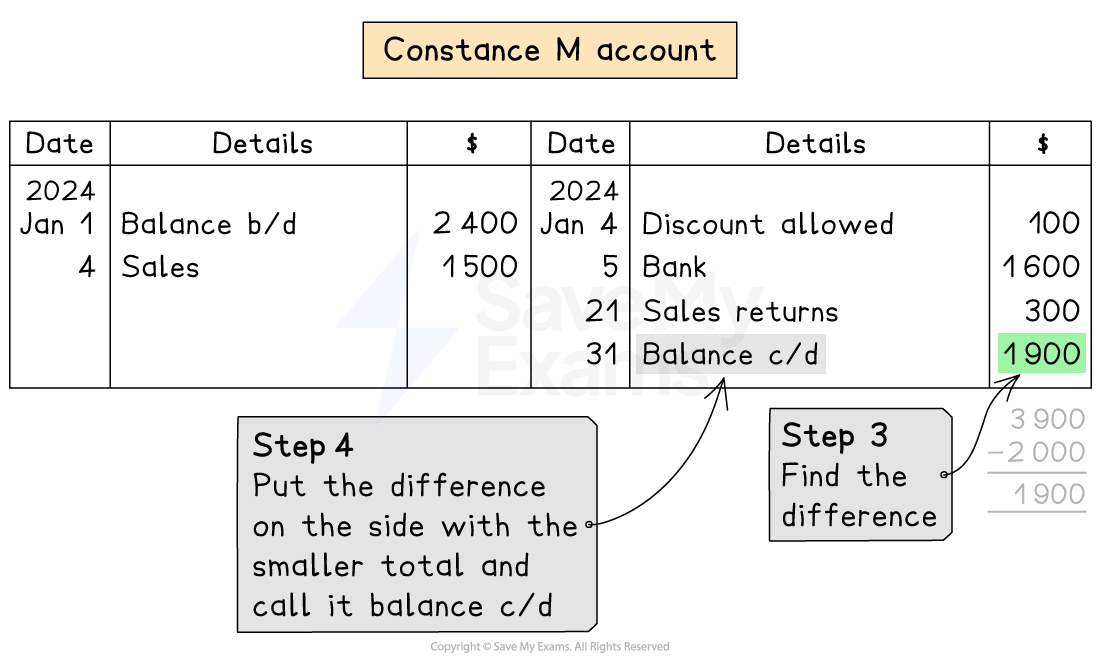
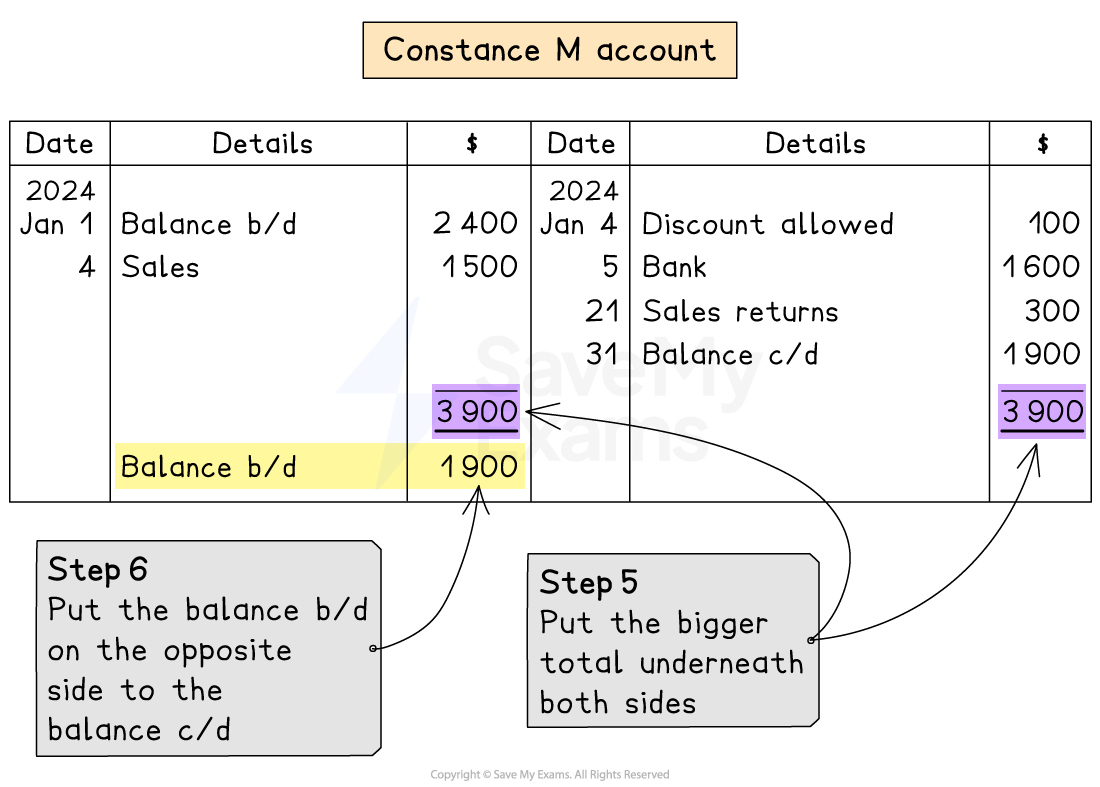
Worked Example Milo is a sole trader. Milo buys goods on credit from SME Goods. The transactions during February 2024 are shown below in the SME Goods account in the purchases ledger. Balance the account on 29 February 2024.
SME Goods Account
Date Details $** Date Details $ 2024
Feb 1Balance b/d 200 2024
Feb 2Purchases 800 Feb 8 Purchases returns 100 Feb 19 Purchases 1 500 Feb 16 Bank 650 Feb 27 Purchases 700 Feb 16 Discount received 50 Feb 29 Bank 800 Answer:
The total of the debit entries is $1800 The total of the credit entries is $3000
The difference is $1200
- This goes on the debit side as that side has a smaller total
SME Goods Account
Date Details $ Date Details **$ 2024
Feb 1Balance b/d 200 2024
Feb 2Purchases 800 Feb 8 Purchases returns 100 Feb 19 Purchases 1 500 Feb 16 Bank 650 Feb 27 Purchases 700 Feb 16 Discount received 50 Feb 28 Bank 800 Final answer: Feb 29 Final answer: Balance c/d Final answer: 1 200 Final answer: 3 000 Final answer: 3 000 Final answer: Mar 1 Final answer: Balance b/d Final answer: 1 200
Was this revision note helpful?
Build on this topic