\"e\ (Cambridge International AS Mathematics)
Exam board Cambridge International · ASUpdated 2026-07-02
"e"
What is the number "e" in maths?
-
e is an irrational number, sometimes called Euler's number
- e ≈ 2.718
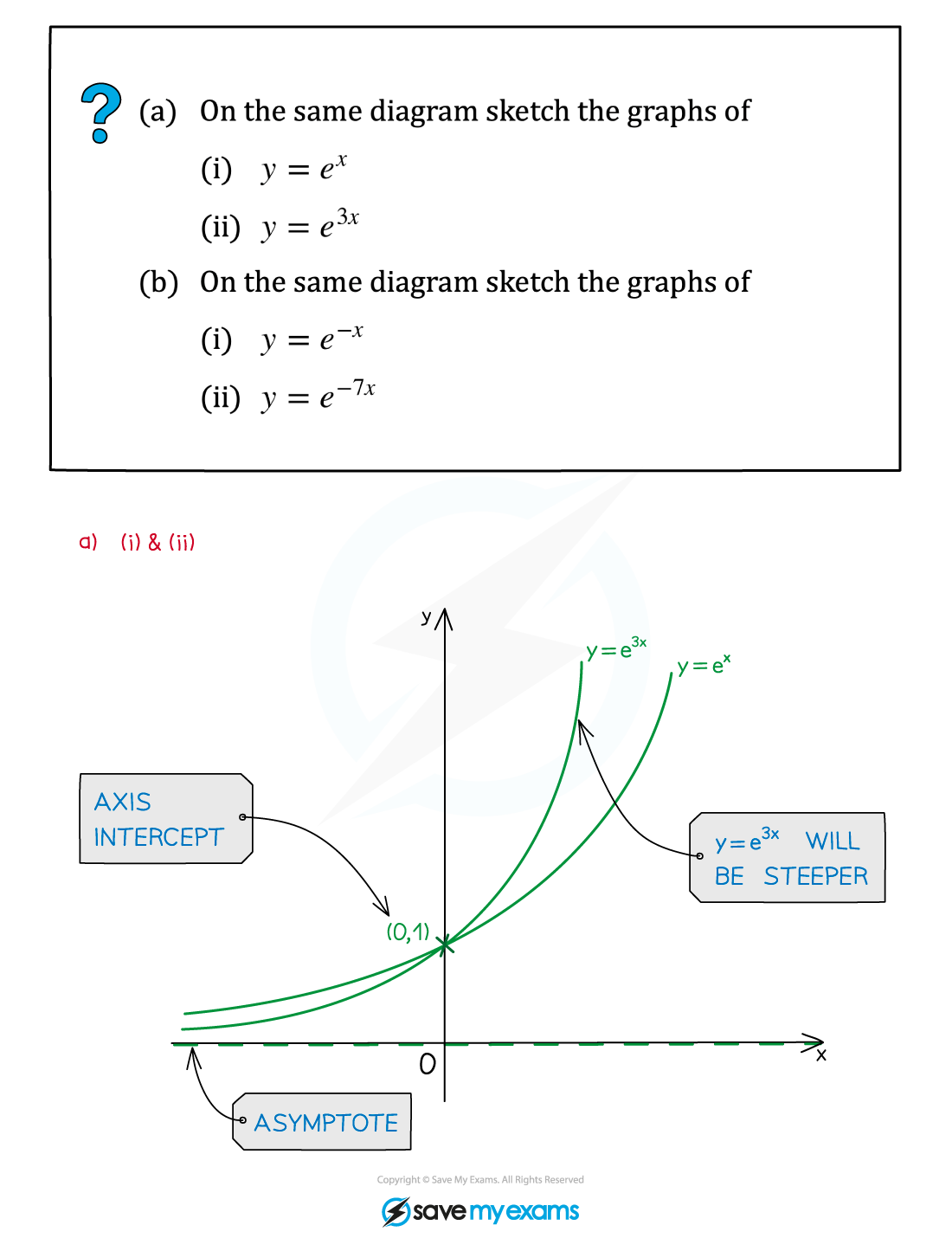
How do I sketch y = ex?
-
The exponential function is y = ex
-
As with other exponential graphs y = ex
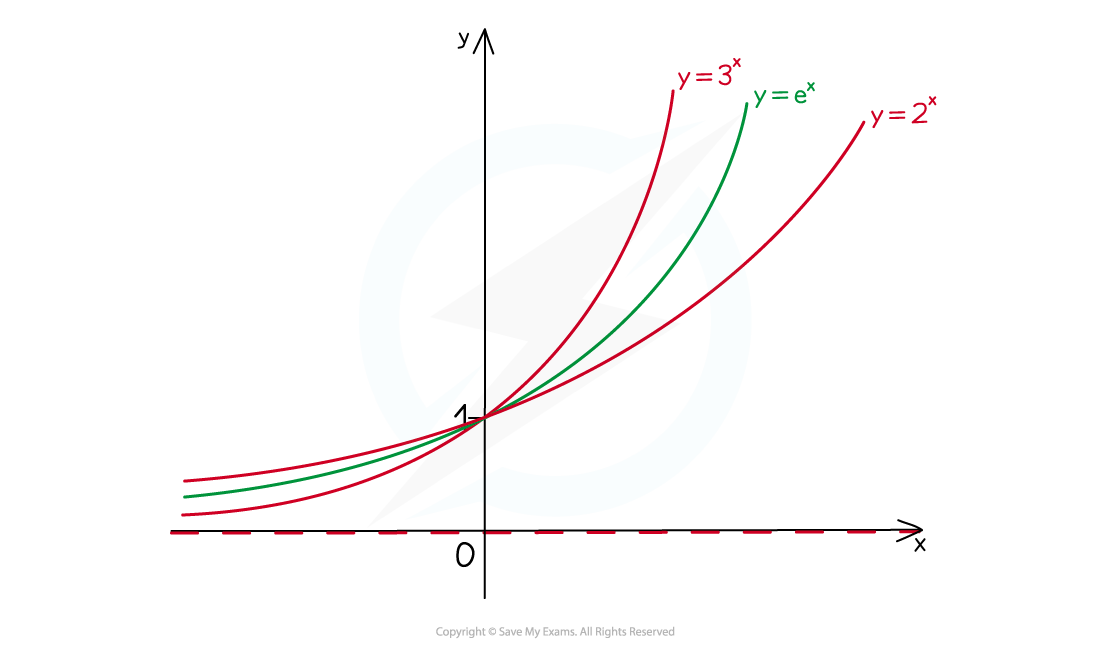
- passes through (0, 1)
- has the x-axis as an asymptote
-
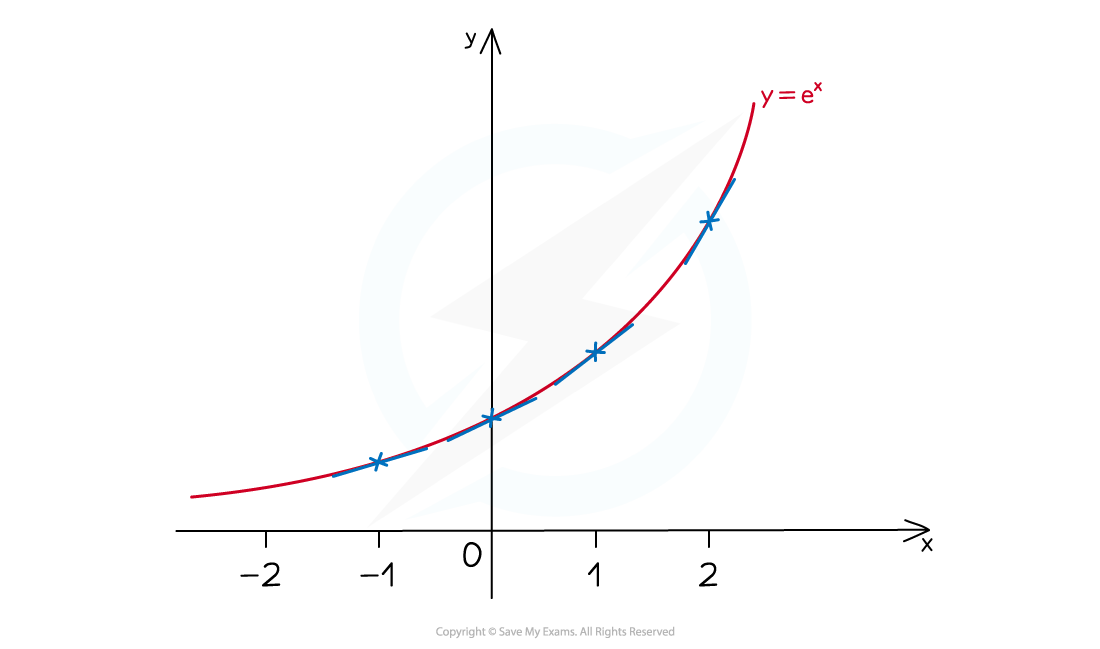
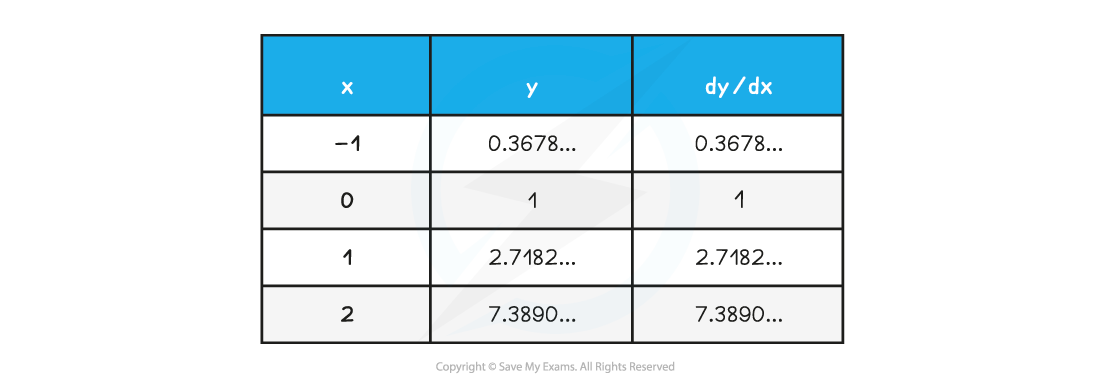
What is the special property of "e"?
- y = ex has the particular property that
- ie for every real number x, the gradient of y = ex is also equal to ex(see Derivatives of Exponential Functions)
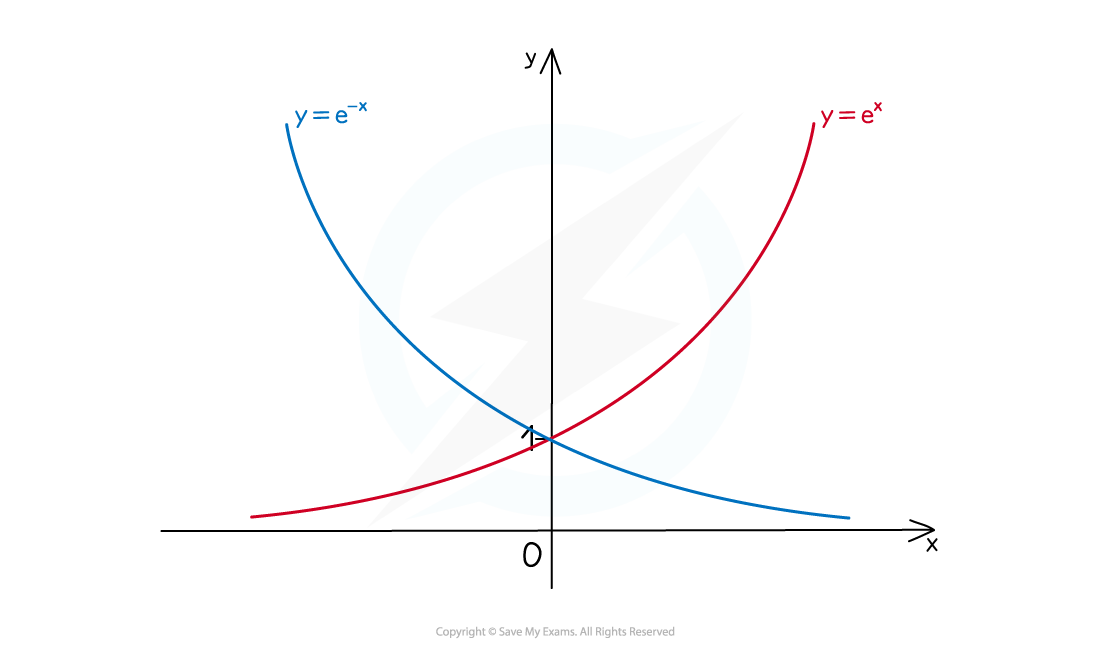
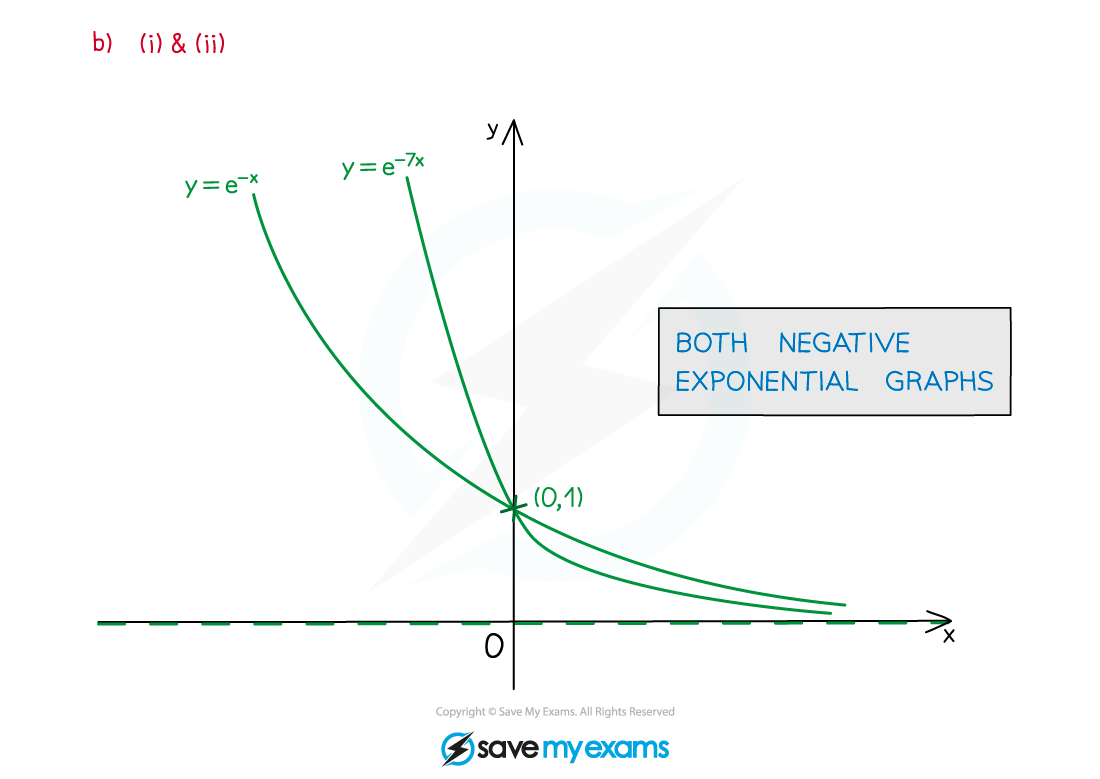
How do I sketch y = e-x?
- y = e-x is a reflection in the y-axis of y = ex
- They are of the form y = f(x) and y = f(-x)(see Transformations of Functions - Reflections)
What is exponential growth and decay?
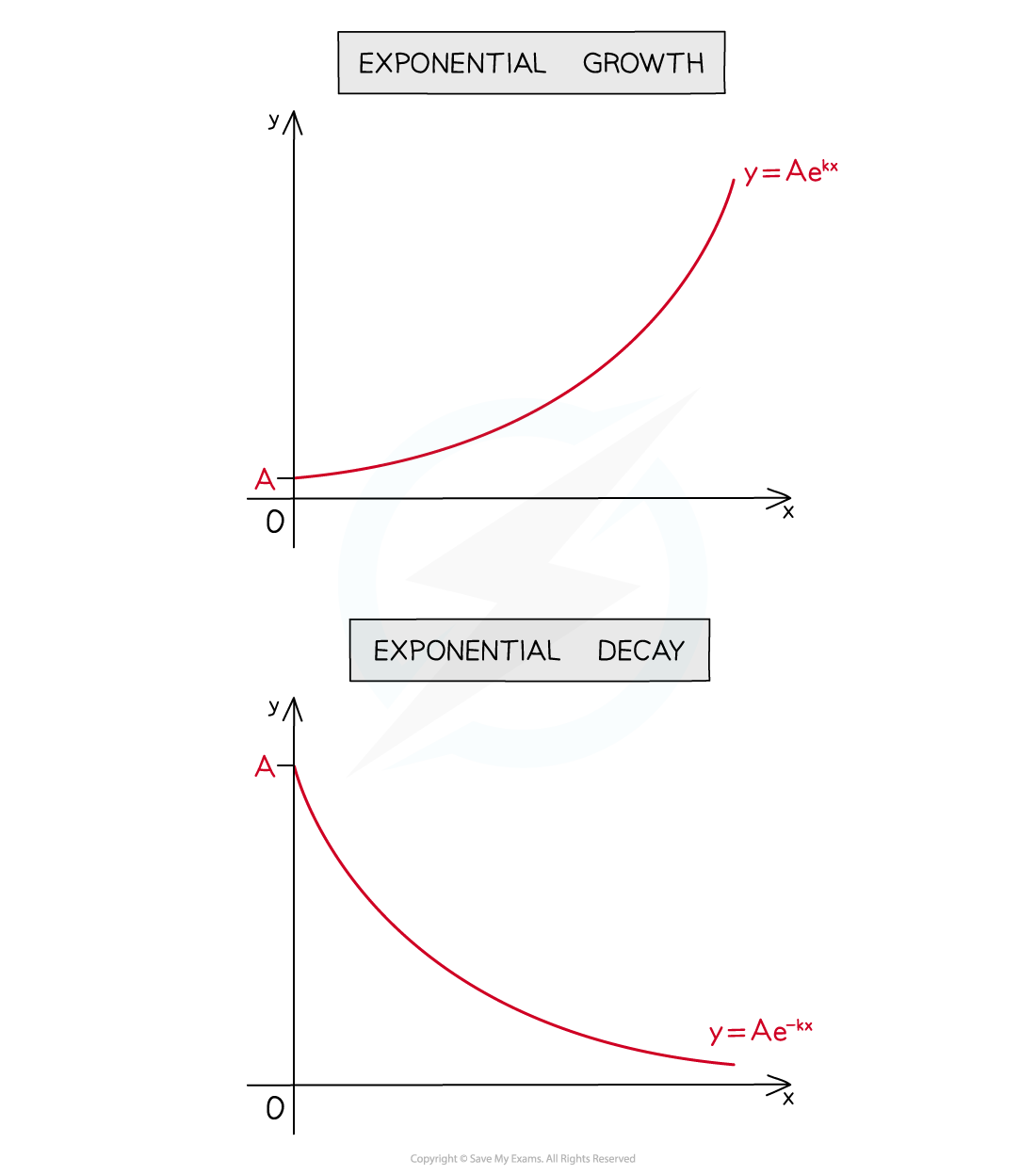
- y = Aekx (k > 0) is exponential growth
- y = Ae-kx (k > 0) is exponential decay
- A is the initial value
- k is a (usually positive) constant
- “-“ is used in the equation making clear whether it is growth or decay
Worked Example
Was this revision note helpful?
Build on this topic