Algorithm basics (Cambridge International AS Computer Science)
Exam board Cambridge International · ASUpdated 2026-02-19
Definition of algorithm
What is an algorithm?
-
An algorithm is a solution to a problem expressed as a sequence of defined steps
-
Methods of writing an algorithm before attempting to program a solution include:
- Structured English
- Pseudocode
- Flowcharts
Structured English
-
Structured English is a human-readable method for describing algorithms using a combination of natural English language and programming logic
- It uses clear English phrases to describe each step
- Logic structures like IF...THEN, REPEAT, and WHILE may appear, but without strict syntax rules
- Often used in the early planning stages before converting to pseudocode
Pseudocode
-
Pseudocode is a precise, structured, and language-independent way of describing an algorithm that resembles a programming language
-
It follows specific exam-board-defined syntax
- It includes formal elements like
IF,THEN,ELSE,WHILE,REPEAT,DECLARE, and←for assignment - Students must follow CIE’s pseudocode format in exams
- It includes formal elements like
Flowcharts
-
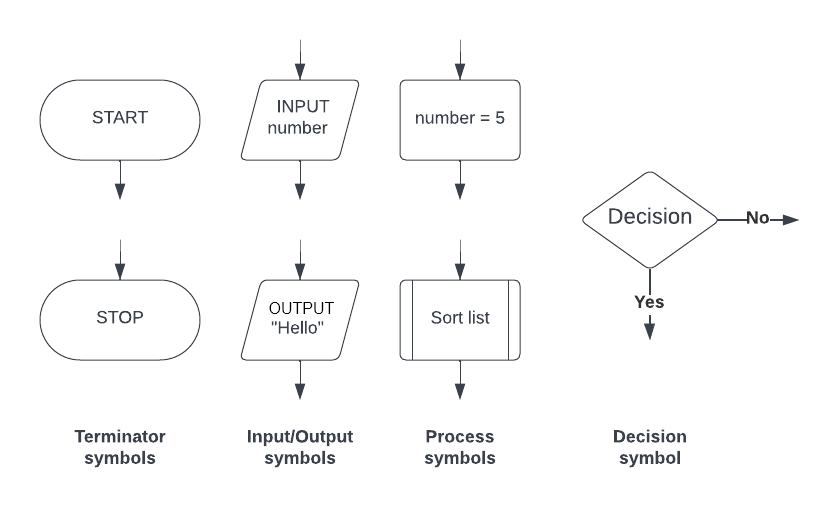
Flowcharts are a visual tool that uses shapes to represent different functions to describe an algorithm
-
Used to visualise the flow of control in a system
-
Standard symbols include:
- Oval for Start/End
- Parallelogram for Input/Output
- Rectangle for Processes
- Diamond for Decisions
-
Arrows show the sequence of operations
Identifier tables
What is an identifier table?
- An identifier table is used when writing pseudocode to keep track of all the identifier names used in an algorithm
- An identifier is the name given to a variable, constant, array, procedure, or any other named element in the pseudocode
Why use an identifier table?
- It helps you stay organised when designing an algorithm
- Ensures consistent naming
- Makes it easier to understand what each identifier stores or does
- Useful in exam questions when you are asked to declare variables clearly
Identifier naming rules
- Must start with a letter (A–Z or a–z)
- Can include letters, digits (0–9), and underscores (_)
- Accented characters and symbols are not allowed
- Identifiers are case sensitive (e.g.
Totalandtotalare NOT treated the same)
| Identifier | Description |
|---|---|
StudentName | Stores a student’s full name |
TestScore | Holds a test score value |
MAX_SCORE | Maximum score allowed |
FormList | Stores names in a form group |
Was this revision note helpful?
Build on this topic