Transmission media (Cambridge International AS Computer Science)
Exam board Cambridge International · ASUpdated 2026-10-01
Wired vs wireless
What is a wired network?
-
A wired network is a network where physical cables are used to join devices together and transmit data
-
Computers can be connected to networks using many different types of wires to transmit data
-
The most common types of cables in a wired network are:
- Ethernet
- Fibre optic
- Copper
Advantages & disadvantages of wired networks
| Advantages | Disadvantages |
|---|---|
| Speed- Fast data transfer | Portability- Can't move easily, location is limited by physical cable |
| Security- Better physical security | Cost- Need more cables to add a new device |
| Range- High, less susceptible to interference | Safety- Cables can be trip hazards, need routing along walls, under floors |
What is a wireless network?
-
A wireless network is a network where connections are made using radio waves to transmit data through the air
-
The most common types of wireless connections are:
- Wi-Fi
- Bluetooth
What is Wi-Fi?
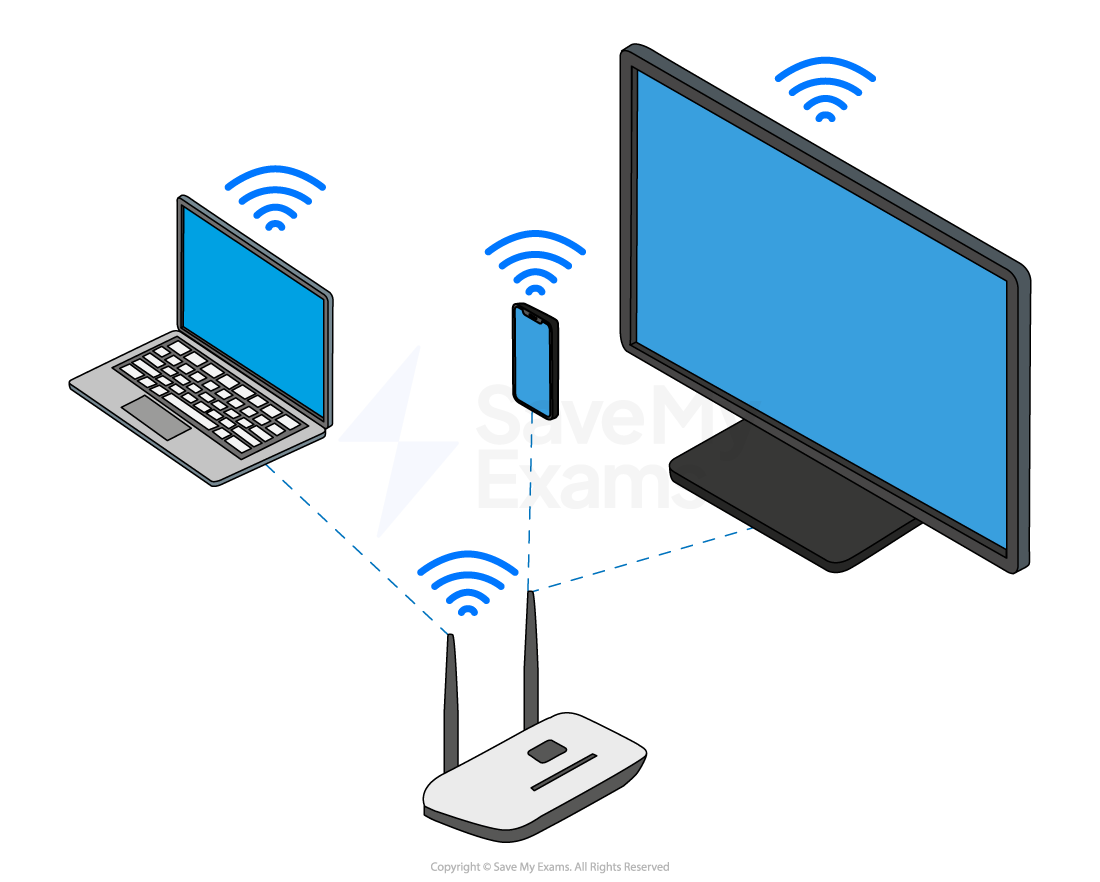
- Wi-Fi is a common standard for wireless networks
- It is common in most homes and offices to connect devices such as laptops, tablets& smart phones
- Using Wi-Fi, devices communicate with a wireless access point (WAP), which can be a standalone device or built into a router or switch
What is Bluetooth?

- Bluetooth is another common standard for wireless networks
- Bluetooth is common in most homes and offices to connect devices such as headphones, controllers, keyboards& mice
- Bluetooth is used typically for a direct connection between two devices
Advantages and disadvantages of wireless networks
| Advantages | Disadvantages |
|---|---|
| Portability- Easy to move around, location is only limited by range | Speed- Slower data transfer than wired |
| Cost- Less expensive to setup and add new devices | Security- Less secure than wired |
| Compatibility- Most devices are manufactured with a built in wireless adapter | Range- Relies on signal strength to the WAP, signals can be obstructed |
Types of media
What is transmission media?
-
Transmission media is the type of cable used in wired connections
-
Wired connections offer a higher bandwidth than wireless connections
-
The main options for transmission media are:
- Twisted pair
- Coaxial
- Fibre-optic
Twisted pair
- Carries electrical signals between devices on a local area network (LAN)
- Common in offices and homes to connect devices such a desktop computers & servers
- Allow duplex communication
- Slower transfer rate compared to coaxial and fibre-optic
- Can suffer from external interference (electromagnetic radiation)
- Low cost

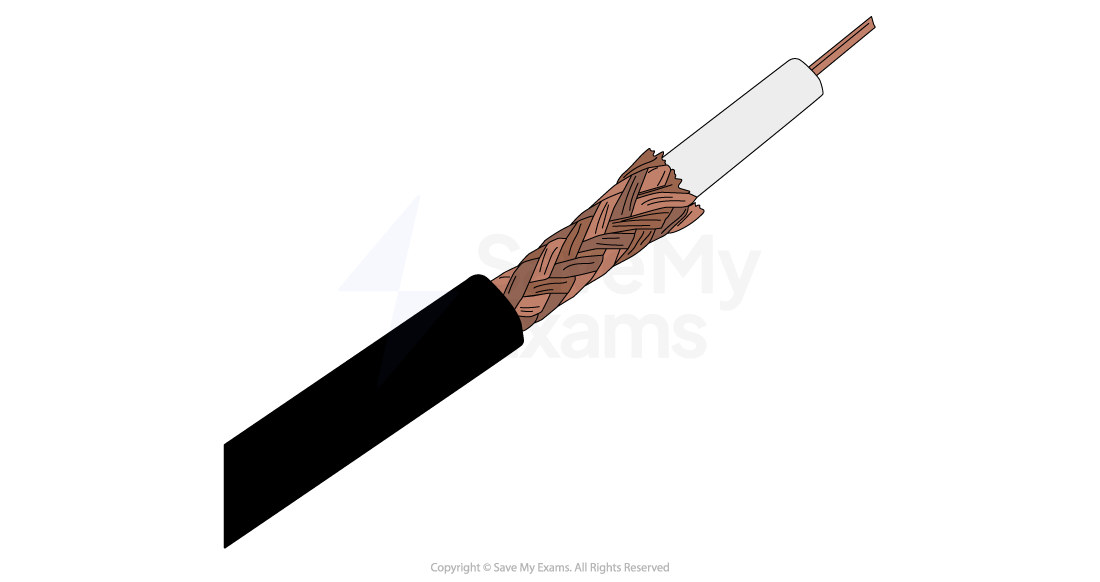
Coaxial
- Used in telecommunication to transmit voice signals, forming the traditional landline phone network
- Adapted to deliver network traffic on a wide area network (WAN) making the internet possible
- Degrades over time which limits their range compared to fibre optic
- Suffers from interference which can disrupt data quality
- Transmits data at a much slower rate, and has a much lower bandwidth compared to fibre optic
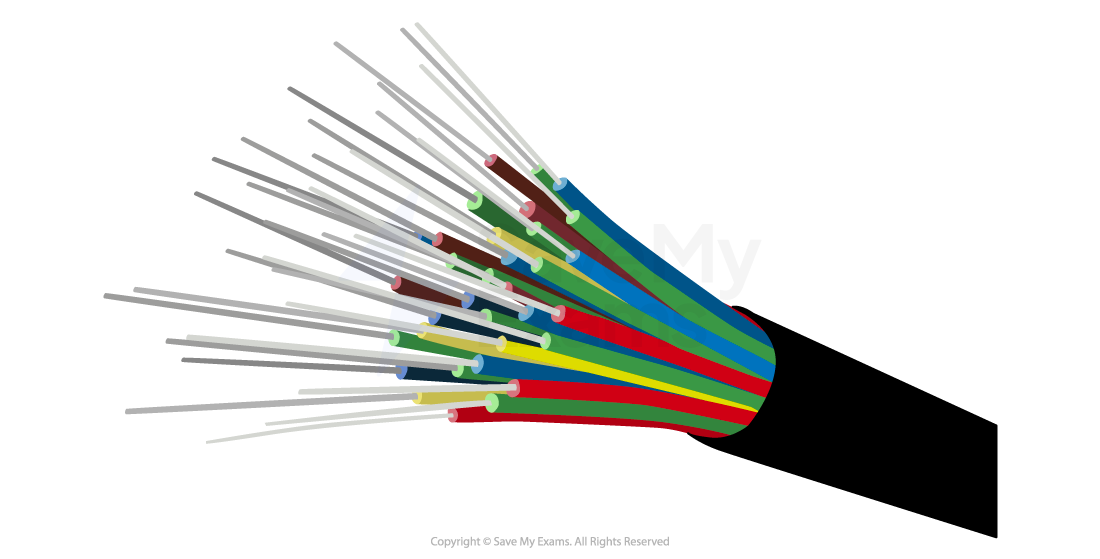
Fibre optic
- Uses light to transmit data on a wide area network (WAN)
- Transmits data at high speed and has a higher bandwidth compared to copper cables
- Does not suffer from interference which makes them the most secure option to send sensitive data
- Can cover a long distance without any degradation, they can span cities and countries
Quick comparison
| Feature | Twisted pair | Coaxial cable | Fibre optic |
|---|---|---|---|
| Used for | LAN connections in homes/offices | Voice signals (telecoms), early WAN/internet | High-speed WANs, internet infrastructure |
| Data transfer method | Electrical signals | Electrical signals | Light signals |
| Speed | Slower than coaxial and fibre | Slower than fibre | Fastest |
| Bandwidth | Low to medium | Lower than fibre | Highest |
| Signal degradation | Moderate | Degrades over time | Minimal degradation – works over long distances |
| Interference | Prone to electromagnetic interference | Also suffers from interference | No interference – more secure |
| Communication | Allows duplex communication | Supports duplex (but lower quality) | Full duplex |
| Cost | Cheap | Medium cost | Expensive |
| Typical use | Desktop PCs, printers, servers in LANs | Traditional phone lines, early internet connections | Modern internet backbones, long-distance data transmission |
Was this revision note helpful?
Build on this topic