Break-Even Analysis (Cambridge International AS Business)
The meaning and importance of break-even analysis
-
Break-even analysis is a financial tool used to determine the point at which the business revenue equals its expenses, resulting in neither profit nor loss
-
It helps businesses understand the minimum level of sales or output they need to achieve to cover all costs
- This helps managers make informed decisions about pricing and production volumes
-
It is particularly useful for communicating with stakeholders, including investors or lenders
- It demonstrates the financial viability of the business and gives an insight into potential return on investment
Components of break-even analysis
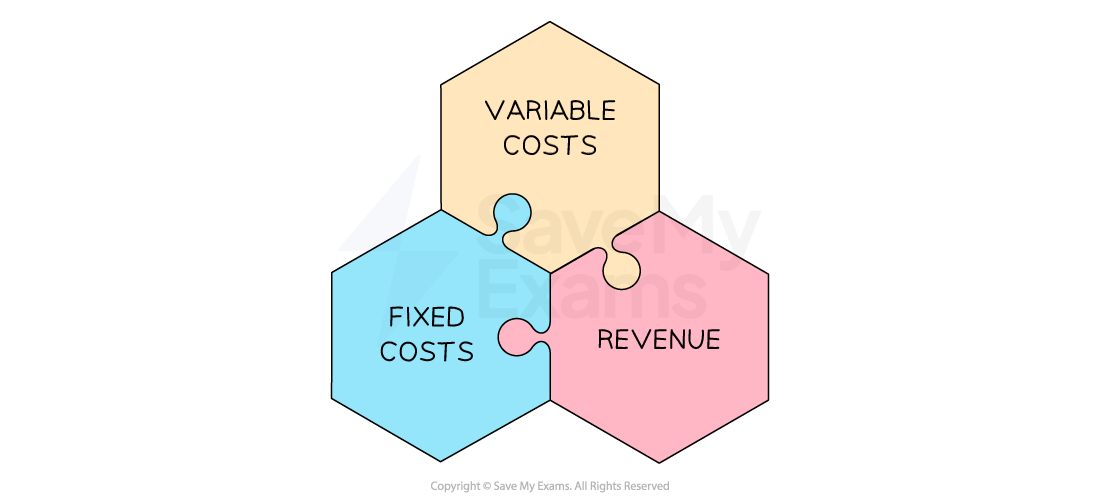
The main components of a break-even analysis
Sales revenue
-
Sales revenue is the value of the units sold by a business over a period of time
-
E.g. the revenue earned by Apple Music from sales of music downloads
-
Sales revenue is a key business performance measure and must be calculated to identify profit
-
Sales revenue is calculated using the formula
-
Sales revenue increases as the sales volume increases
-
Costs
-
In preparing goods and services for sale, businesses incur a range of costs
- Some examples of these costs include purchasing raw materials, paying staff salaries and wages and paying utility bills, such as electricity
-
These costs can be broken into different categories
-
Fixed costs (FC) are costs that do not change as the level of output changes
- These have to be paid whether the output is zero or 5,000
-
Variable costs (VC) are costs that vary directly with the output
- These increase as output increases and vice versa
-
Total costs (TC) are the sum of the fixed and variable costs
-
Calculating the break-even point
- Breakeven is calculated using the formula
-
Contribution per unit is used to calculate the breakeven point
- It is calculated using the formula
equation
- It is called contribution, as once the variable cost of the unit has been paid, the remainder of the selling price contributes to paying the fixed costs of the business
Worked Example Selected cost and revenue data for Cannock Chase Glamping
£ Revenue per pod per night 95 Variable costs per pod per night 19 Annual fixed costs 55,000 Using the information in the table, calculate how many pods need to be occupied each year for Cannock Chase Glamping to break even
(4)
Step 1: State the formula to calculate the breakeven point
(1)
Step 2: Calculate the contribution
(1)
Step 3: Apply the formula to calculate the breakeven point
$= \frac{\pounds 55 , 000}{\pounds 76}
= 723.68$ (1)
Step 4: Always round UP to the nearest whole number because only whole products can be sold
(1)
Uses and limitations of break-even analysis
Uses of break-even analysis
1. Profitability assessment
- It helps identify the level of sales required to avoid losses and provides a target for achieving profits
2. Cost control
- Break-even analysis helps in identifying fixed and variable costs and their impact on the business
- By understanding the cost structure, businesses can evaluate their spending patterns and reduce unnecessary expenses
3. Pricing decisions
- Break-even analysis provides insights into pricing decisions by helping businesses determine the minimum price required to cover costs and achieve the desired level of profit
4. Financial planning
- Break-even analysis assists in financial planning by providing a reference point for target setting, such as realistic sales targets and plans for necessary expenses
5. Sensitivity analysis
- It allows businesses to evaluate the impact of changes in variables such as costs, prices and sales volumes on the breakeven point
- This helps in understanding the potential risks and uncertainties, such as a new competitor entering the market or suppliers increasing prices
6. Decision-making
- Break-even analysis provides a basis for informed decision-making
Limitations of break-even analysis
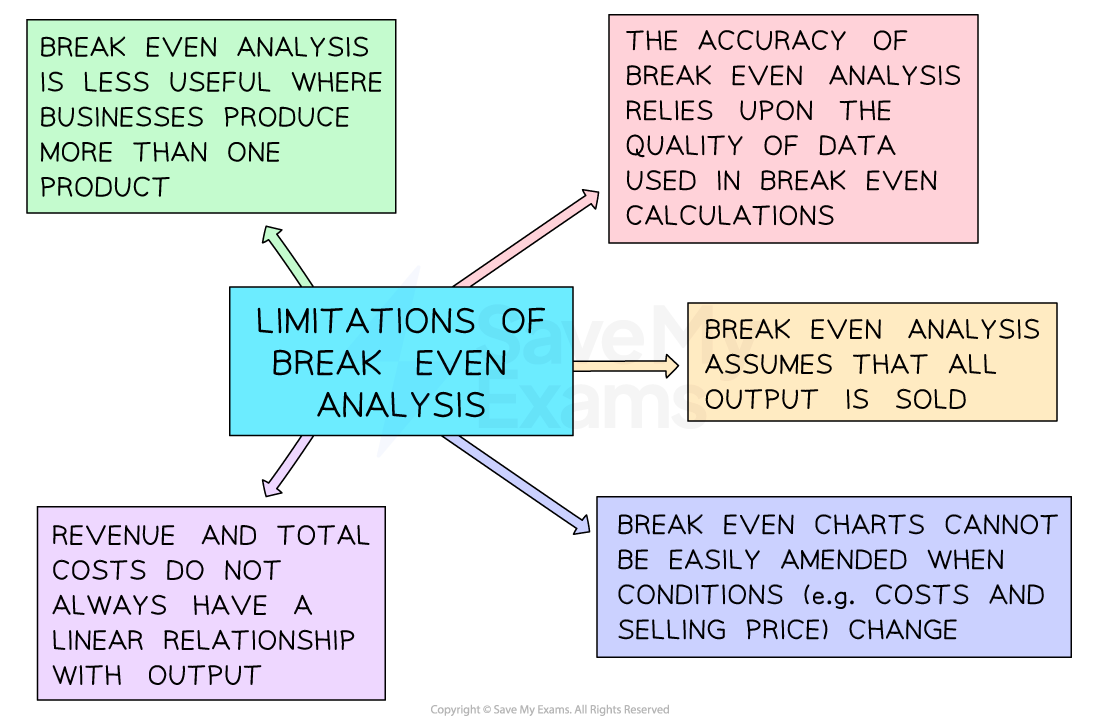
The limitations of break-even analysis
Was this revision note helpful?
Build on this topic