Motivation Theories: Taylor, Mayo and Maslow (Cambridge International AS Business)
Taylor's Motivation Theory
-
Taylor's theory focuses on breaking down complex tasks into simpler ones, standardising work processes and providing workers with clear instructions and training to achieve maximum efficiency
-
Manufacturing businesses most commonly use Taylor's principles to structure staff benefits
- Piece rate pay systems link output to financial rewards
- Production lines involving human labour are often set up based on these principles
Taylor's theory of motivation
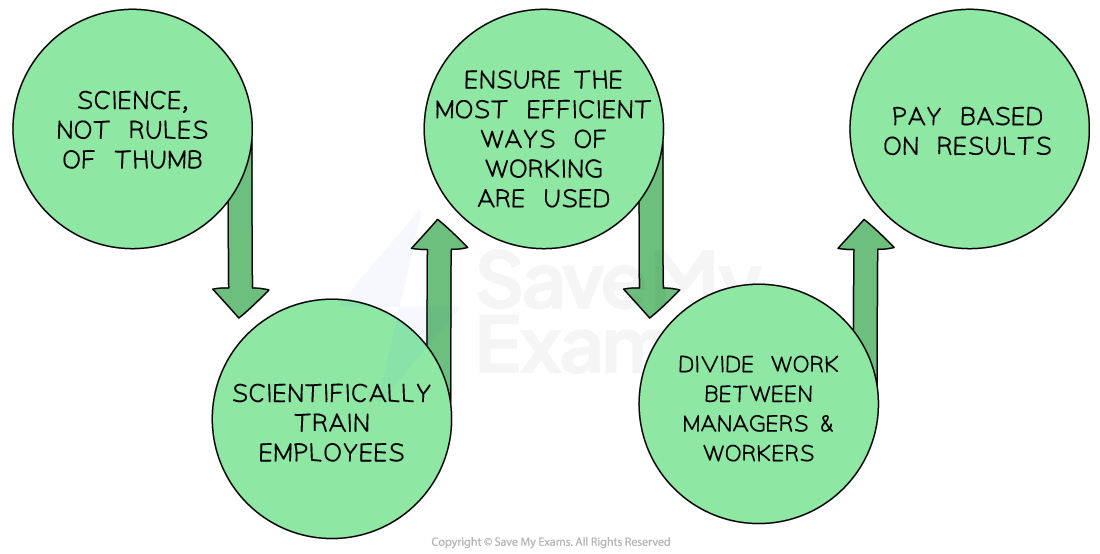
*Taylor's method starts with a scientific analysis of what is involved in a job and then breaks it down into parts for which employees can be trained *
The steps in Taylor's process
1. Study and analyse the work process
- Carefully analyse each step of the work process
- Break down complex tasks into simpler ones and identify the most *efficient way to perform each task
2. Standardise the work process
- This involves creating detailed procedures and instructions for each task so that workers can follow these procedures consistently
3. Select and train workers
-
Workers should be carefully selected based on their skills and abilities
-
Train workers to perform their tasks efficiently and effectively
- This training includes both technical skills and the proper attitudes and behaviours required to be successful (e.g patience in a repetitive task)
4. Provide incentives for performance
-
Scientific management emphasises the use of incentives to motivate workers
- This may include bonuses or piece-rate pay
Evaluating Taylor's theory
| How businesses use Taylor's approach | Advantages | Disadvantages |
|---|---|---|
| - Workers are trained to perform only one task, which they become very skilled at - Workers are usually paid for the completed work (piece rate pay), e.g. $0.16 per T-shirt completed by garment workers in Bangladesh | - Increased *efficiency *lowers costs - Standard procedures that everyone follows reduce errors - Specialisation of labour leads to greater efficiency and productivity - Clear lines of *authority *lead to more efficient decision-making and communication - Good training and development improves employee performance and job satisfaction | - Overemphasis on efficiency reduces worker satisfaction and creativity - Workers may disengage from work if they are reduced to working in a machine-like system - This approach may not work for roles that need high levels of creativity, problem-solving or interpersonal skills - Potential for exploitation, as this approach may be used to extract more work from workers without paying them fairly |
Mayo's Motivation Theory
-
Mayo's theory focuses on the importance of social factors in the workplace
- These include factors such as communication, motivation, and job satisfaction
-
Mayo suggests that the key to improving productivity and job satisfaction lies in understanding and improving relationships between workers, supervisors and management
How businesses use Mayo's Human Relations theory
| How businesses use Mayo's approach | Advantages | Disadvantages |
|---|---|---|
| - Empowering employees in decision-making, e.g, creating teams which decide their priorities - Team-building activities are used to build relationships - Providing feedback and recognition to employees, e.g. Worker of the Week - Creating a positive work environment by promoting open communication and providing support to employees, e.g. offering wellness programmes - Encouraging employee development by offering training programmes, *mentorship *and career advancement | - Improved job satisfaction as workers feel valued and supported - Open and honest communication, which reduces misunderstandings and conflicts - Employee empowerment **increases workers' sense of ownership and responsibility - Stronger teams, as there is a sense of community and team spirit | - Time-consuming, as building positive relationships requires time and effort - Lack of control as workers take more decisions - Resistance to change, as some workers and managers may be resistant to the changes required by Mayo's theory - Potential for conflict,** as attempts to build stronger relationships can also lead to disagreement - It may not work for businesses which require a high degree of individual *autonomy *and independence |
Maslow's Hierarchy of Needs
-
Maslow outlined five tiers of human needs that must be met for individuals to reach their full potential
-
Once a tier of needs has been met, it is unlikely to continue to motivate
- For example, once safety needs are met through satisfactory pay, employees will look for the next set of needs - love and belonging needs – to be met
Maslow's hierarchy of needs
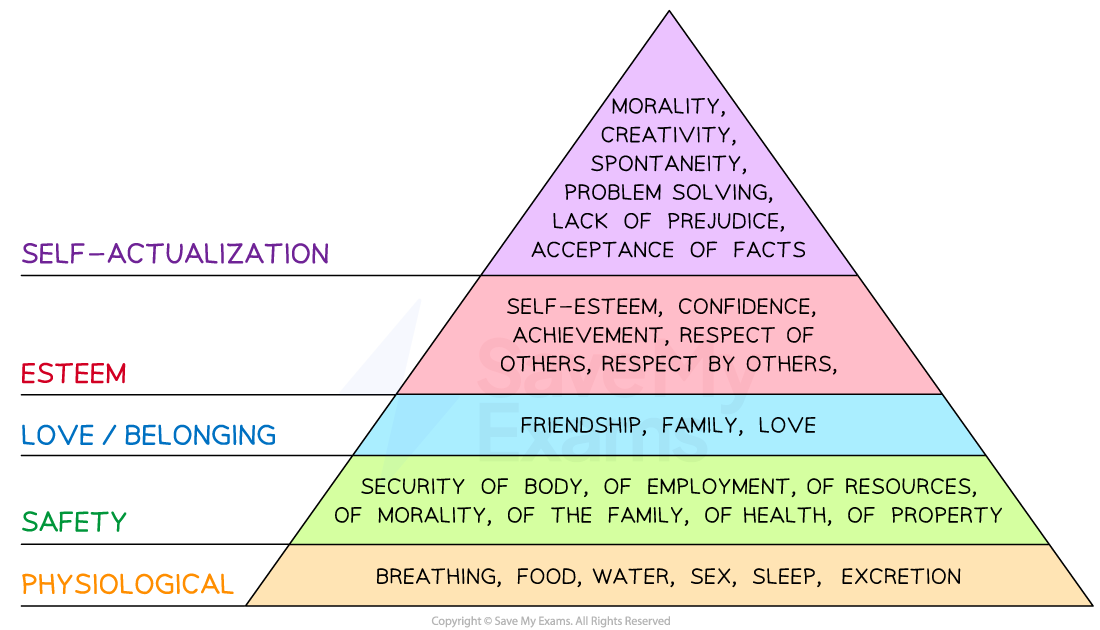
Maslow's Hierarchy of Needs explains human motivation based on the pursuit of different levels of needs being fulfilled
1. Physiological needs
- Businesses can provide necessities for their employees, e.g comfortable work environment, access to clean water and food and adequate rest breaks
2. Safety needs
- Businesses can provide job security, fair pay, benefits, and safe working conditions for their employees
3. Love and belonging needs
- Businesses can encourage teamwork and generate a sense of community and belonging within the workplace
4. Esteem needs
- Businesses can provide recognition for employees' accomplishments and provide a positive *work culture *that values individual contributions
5. Self-actualisation needs
-
Businesses can help employees achieve this need by offering opportunities for employees to pursue their passions and interests
- E.g. Barclays Bank supports elite sportspeople by allowing them time off work to continue their training (the focus is on getting the job done, not having to be present at work at a certain time)
Evaluating Maslow's theory
| Advantages | Disadvantages |
|---|---|
| - By meeting employees' needs, a more satisfying work environment is established - This can lead to increased productivity and lower staff turnover rates - Offering **incentives that align with their specific needs and desires improve staff loyalty - Employees who feel valued and supported by their employers are more likely to perform at a higher level | - Businesses need to tailor their approach to meet the individual needs of their employees, as one size does not fit all - Meeting many individual needs can be expensive,** especially when offering costly perks - Determining the best way to motivate requires significant effort from management to connect individually with workers |
Was this revision note helpful?
Build on this topic