Cells of the Blood (Cambridge International AS Biology)
Spec point —
8.1.5· recognise and draw red blood cells, monocytes, neutrophils and lymphocytes from microscope slides, photomicrographs and electron micrographs
Cells of the blood
-
Blood is a tissue composed of a number of important specialised cells, including:
- Red blood cells
- Monocytes
- Neutrophils
- Lymphocytes
-
These cells all have distinguishable structures which enable them to be recognised on microscope slides, in photomicrographs and in electron micrographs
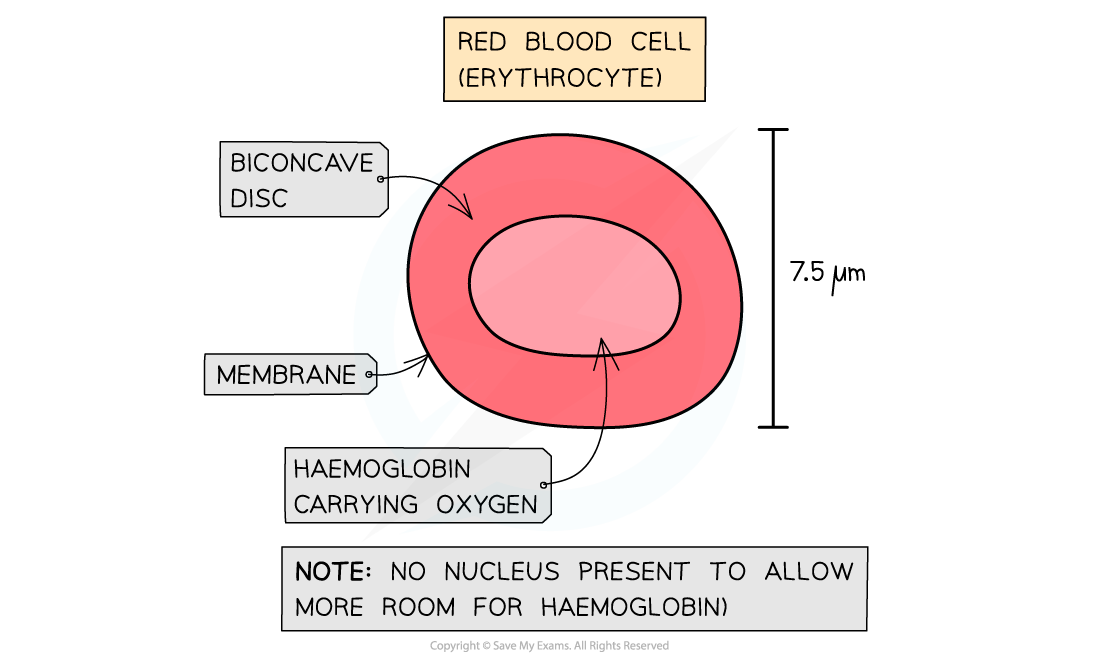
Diagram of the structure of a red blood cell
-
Red blood cells contain haemoglobin
- This is a protein with a quaternary structure that contains haem iron groups which can bind reversibly to oxygen
-
Distinctive features of red blood cells when viewed under a microscope, are their distinctive biconcave disc shape (caused by their lack of nucleus)
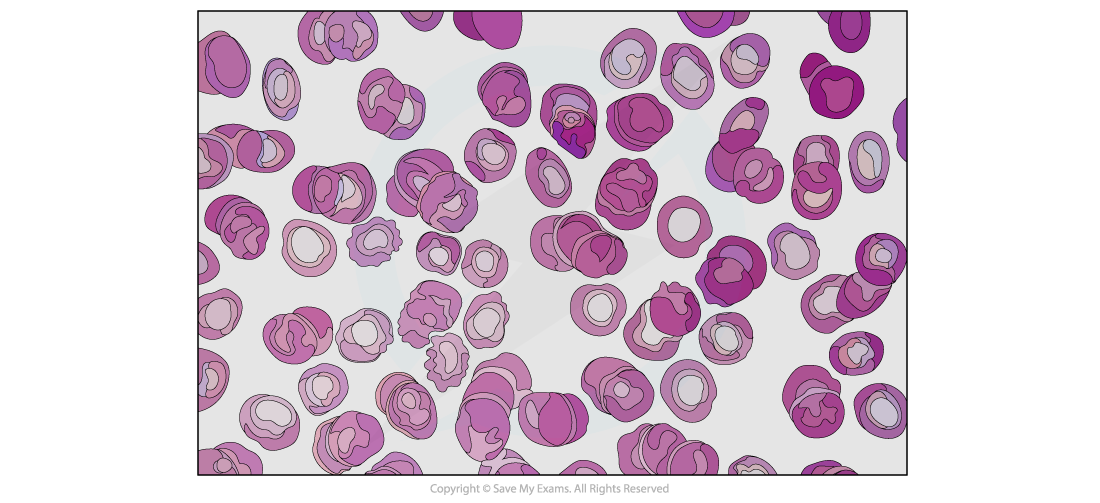
Red blood cell micrograph
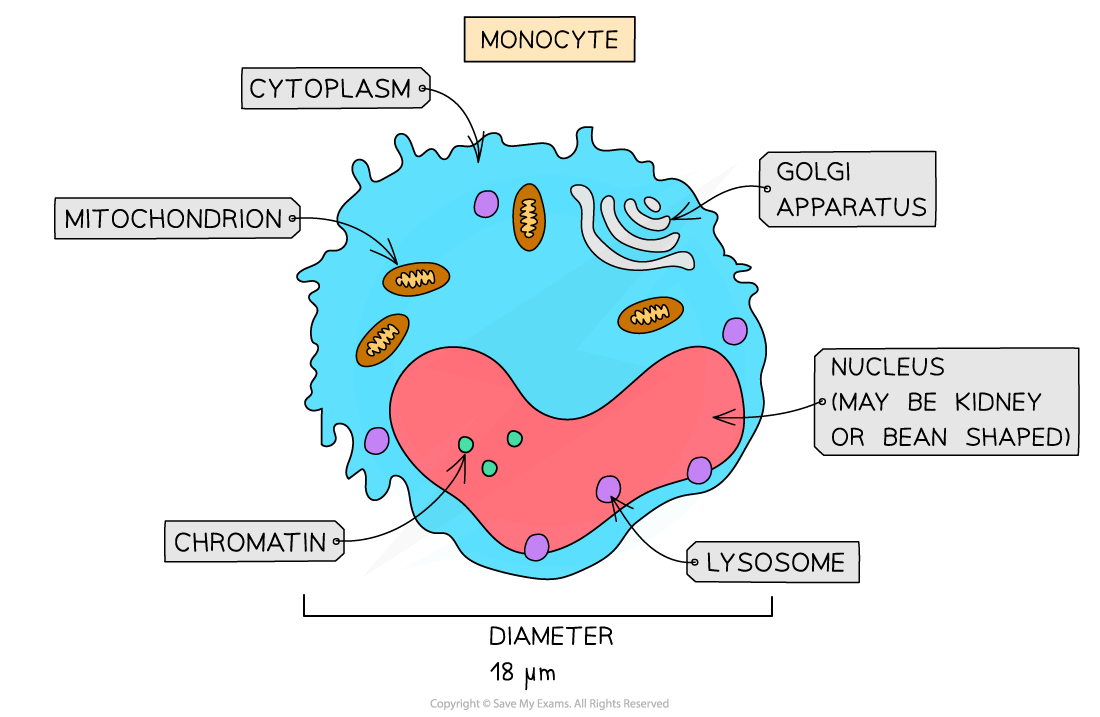
A monocyte is a type of white blood cell
-
Monocytes are identifiable by their size
- They are the largest of the leukocytes and have a nucleus shaped like a kidney or a bean
-
The nucleus of monocytes tends to appear lighter after staining than other leukocytes
-
The nucleus should appear a light blue colour, while the chromatin inside is distinct and fine
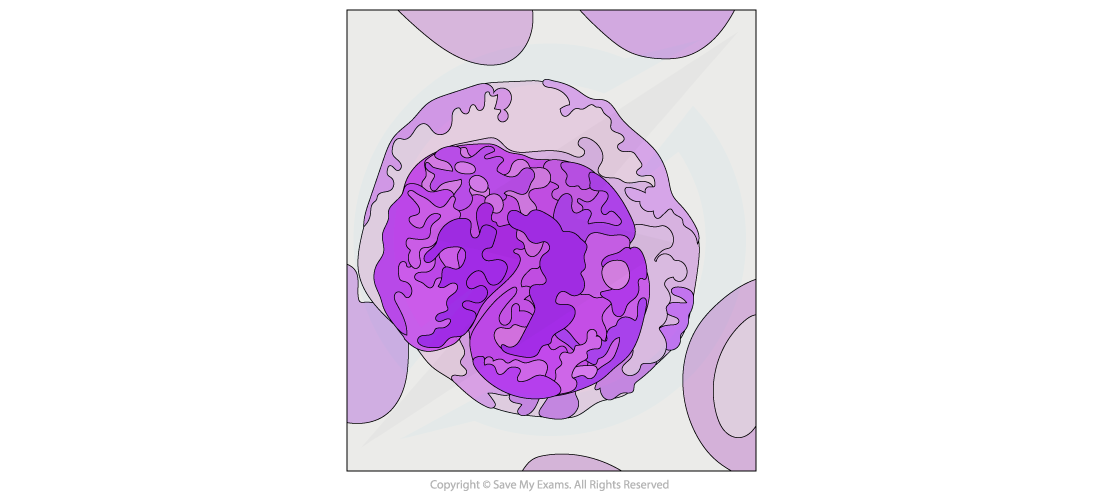
A micrograph of a monocyte cell
-
Neutrophils are distinguished by their multi-lobed nuclei
-
Up to 70% of all leukocytes are neutrophils
- This makes them easy to spot on a micrograph
-
The granules of neutrophils typically stain pink or purple-blue
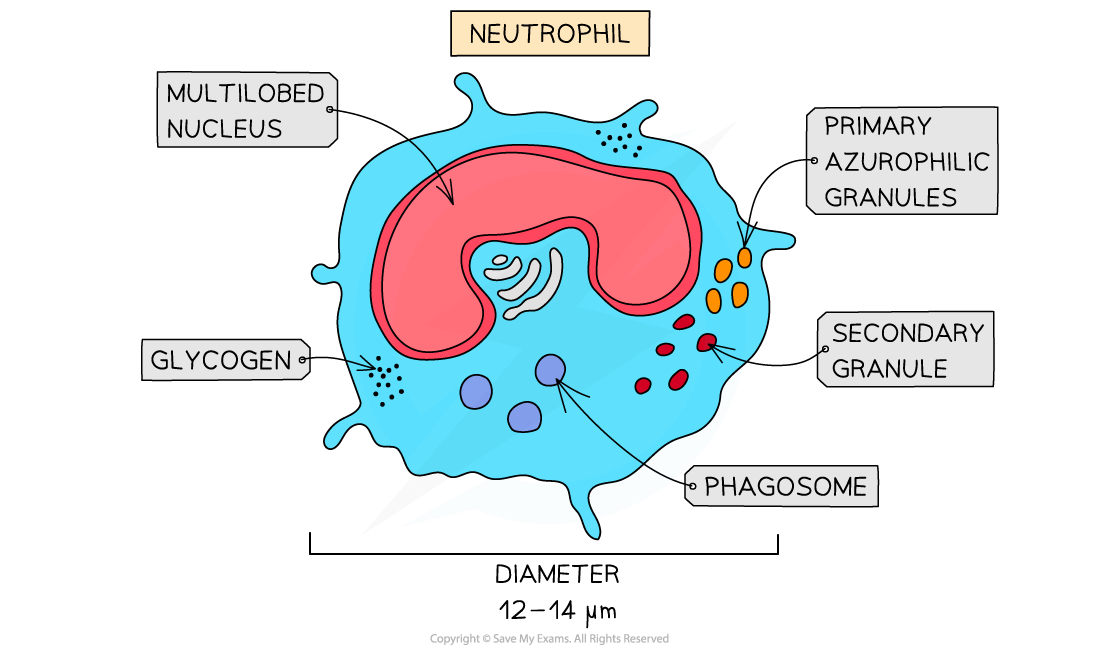
A neutrophil is a type of white blood cell
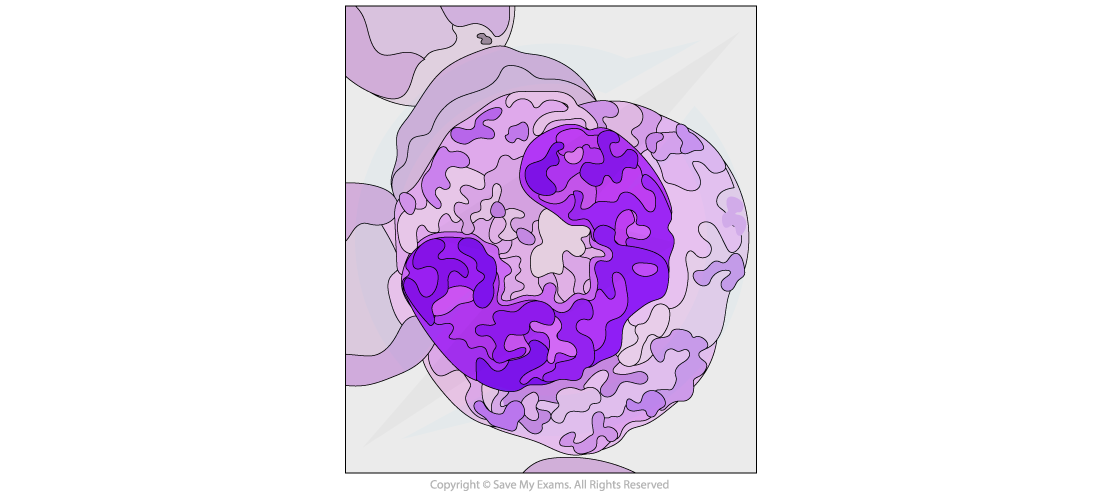
A micrograph of a neutrophil cell
- Lymphocytes are small leukocytes that are identifiable by their very large nuclei, which typically stains a dark colour
- Lymphocytes constitute around 20-25% of all leukocytes
- Lymphocytes are around the size of red blood cells
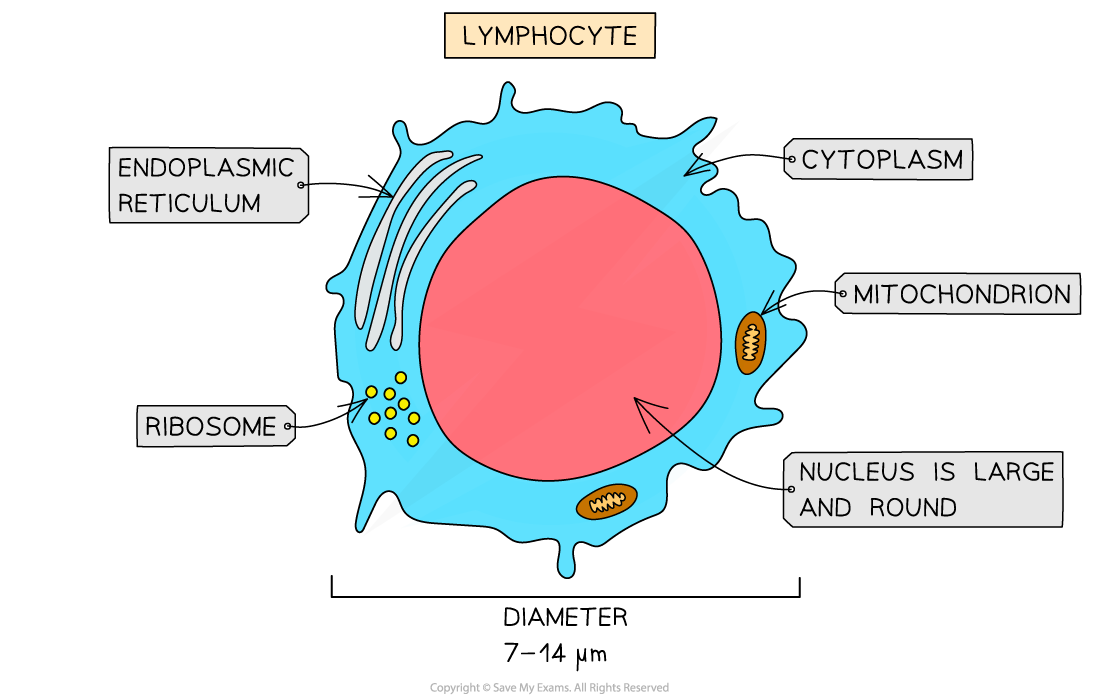
A lymphocyte is a type of white blood cell
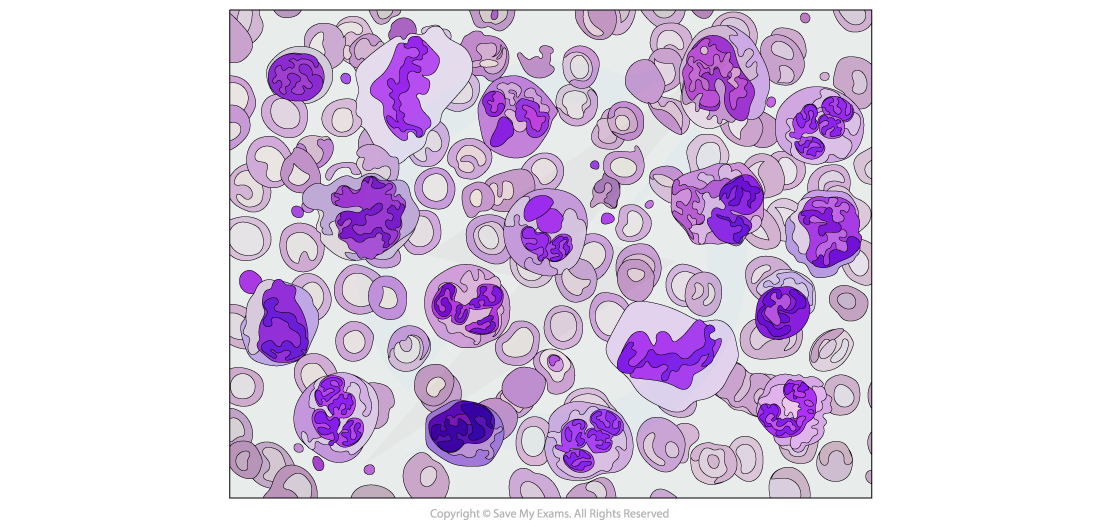
A micrograph of some lymphocyte cells
Exam Hint When looking at micrographs, ensure you distinguish between the kidney-shaped nucleus of a monocyte and the multi-lobed nucleus of a neutrophil, as these can appear similar at first. As with all things, practice is key here!
Was this revision note helpful?
Build on this topic