How Enzymes Work (Cambridge International AS Biology)
How enzymes work
The lock-and-key hypothesis
-
Enzymes are globular proteins
-
This means their shape (as well as the shape of their active site) is determined by the complex tertiary structure of the protein that makes up the enzyme
- This means their shape is highly specific
-
In the 1890’s the first model of enzyme activity was described by Emil Fischer:
- He suggested that both enzymes and substrates were rigid structures that locked into each other very precisely, much like a key going into a lock
- This is known as the ‘lock-and-key hypothesis’
-
This was later modified and adapted to our current understanding of enzyme activity, permitted by advances in techniques in the molecular sciences
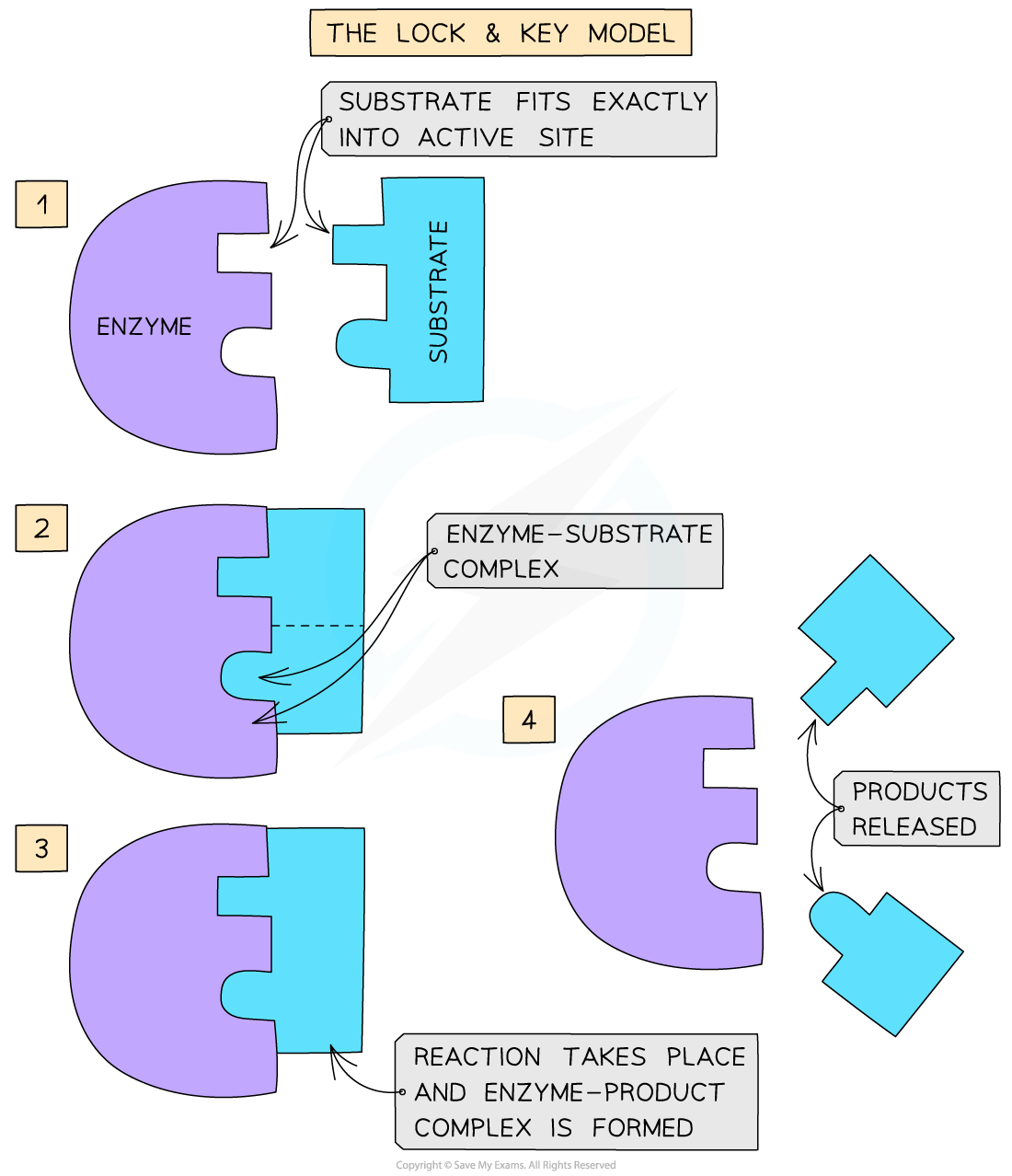
The lock-and-key hypothesis
The induced-fit hypothesis
-
The modified model of enzyme activity is known as the ‘induced-fit hypothesis’
-
Although it is very similar to the lock and key hypothesis, in this model the enzyme and substrate interact with each other:
- The enzyme and its active site (and sometimes the substrate) can change shape slightly as the substrate molecule enters the enzyme
- These changes in shape are known as conformational changes
- This ensures an ideal binding arrangement between the enzyme and substrate is achieved
- This maximises the ability of the enzyme to catalyse the reaction
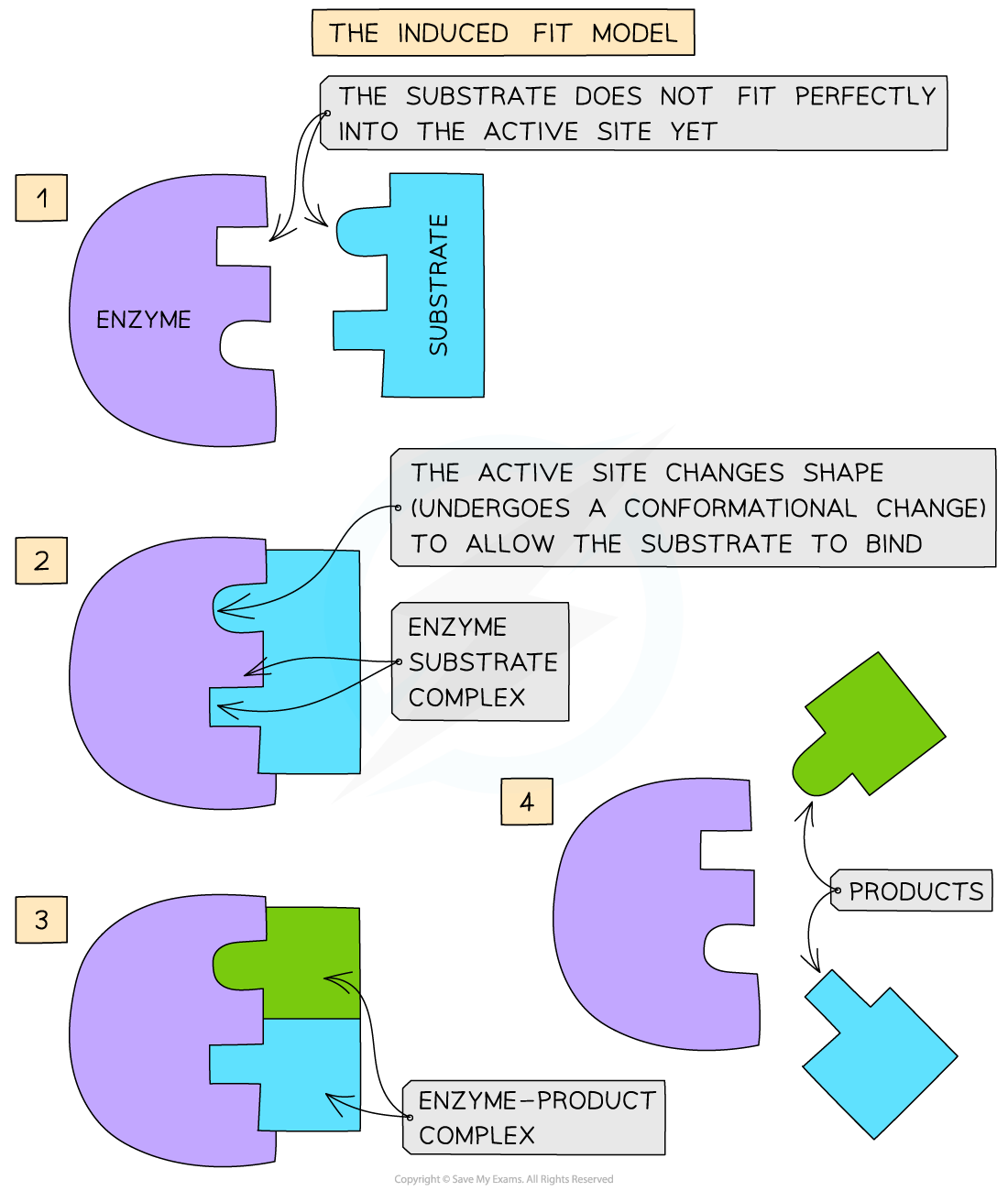
The induced-fit hypothesis
Exam Hint Don't forget – our current understanding of enzyme-substrate interactions is based on the induced-fit hypothesis.
Was this revision note helpful?
Build on this topic