Antibodies (Cambridge International AS Biology)
Antibodies: Structure & Functions
Spec point —
11.2.1· relate the molecular structure of antibodies to their functions
Antibody structure
-
Antibodies are globular glycoproteins called immunoglobulins
-
Antibodies have a Y-shaped quaternary structure with two ‘heavy’ polypeptide chains bonded by disulfide bonds to two ‘light’ polypeptide chains
-
Antibodies have a constant region and a variable region
-
The constant regions do not vary within a class of antibodies but do vary between the classes.
- The constant region determines the mechanism used to destroy antigens
-
The variable region is where the antibody attaches to the antigen to form an antigen-antibody complex
-
At the end of the variable region is the antigen-binding site.
-
Each antigen-binding site is generally composed of 110 to 130 amino acids and includes the ends of the light and heavy chains
-
Antigen-binding sites vary greatly, giving the antibody its specificity for binding to antigens
- Antibodies bind to a region of the antigen called the epitope
-
-
-
Antibodies also have a hinge region which gives flexibility to the antibody molecule
- This allows the antigen-binding site to be placed at different angles when binding to antigens
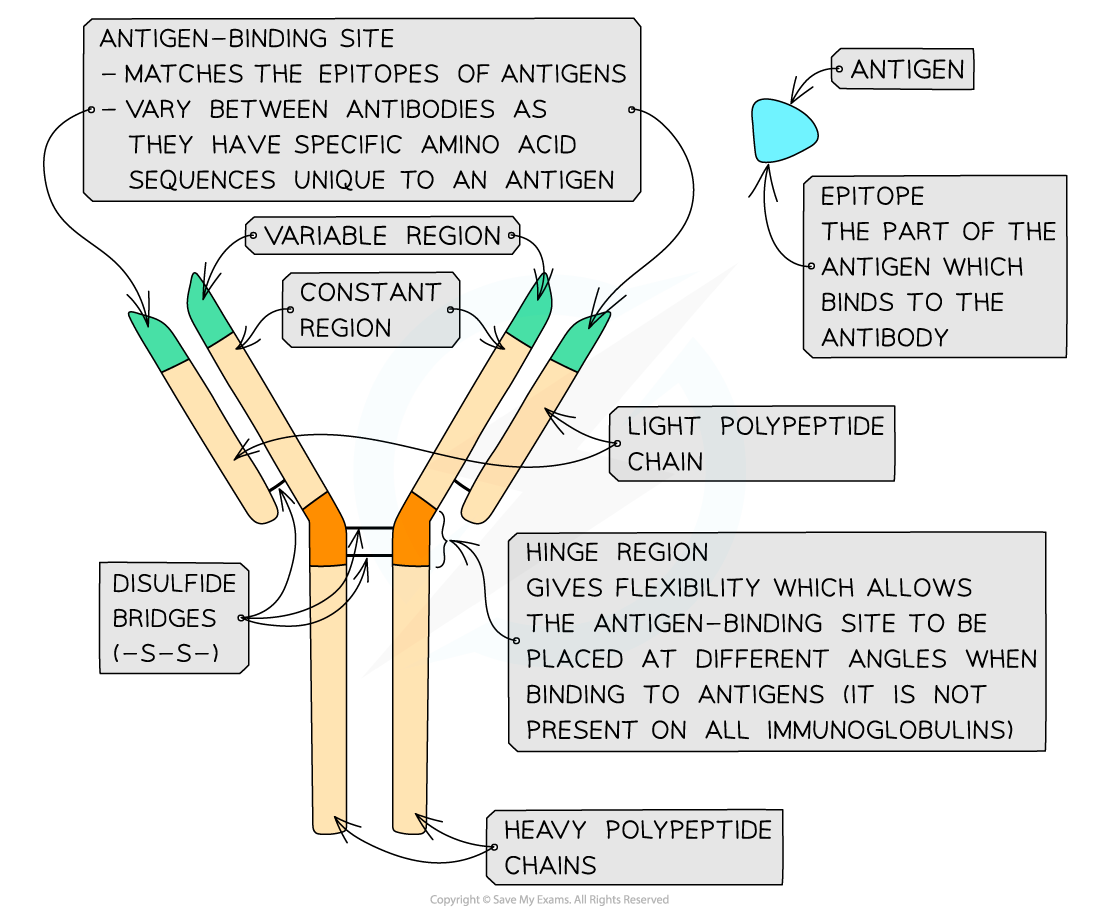
Antibodies are Y-shaped molecules with specific antigen binding sites
Antibody function
-
Antibodies are produced by B lymphocytes
-
Their role is to bind to specific antigens
- Antigens include parts of pathogens and their toxins, pollen, blood cell surface molecules and the surface proteins found on transplanted tissues
-
Antibodies can function in several different ways
-
Antibodies can attach to viruses and to the toxins produced by pathogens to block them from entering or damaging cells
-
Antibodies can act as anti-toxins by binding to and neutralising toxins
-
Antibodies can attach to bacteria, making them readily identifiable to phagocytes; this is called opsonisation.
- Once identified, the phagocyte has receptor proteins for the heavy polypeptide chains of the antibodies, which enables phagocytosis to occur
-
Antibodies can attach to the flagella of bacteria, making them less active; this makes it easier for phagocytes to do phagocytosis
-
Antibodies act as agglutinins, causing pathogens to clump together in agglutination
- This reduces the chance that the pathogens will spread through the body and makes it possible for phagocytes to engulf a number of pathogens at one time
-
Antibodies bound to pathogens can activate complement proteins in the blood, which make holes in the cell surface membranes of the pathogens so that they burst (lyse)
-
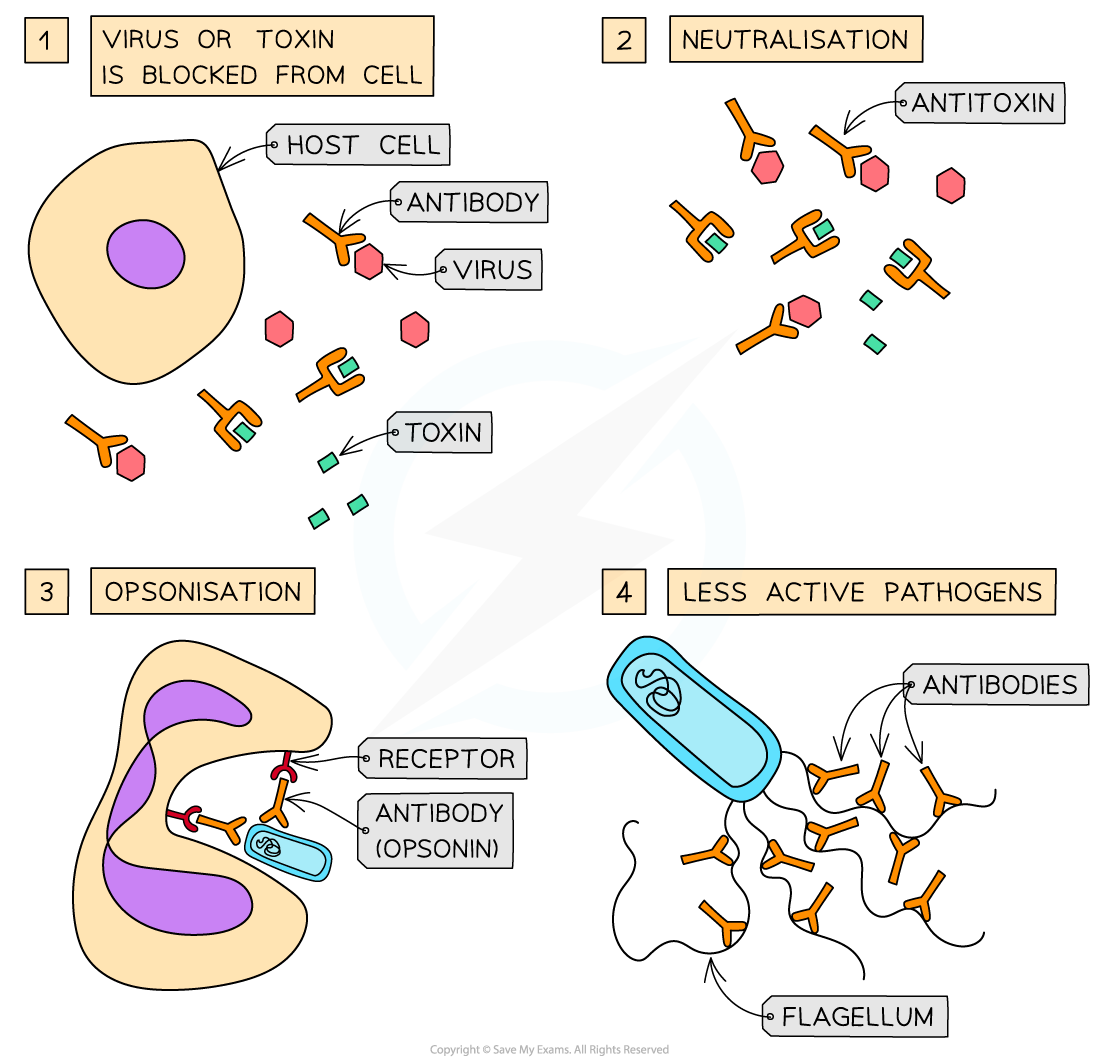
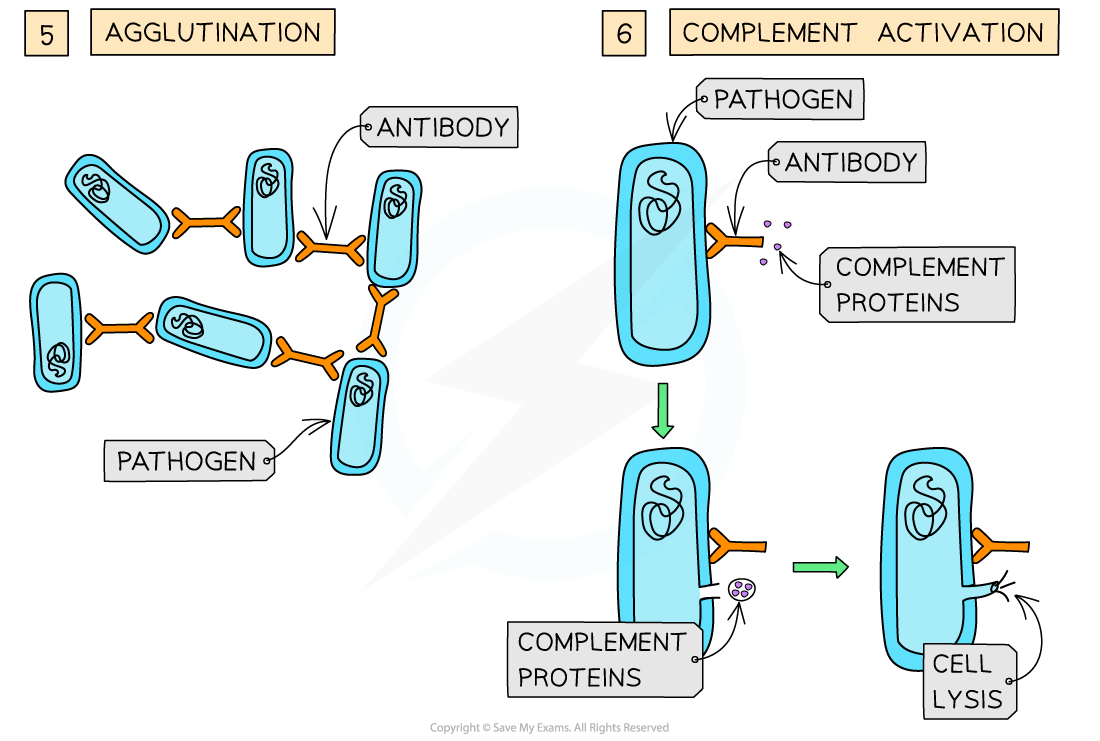
Antibodies can act on pathogens in different ways
Was this revision note helpful?
Build on this topic