Extract:
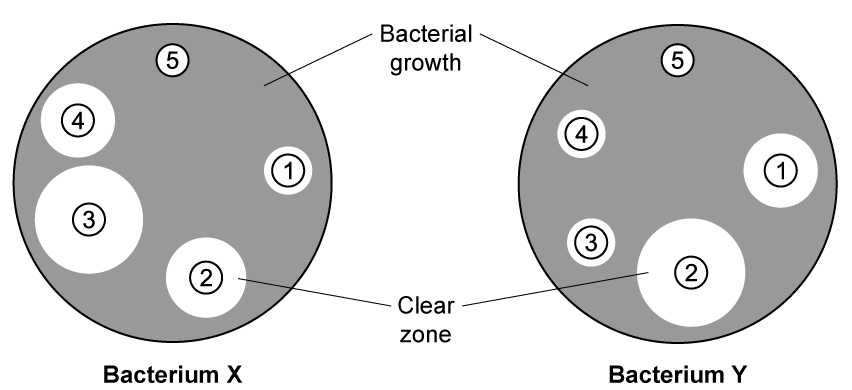
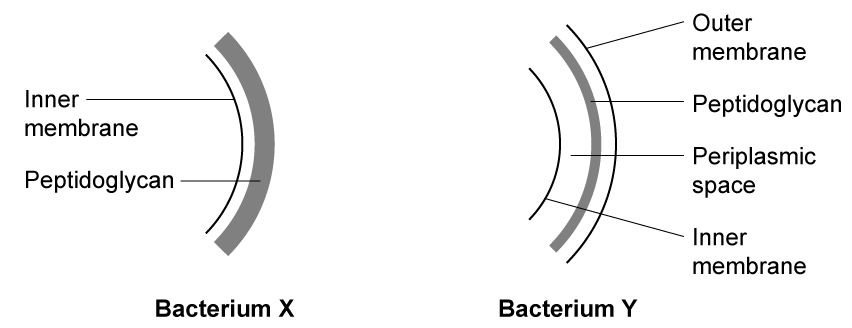
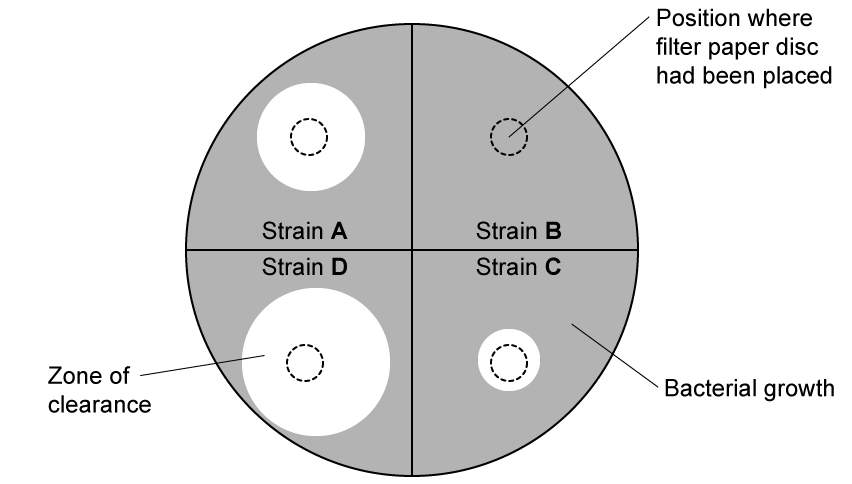
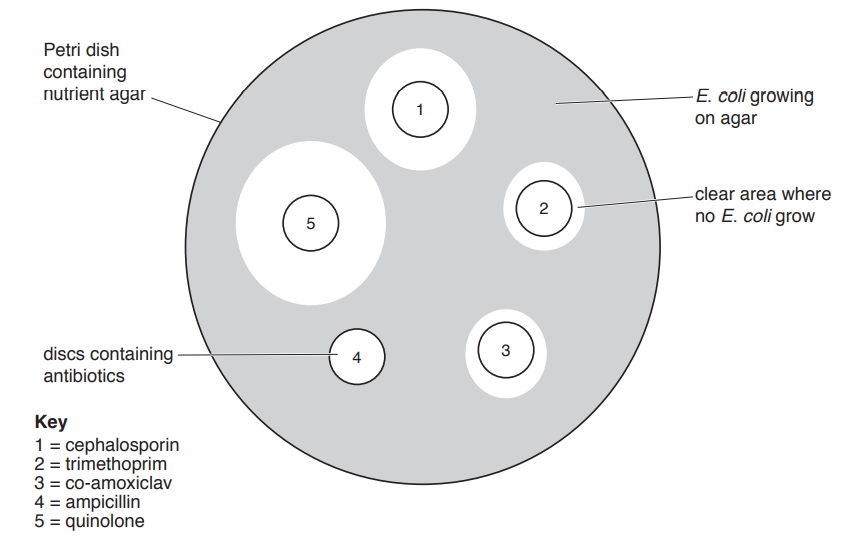
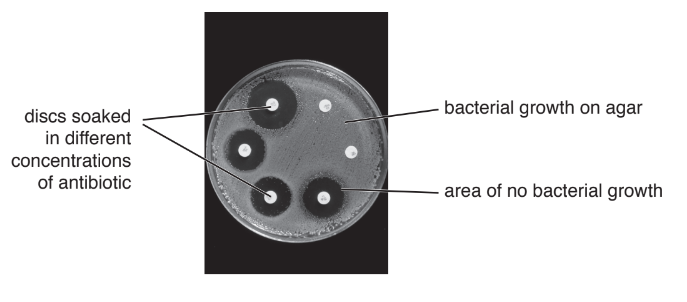
Scientists investigated the sensitivity of two different species of bacteria (X and Y) in the presence of different types of antibiotics. An inoculum of each species of bacteria was spread onto agar plates before filter paper discs soaked in different antibiotics were placed onto the surface of each plate.
The substances that the filter paper discs were soaked in were as follow:
1 - Penicillin G, a natural penicillin
2 - Penicillin V, a natural penicillin
3 - Amoxicillin, a synthetic penicillin
4 - Mezlocillin, a synthetic penicillin
5 - Distilled water
The plates were incubated at 30°C for 24 hours, after which they were removed and the clear zone, where no bacterial growth occurred, was measured around each filter paper disc.
Explain the effects that penicillin V had on bacterium Y.
Mark scheme: Penicillin (V) inhibits enzymes (responsible for forming cross-links); (This) prevents cross-links from forming / peptidoglycan chains cannot link up; The cell wall weakens / becomes weaker; (Therefore) cannot resist turgor (pressure) of cell content; (The) cell / wall burst. When a new bacterial cell is growing, it secretes enzymes called autolysins that makes small holes in the cell wall. They allow the cell wall to stretch so that the peptidoglycan molecules can join up via cross-links. Since penicillin inhibits the enzymes responsible for the formation of these cross-links, it creates an environment where the autolysins continue to make holes in the cell walls, eventually weakening the structure of the wall to the point where the cell bursts.
State the reason why penicillin is not effective in treating viral diseases.