13 markseasy
Sketch the graph of , giving the coordinates of the points where the graph meets the coordinate axes.
30 questions · 126 marks · ≈ 2 hours
Sketch the graph of , giving the coordinates of the points where the graph meets the coordinate axes.
Sketch the graph of , giving the coordinates of the points where the graph meets the coordinate axes.
Sketch the graph of , stating the coordinates of any points where the graph meets the coordinate axes and the equations of any asymptotes.
(i) On the axes below, sketch the graphs of and .
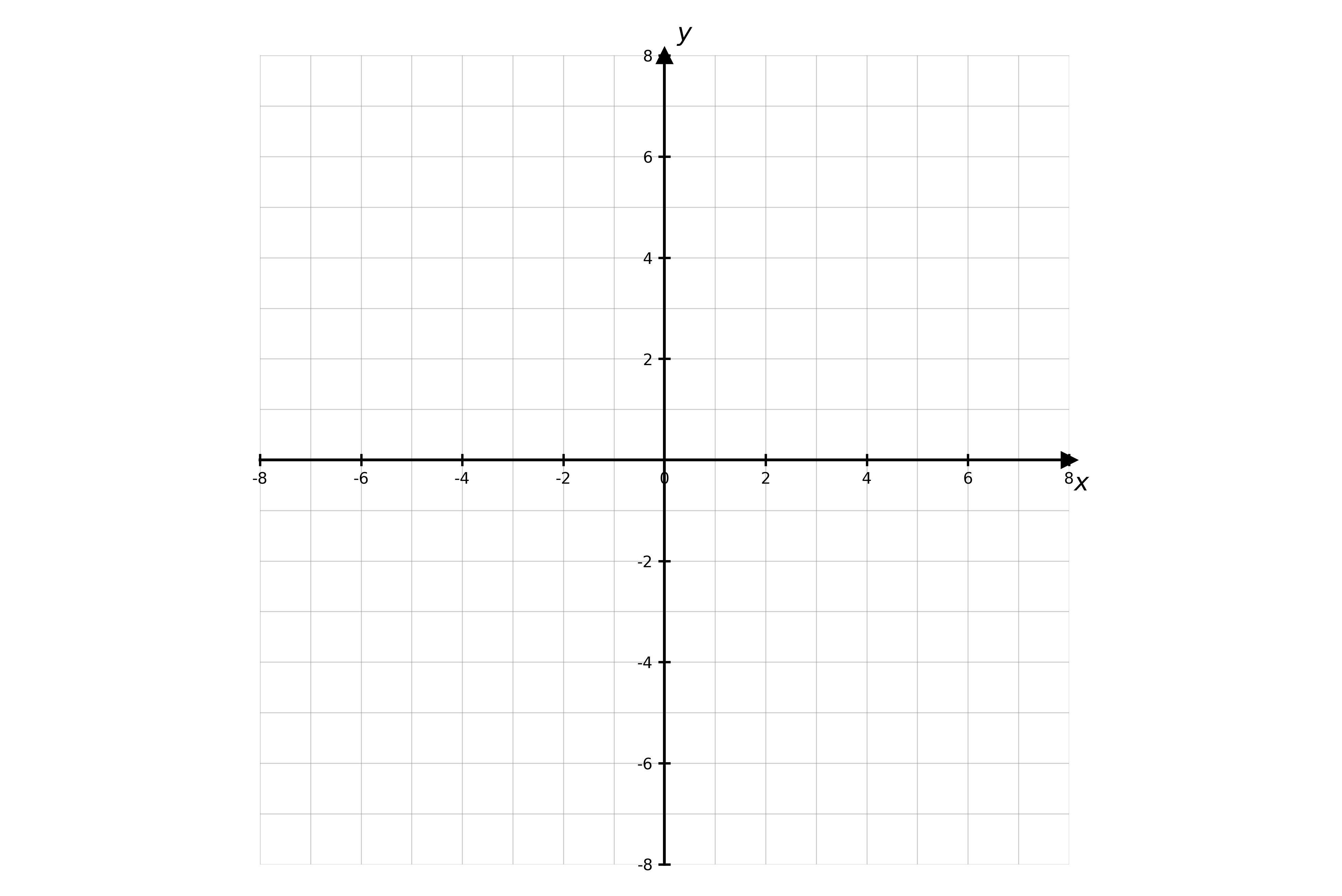
(ii) Use your graphs to solve the simultaneous equations and .
The function is defined by
for .
(i) Write down the value of .
(ii) Factorise .
Hence sketch the graph of , giving the coordinates of the points where the graph meets the coordinate axes.
is proportional to . When , .
(i) Find the constant of proportionality.
(ii) Sketch the graph of against .
By sketching the graphs of and on the same diagram, show that the equation has exactly two real solutions.
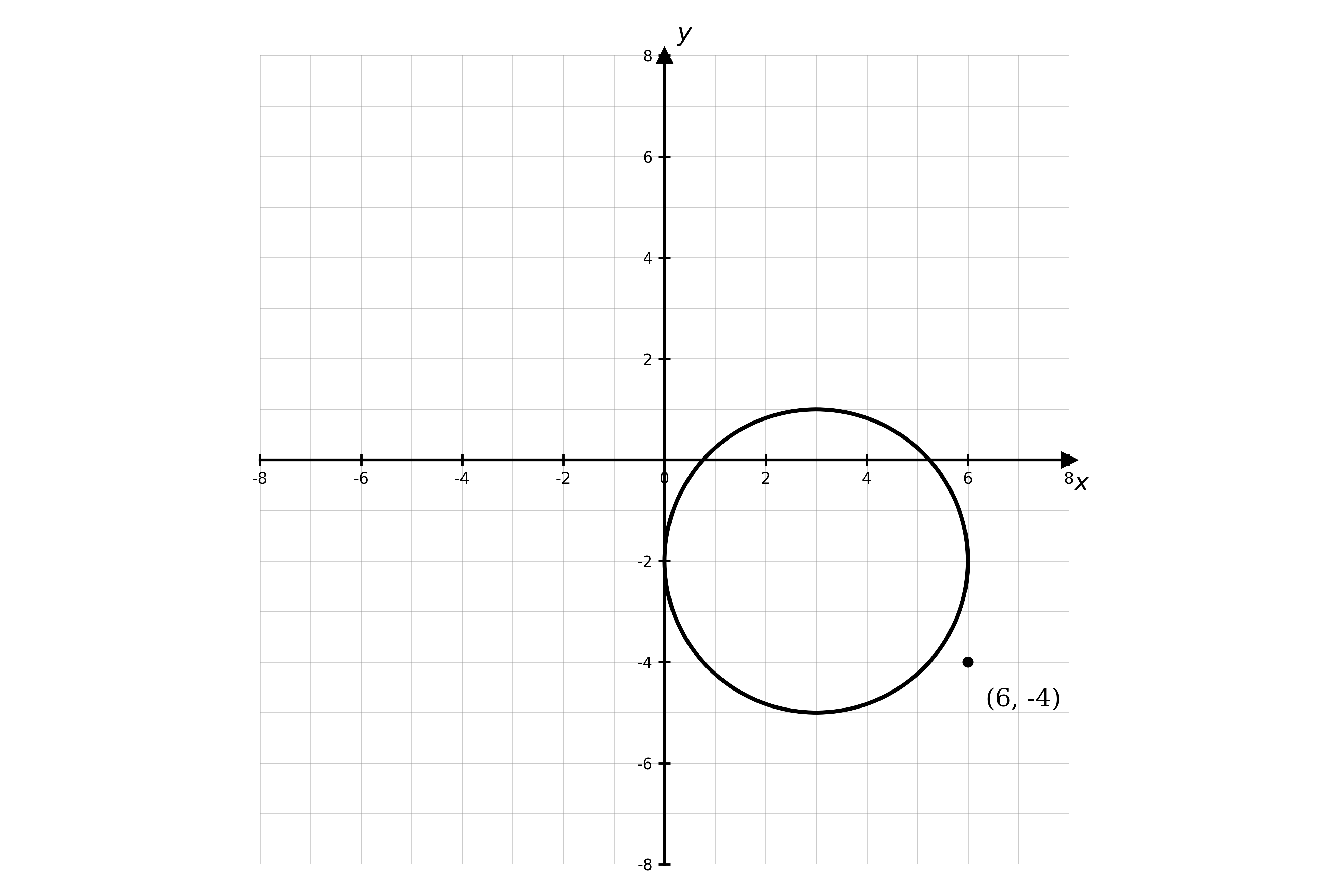
The diagram shows the circle with equation .
On the diagram, draw three straight lines through the point to show that a line through this point can meet the circle at no points, at exactly one point, or at two points.
Express in the form , where , and are integers.
Hence sketch the graph of , giving the coordinates of the points where the graph meets the coordinate axes.
Sketch the graph of , giving the coordinates of the points where the graph meets the coordinate axes.
Sketch the graph of , and write down the equations of any asymptotes.
On the axes below, sketch the graphs of and .
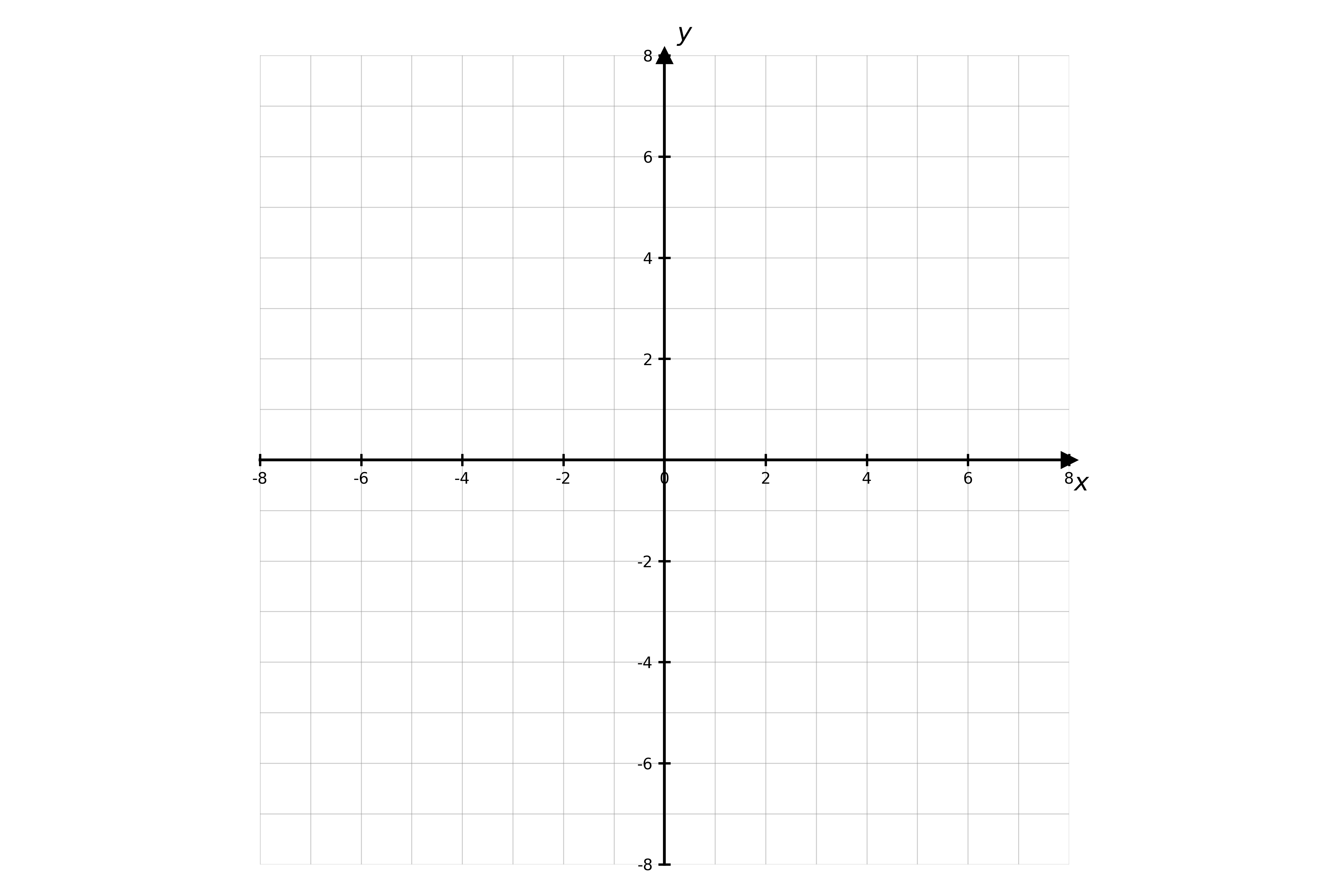
Using your graphs, or otherwise, solve the simultaneous equations and .
is inversely proportional to . When , .
Find the constant of proportionality and sketch the graph of against .
Sketch the graph of , giving the coordinates of the points where the graph meets the coordinate axes.
On the same diagram, sketch the graphs of and .
Use your diagram to determine the number of solutions of the equation .
A machine completes a calculation in a time, seconds, that is proportional to the number of processes, , involved. For a calculation involving processes the machine takes seconds.
Show that the constant of proportionality is .
Hence write down an equation linking and .
Find the time it takes for the machine to complete a calculation involving processes.
How many processes are involved in a calculation taking seconds?
The diagram shows the graph of , where .
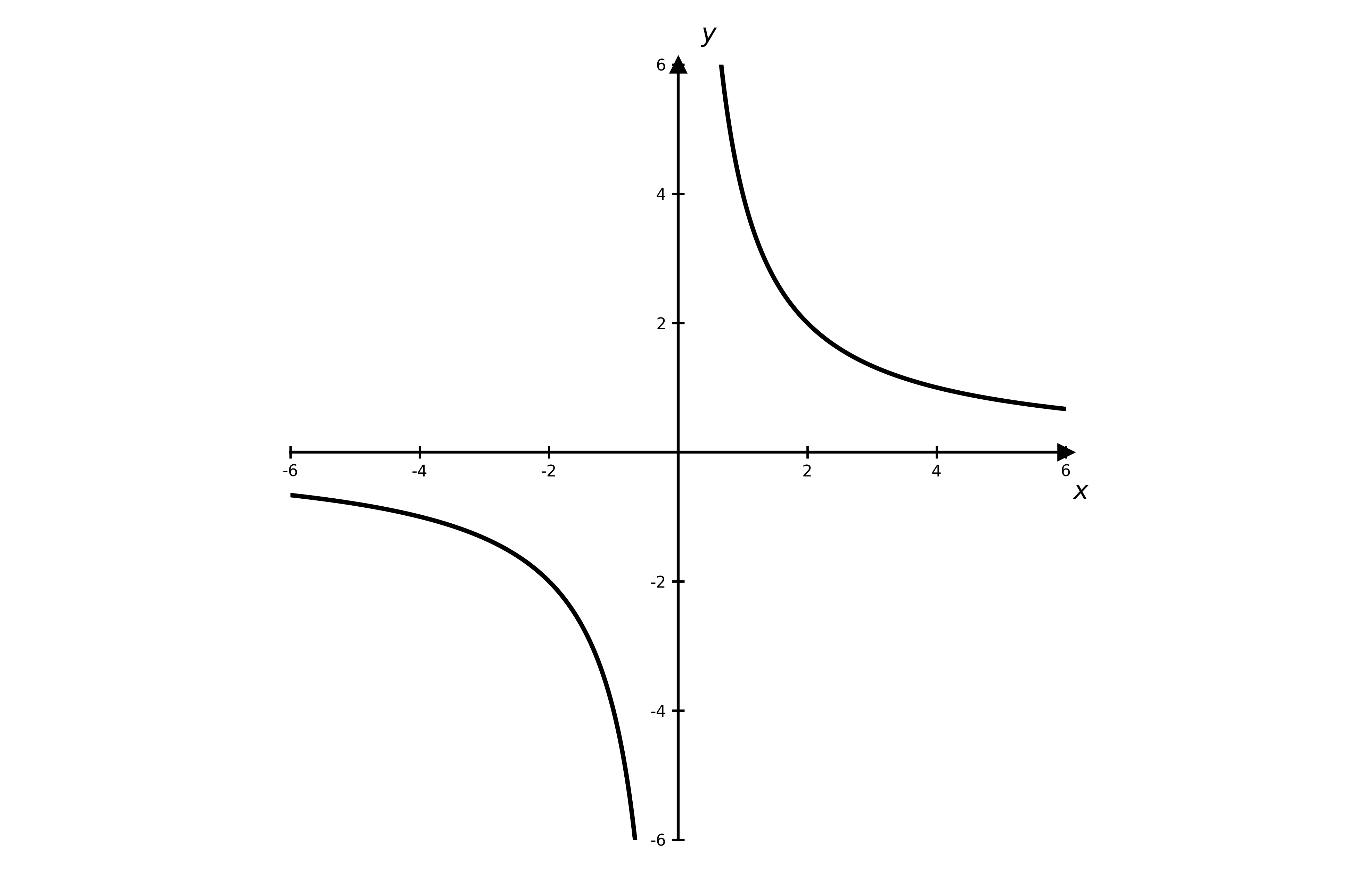
Sketch the graph of , where .
State which graph each of the following points must lie on, and find the value of in each case.
(i)
(ii)
Solve the equation .
Write down the -coordinates of the points of intersection of the graphs of and .
Find the -coordinates of these points of intersection.
On the same diagram, sketch the graphs of and .
is inversely proportional to . When , .
Find the constant of proportionality and sketch the graph of against .
Sketch the graph of , and write down the equations of any asymptotes.
On the axes below, sketch the graphs of and .
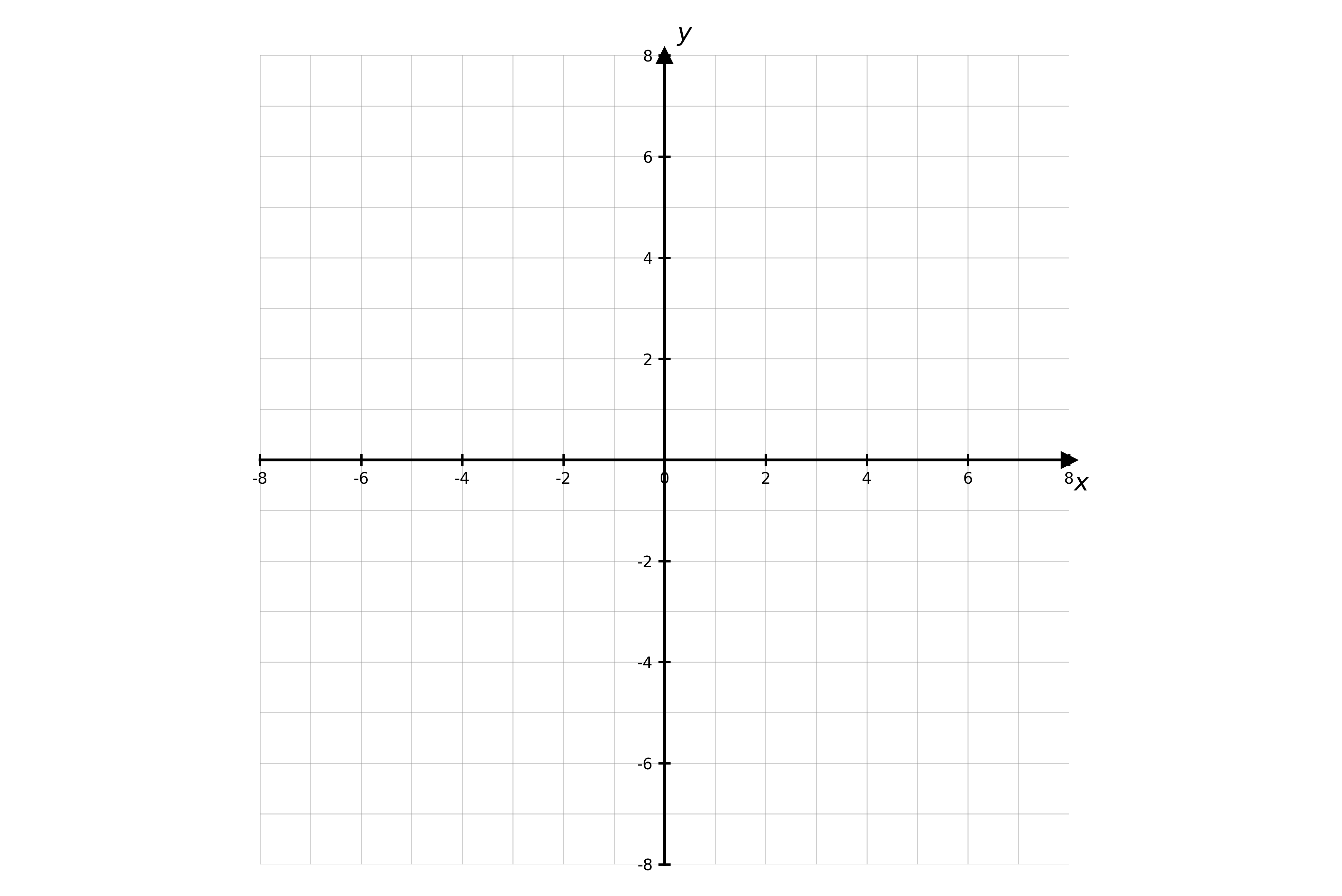
Using your graphs, or otherwise, solve the simultaneous equations and .
Sketch the graph of , giving the coordinates of the points where the graph meets the coordinate axes.
On the same diagram, sketch the graphs of and .
Use your diagram to determine the number of solutions of the equation .
A machine completes a calculation in a time, seconds, that is proportional to the square of the number of processes, , involved. For a calculation involving processes the machine takes seconds.
Find an equation linking and .
How many processes are involved in a calculation taking seconds?
Find the time it takes for the machine to complete a calculation involving processes.
The diagram shows the graph of , where .
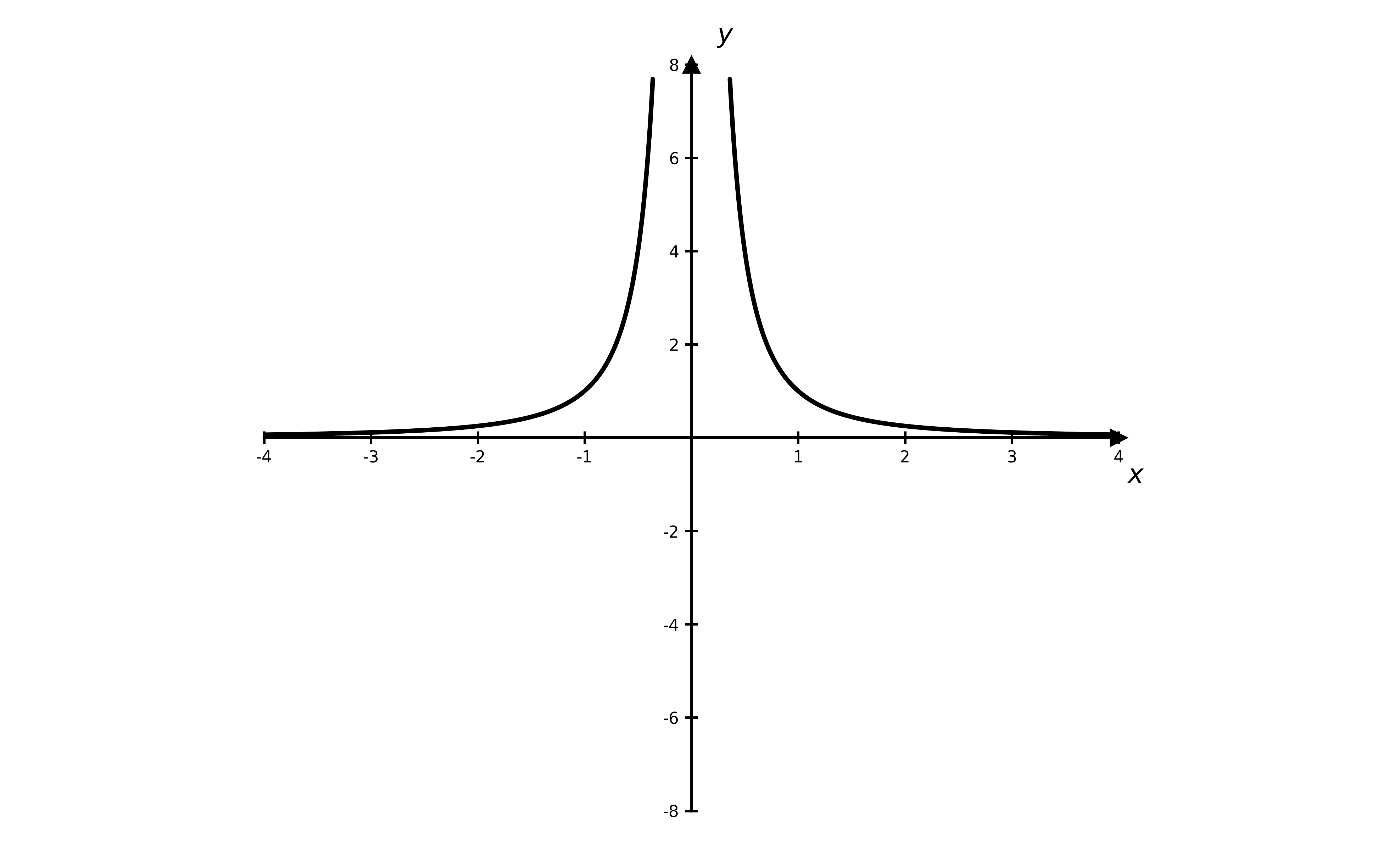
Sketch the graph of , where .
Given that is a negative real number, state, with a reason, which graph passes through the point .
On the same diagram, sketch the graphs of and .
Write down the equation(s) of any lines of symmetry and asymptotes for the two graphs in part (a).
On the axes below, sketch the graphs of and .
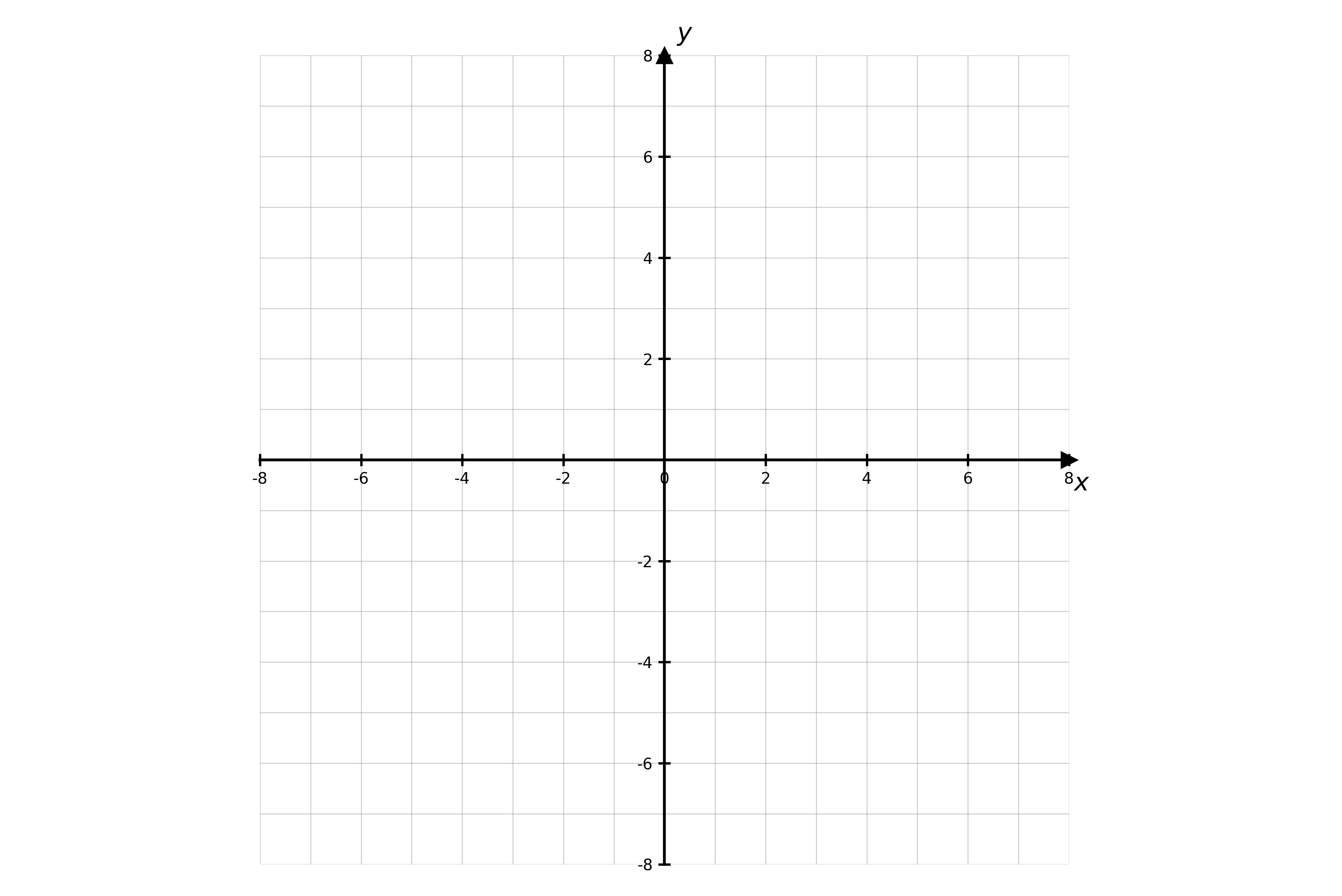
Using your graphs, or otherwise, find the solutions of the equation .
is inversely proportional to the square of . When , .
Find the constant of proportionality and sketch the graph of against .
A machine completes a calculation in a time, seconds, that is proportional to the cube root of the number of processes, , involved. For a calculation involving processes the machine takes seconds.
How many processes are involved in a calculation taking seconds?
Find the time it takes for the machine to complete a calculation involving processes.
On separate diagrams, sketch the graphs of , where , and , where .
One of the graphs passes through the point with coordinates .
Write in terms of and, justifying your answer, state which graph this point lies on.